
Air Quality in Saskatchewan
Air quality index (AQI⁺) and PM2.5 air pollution in Saskatchewan •
Live Air Quality Ratings in Saskatchewan
Live city rankings are temporarily unavailable.
The Right Air Filter For High AQI Days
When outdoor air quality drops, the EPA recommends upgrading to a MERV 13 filter — or the highest-rated filter your HVAC system can handle — to help capture more of the fine particulate (PM2.5) that comes with poor air quality. MERV 13 is the highest rating most residential systems can run without restricting airflow.
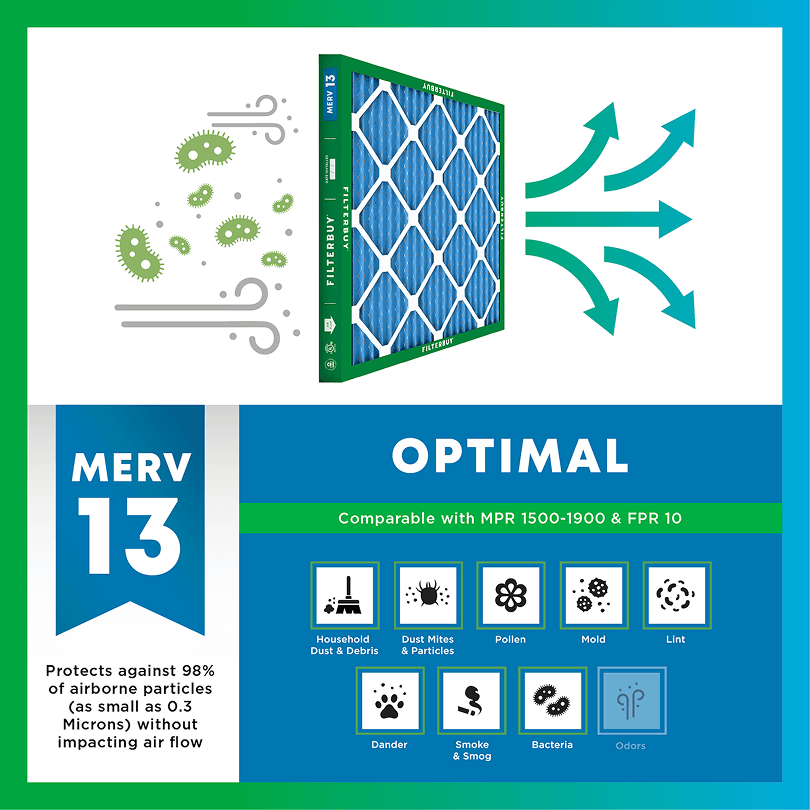
- Captures PM2.5 and other fine particulates
- Filters ash, soot, and smoke particles
- Rated to capture particles as small as 0.3 microns
- Matches the filter rating the EPA suggests during high-AQI and smoke events

AQI FAQs
What is AQI?
AQI stands for Air Quality Index, the EPA's scale for reporting daily air quality. It runs from 0 to 500. The higher the number, the greater the level of air pollution. Values at or below 100 are generally considered satisfactory; values above 100 mean air quality is unhealthy, first for sensitive groups, then for everyone as numbers climb.
What does AQI measure?
The AQI tracks five major pollutants regulated by the Clean Air Act: ground-level ozone, particle pollution (PM2.5 and PM10), carbon monoxide, sulfur dioxide, and nitrogen dioxide. The reported AQI value reflects whichever pollutant is highest at that time — most often ozone or fine particles (PM2.5).
How is AQI calculated?
Monitoring stations measure pollutant concentrations, and the EPA converts each into a standardized 0–500 score using set breakpoints. Each pollutant gets its own sub-index, and the highest sub-index becomes the reported AQI. That's why a single number can represent different pollutants on different days.
What is a good AQI?
An AQI of 0–50 is rated "Good" — air quality poses little or no risk. 51–100 is "Moderate," acceptable for most people though unusually sensitive individuals may want to limit prolonged outdoor exertion. Anything at or below 100 is generally considered satisfactory air quality.
What does an AQI of 100 (or 150) mean?
100 is the dividing line: at or below it, air quality is satisfactory for the general public. From 101–150, air is "Unhealthy for Sensitive Groups" — people with respiratory conditions, older adults, and children. From 151–200, it's "Unhealthy" and everyone may begin to feel effects.
Why is the AQI bad today?
Short-term AQI spikes usually come from wildfire smoke, temperature inversions that trap pollutants near the ground, high-ozone weather (hot, sunny, stagnant days), or heavy traffic and industrial activity. Check a real-time source like the map on this page to see which pollutant is driving today's reading in your area.
What AQI is bad for running or exercise?
Many runners follow the EPA category lines: below 50, no adjustment needed; 51–100, unusually sensitive people may shorten intense workouts; above 100, sensitive groups are advised to reduce prolonged or heavy outdoor exertion; above 150, that advice extends to everyone. Exercise increases how much air you breathe in, which is why thresholds matter more during workouts.
What AQI is safe to open windows?
A common rule of thumb is to keep windows open when the AQI is under 100 and close them when it climbs above, especially during wildfire smoke events when fine particles are elevated. When windows are closed, running your HVAC system with a fresh filter helps capture particles circulating indoors.
Should I wear a mask based on AQI?
Public health agencies generally suggest considering a well-fitted N95-style respirator outdoors when the AQI exceeds 150, particularly during smoke events. Cloth and surgical masks don't filter fine particles effectively. Follow guidance from your local health department, which may adjust recommendations during severe episodes.
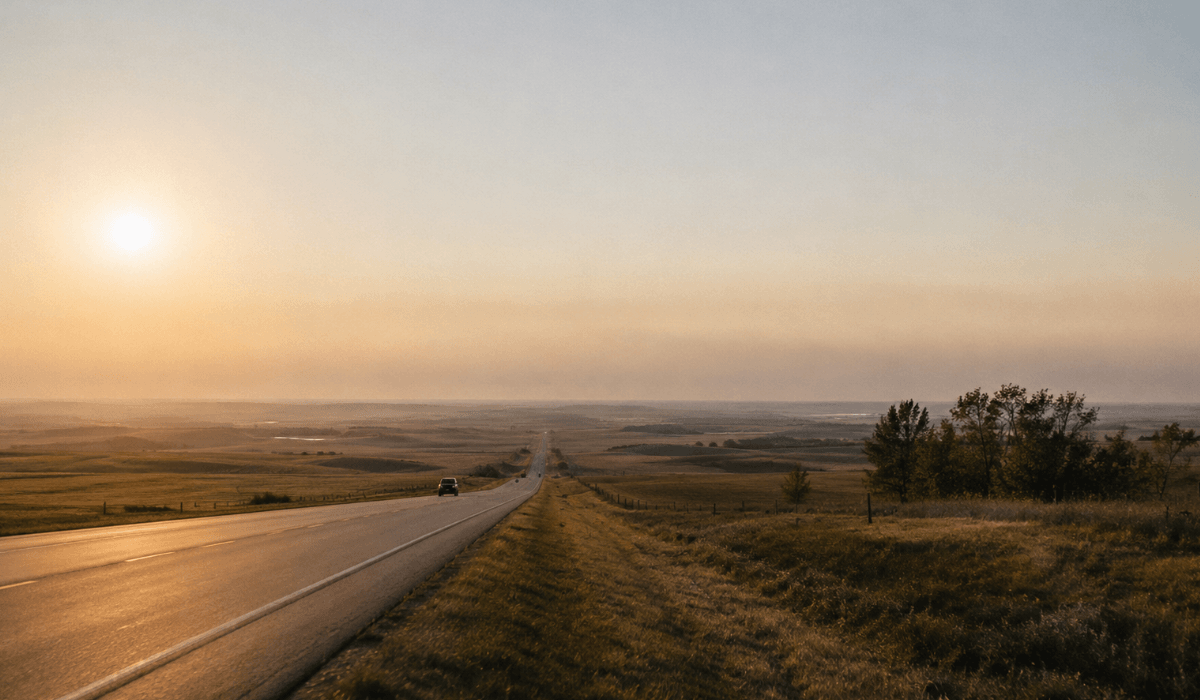
Check Today's Live Real Time Air Quality Index AQI Map in Saskatchewan Now
By Michelle Wan, Brand Manager and Air Quality Writer at Filterbuy Canada | Reviewed by David Clark, Licensed HVAC Technician | Published July 24, 2026 | Updated July 24, 2026
TL;DR
Saskatchewan's air quality can shift from clear to hazardous in a single afternoon: prairie wind, farm dust, oil and gas activity, and wildfire smoke all play a role. Canada's AQHI, a 1-to-10+ scale, is the fastest way to check current risk in Regina, Saskatoon, Prince Albert, and beyond. Use the live map below, then keep reading for what the number means.
Key Takeaways
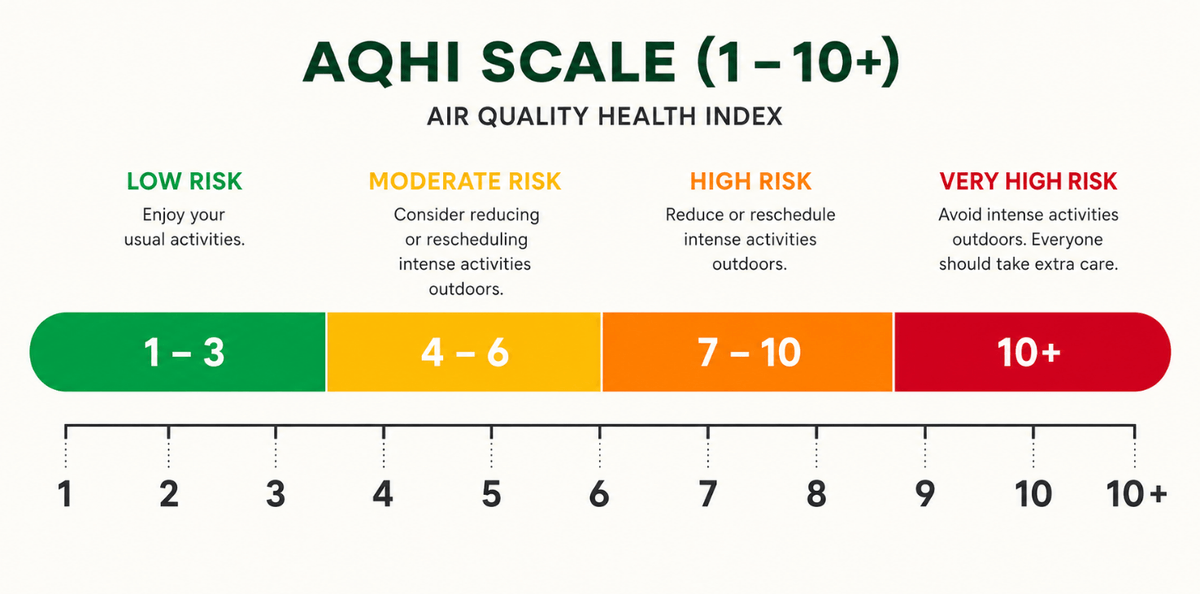
Saskatchewan reports air quality through the AQHI, not the older U.S.-style AQI; a reading above 7 is high risk, and 10+ is very high risk.
Environment Canada publishes live, hourly AQHI readings for Regina, Saskatoon, Prince Albert, Estevan, Swift Current, and Buffalo Narrows.
The province has six official air zones; the Boreal Air Zone in the north is largest by area but has the fewest fixed monitoring stations, so smoke conditions there rely more on modelling than ground sensors.
Saskatchewan declared a state of emergency in May 2025 as wildfires forced evacuations across the north, a reminder that AQHI readings can spike fast during fire season, roughly May through September.
PM2.5, the fine particulate in wildfire smoke, is the pollutant most likely to drive a bad air quality day in Saskatchewan.
A well-matched Filterbuy MERV-rated furnace filter reduces indoor exposure to smoke and dust while outdoor conditions improve.
Saskatchewan's Live AQHI Map, Right Now
The map above pulls current and forecast readings from Environment Canada's AQHI network, plus the province's real-time dashboard. It shows the current value and forecast maximums, refreshed as observations arrive. Conditions shift fast during wildfire season, so check back through the day.
Checking conditions elsewhere too? Filterbuy Canada's live air quality map for all of Canada covers every province and major city.
Prefer a ping over checking manually? SaskAlert, the province's free emergency notification system, texts wildfire and air quality alerts straight to your phone.
What the AQHI Number Actually Means
The AQHI translates air pollution into a health risk you can act on immediately, not a technical pollutant count. It runs 1 to 10+; higher means greater risk, especially for children, seniors, and people with heart or lung conditions.
At-risk individuals, including those with respiratory or cardiovascular conditions, should take precautions sooner, per Health Canada's guidance.
Saskatchewan's Six Air Zones and Why Location Changes the Risk
Saskatchewan splits air monitoring into six zones, shaped by industry, geography, and weather. Your zone explains why a Regina reading can look nothing like La Ronge's on the same afternoon.
The Boreal Air Zone covers more land than any other zone, yet has the thinnest network of fixed monitoring stations. That matters most during wildfire season, when northern residents often rely on smoke forecast modelling and satellite data more than a nearby ground sensor. If you live near the Boreal zone, treat the live map as a regional estimate and watch for official air quality statements.
One detail worth flagging from researching this page: only three of the six zones, Great Plains, Western Yellowhead, and Southeast Saskatchewan, have an active air zone association coordinating local monitoring. The Boreal zone, covering roughly half the province alone, does not.
Why Saskatchewan's Air Quality Can Change So Fast
Two forces drive Saskatchewan's volatility: wide-open prairie wind carrying dust and pollutants over long distances, and a wildfire season that keeps growing longer.
In May 2025, the province declared a state of emergency as wildfires intensified up north, forcing thousands to evacuate. By September, active fires were still pushing AQHI into very-high-risk range in Saskatoon and Buffalo Narrows. Outside fire season, farm work, oil and gas activity, and industrial emissions in Great Plains and Southeast Saskatchewan drive smaller, localized swings.
Environment Canada tracks "smoke hours," hours when visibility drops below 10 kilometres from smoke, at Saskatoon, Regina, Prince Albert, and La Ronge. Saskatoon logged just 4 in 2022, then 321 in 2023 and 218 in 2024, its two highest totals on record. Lung Saskatchewan has reported more calls from residents managing lung disease through those seasons.
AQHI vs. AQI: Which Number Should You Trust in Saskatchewan?
Saskatchewan reports air quality using the AQHI, not the U.S. AQI, though both get searched. AQHI is built around health risk, jointly developed by Environment Canada and Health Canada; AQI is a U.S. EPA scale calculated from pollutant thresholds. A map showing a 0–500 value is likely a global aggregator, not Canada's official system.
Protecting Your Indoor Air When Outdoor Conditions Drop
Outdoor AQHI readings describe the air outside, but what happens inside during a high-risk day depends on your furnace filter and how well your home is sealed. Fine wildfire smoke particles, PM2.5, work through gaps, vents, and open doors.
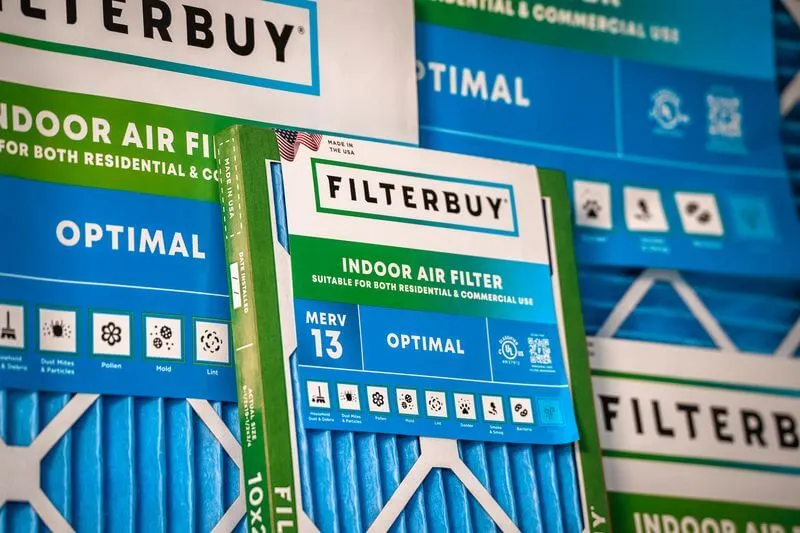
Filterbuy Canada carries pleated MERV 8, MERV 11, and MERV 13 filters, colour-coded for quick ID, with free shipping across Canada. MERV 13 is generally strongest for smoke season, capturing finer particles than a standard MERV 8. Confirm your HVAC can handle a higher-rated filter first, and change it more often during heavy smoke.
Lingering smoke smell? Filterbuy's Odour Eliminator carbon-infused filter handles that alongside standard particle filtration.
Across the Canadian pages I've written this year, the same pattern holds: wildfire smoke, not everyday dust, is what finally gets people to check their filter's MERV rating.
For more on matching filter strength to smoke, see Filterbuy Canada's guide to the best MERV filter for wildfire smoke. Unsure when your filter is due? This filter change frequency guide breaks it down, or skip the guesswork with an air filter subscription.
“On high-AQHI days, the single most effective thing a homeowner can do indoors is confirm the furnace filter is actually rated to handle fine particulate, not just dust. A clogged or undersized filter won't protect anyone, no matter how good the box says it is. Check the return duct for gaps too: a MERV 13 does nothing if smoke is bypassing it around a loose frame." - David Clark, Licensed HVAC Technician
Supporting Statistics
Wildfire smoke is studied closely south of the border too. Three figures below show why a high-AQHI day matters.
1. 17% of the PM2.5 health burden. Wildfire smoke drove up to 17% of the fine-particulate burden in California communities studied by the U.S. EPA. That included an estimated 300,000 excess respiratory ER visits and 129,000 excess cardiovascular ER visits from 2008 to 2016.
Source: U.S. EPA Risk Assessment Portal
2. 77.2 million Americans affected. A record number of U.S. counties saw unhealthy short-term particle-pollution spikes in 2021 to 2023. The American Lung Association ties part of that spike to smoke from the 2023 Canadian wildfires.
Source: American Lung Association, State of the Air 2025
3. 90% of time spent indoors. Americans spend about 90% of their time indoors, where pollutant levels often run 2 to 5 times higher than outside. That is why a well-matched furnace filter still matters on a calm day.
Source: U.S. EPA, Report on the Environment: Indoor Air Quality
Essential Resources
Check Live Conditions Anywhere in Saskatchewan
Environment Canada's Saskatchewan AQHI provincial summary gives hourly readings for Regina, Saskatoon, Prince Albert, Estevan, Swift Current, and Buffalo Narrows.
Explore the Province's Real-Time Dashboard
The Government of Saskatchewan's real-time air monitoring dashboard shows live station-level data, including raw PM2.5 readings, plus historic records.
Find Your Air Zone
Saskatchewan's Air Zone Management overview breaks down all six zones and their industries.
Understand the Health Side
Health Canada and Environment Canada's wildfire smoke and air quality overview covers risks by group; Lung Saskatchewan adds a local helpline and symptom guidance.
Get Notified Instead of Checking Manually
The Saskatchewan Public Safety Agency tracks active wildfires, and its free SaskAlert system can text or email an alert the moment one is issued.
Match Your Filter to Smoke Season
Filterbuy Canada's wildfire smoke filter guide and MERV ratings guide cover MERV 8, 11, and 13 for every season.
Check Conditions Elsewhere, or Skip the Filter Guesswork
Filterbuy Canada's live air quality map for all of Canada covers every province, and an air filter subscription ships a fresh filter on a schedule you set.
Why We Built This Page
I built this page for Filterbuy Canada after noticing Saskatchewan residents checking several disconnected sources during smoke advisories: one for the reading, one for what it meant, one for what to do indoors. Most air quality pages stop at the number. This one adds what I found more useful: which zones have someone actually watching the air, and which don't. - Michelle Wan
Frequently Asked Questions
Glossary
AQHI: Canada's 1-to-10+ health-risk scale, jointly developed by Environment Canada and Health Canada.
AQI: The U.S. EPA's 0-to-500 scale; not Canada's reporting standard.
PM2.5: Fine particulate matter 2.5 microns or smaller, wildfire smoke's main pollutant, small enough to reach deep into the lungs.
Air Zone: One of six regions Saskatchewan uses to manage air quality by shared industry, geography, and pollution patterns.
Boreal Air Zone (BAZ): Saskatchewan's largest zone by land area, covering the northern half of the province, with the fewest monitoring stations and no active air zone association.
NAPS: The federal network running continuous air-sampling stations in Canadian cities, including several in Saskatchewan.
MERV: The 1-to-16 scale rating how well a filter captures airborne particles; Filterbuy Canada carries MERV 8, 11, and 13.