
Air Quality in Nova Scotia
Air quality index (AQI⁺) and PM2.5 air pollution in Nova Scotia •
Live Air Quality Ratings in Nova Scotia
Live city rankings are temporarily unavailable.
The Right Air Filter For High AQI Days
When outdoor air quality drops, the EPA recommends upgrading to a MERV 13 filter — or the highest-rated filter your HVAC system can handle — to help capture more of the fine particulate (PM2.5) that comes with poor air quality. MERV 13 is the highest rating most residential systems can run without restricting airflow.
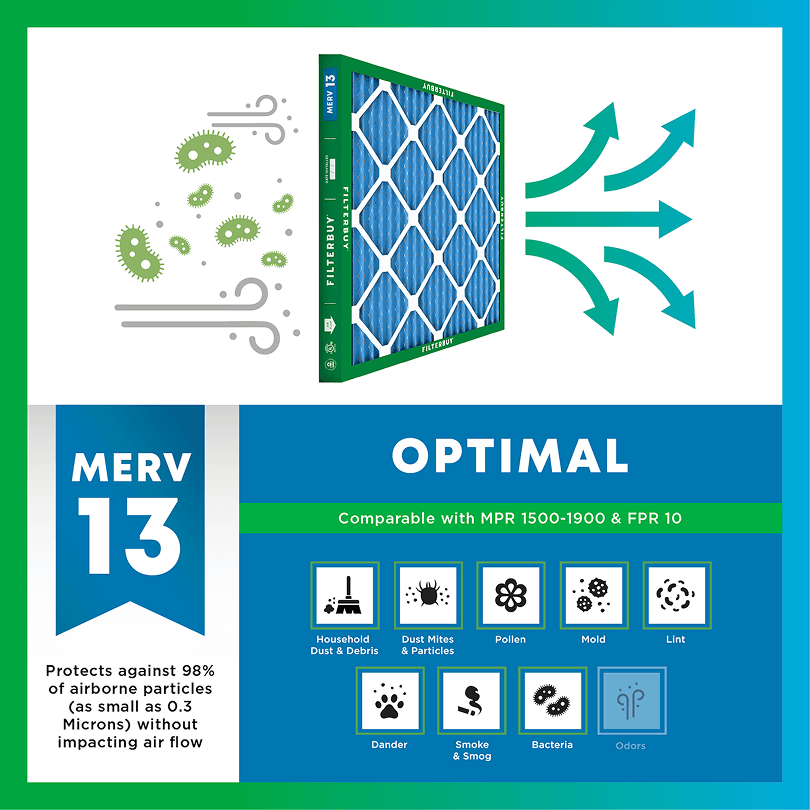
- Captures PM2.5 and other fine particulates
- Filters ash, soot, and smoke particles
- Rated to capture particles as small as 0.3 microns
- Matches the filter rating the EPA suggests during high-AQI and smoke events

AQI FAQs
What is AQI?
AQI stands for Air Quality Index, the EPA's scale for reporting daily air quality. It runs from 0 to 500. The higher the number, the greater the level of air pollution. Values at or below 100 are generally considered satisfactory; values above 100 mean air quality is unhealthy, first for sensitive groups, then for everyone as numbers climb.
What does AQI measure?
The AQI tracks five major pollutants regulated by the Clean Air Act: ground-level ozone, particle pollution (PM2.5 and PM10), carbon monoxide, sulfur dioxide, and nitrogen dioxide. The reported AQI value reflects whichever pollutant is highest at that time — most often ozone or fine particles (PM2.5).
How is AQI calculated?
Monitoring stations measure pollutant concentrations, and the EPA converts each into a standardized 0–500 score using set breakpoints. Each pollutant gets its own sub-index, and the highest sub-index becomes the reported AQI. That's why a single number can represent different pollutants on different days.
What is a good AQI?
An AQI of 0–50 is rated "Good" — air quality poses little or no risk. 51–100 is "Moderate," acceptable for most people though unusually sensitive individuals may want to limit prolonged outdoor exertion. Anything at or below 100 is generally considered satisfactory air quality.
What does an AQI of 100 (or 150) mean?
100 is the dividing line: at or below it, air quality is satisfactory for the general public. From 101–150, air is "Unhealthy for Sensitive Groups" — people with respiratory conditions, older adults, and children. From 151–200, it's "Unhealthy" and everyone may begin to feel effects.
Why is the AQI bad today?
Short-term AQI spikes usually come from wildfire smoke, temperature inversions that trap pollutants near the ground, high-ozone weather (hot, sunny, stagnant days), or heavy traffic and industrial activity. Check a real-time source like the map on this page to see which pollutant is driving today's reading in your area.
What AQI is bad for running or exercise?
Many runners follow the EPA category lines: below 50, no adjustment needed; 51–100, unusually sensitive people may shorten intense workouts; above 100, sensitive groups are advised to reduce prolonged or heavy outdoor exertion; above 150, that advice extends to everyone. Exercise increases how much air you breathe in, which is why thresholds matter more during workouts.
What AQI is safe to open windows?
A common rule of thumb is to keep windows open when the AQI is under 100 and close them when it climbs above, especially during wildfire smoke events when fine particles are elevated. When windows are closed, running your HVAC system with a fresh filter helps capture particles circulating indoors.
Should I wear a mask based on AQI?
Public health agencies generally suggest considering a well-fitted N95-style respirator outdoors when the AQI exceeds 150, particularly during smoke events. Cloth and surgical masks don't filter fine particles effectively. Follow guidance from your local health department, which may adjust recommendations during severe episodes.
Check Today's Live Real Time Air Quality Index AQI Map in Nova Scotia Now
By Michelle Wan | Reviewed by David Clark, Licensed HVAC Technician | Published July 16, 2026 | Updated July 16, 2026
I've written a lot of these provincial air quality guides by now, and Nova Scotia is the one where I almost got it wrong. My first draft compared the province's numbers straight against the U.S. AQI, the way most search results do, before I'd fully registered that Environment Canada and Nova Scotia Environment aren't reporting the same scale at all. Once I cross-referenced the province's own monitoring station list against its wildfire history, a second thing jumped out that I hadn't seen mentioned anywhere else: Shelburne County, home to the largest wildfire in Nova Scotia's recorded history, isn't one of the seven communities with its own AQHI station. That gap, more than any single number on the page below, is the reason I'd tell a Nova Scotia homeowner not to rely on a province-wide reading alone - Michelle Wan
TL;DR
Nova Scotia doesn't use the U.S. AQI (0–500). Canada, and Nova Scotia Environment, reports the Air Quality Health Index (AQHI), a 1-to-10+ scale built directly around health risk rather than raw pollutant concentrations. Seven monitored communities cover the province: Halifax, Halifax Downtown, Halifax – Lake Major, Kentville, Pictou, Port Hawkesbury, and Sydney. Most of the time, Nova Scotia sits at Low Risk (levels 1–3); the most frequent reading is a 2. The main exception is wildfire smoke season, roughly late spring through early fall, when transboundary or in-province forest fire smoke can push the AQHI noticeably higher for a day or more. Check the live number for your community below, then use this Filterbuy.ca guide to understand what it means and what to do about it.
Key Takeaways
Nova Scotia is measured on Canada's AQHI (1–10+, health-based), not the U.S. EPA's AQI (0–500, pollutant-based); the two are not directly interchangeable.
The AQHI is currently reported for seven Nova Scotia locations: Halifax, Halifax Downtown, Halifax – Lake Major, Kentville, Pictou, Port Hawkesbury, and Sydney.
Low Risk (1–3) is the norm for Nova Scotia; provincial data shows the most frequent AQHI reading is 2, and Atlantic Canada AQHI values stay in the low-risk range most of the time.
Wildfire smoke, not everyday traffic or industry, is the leading cause of Nova Scotia's worst air quality days: the May 2023 Shelburne County and Halifax-area (Tantallon) fires pushed local air quality to moderate risk and forced evacuations.
Nova Scotia does receive some transboundary pollution from the eastern United States and central Canada, but the province's own environmental agency says this does not make Atlantic Canada's air worse than the rest of North America.
Only about 4 in 10 Nova Scotia homes have a forced air furnace or ducted heat pump with a central filter slot; the rest run on electric baseboards or ductless heat pumps, where a portable HEPA air cleaner does the equivalent job.
You can't control the outdoor AQHI, but a properly rated Filterbuy furnace filter is one of the few things that protects the air inside your home regardless of what's happening outside.
Live Nova Scotia Air Quality Right Now (AQHI, Not the U.S. AQI)
If you searched for the “air quality index” in Nova Scotia, here's the most important thing to know before you look at a number: Canada doesn't score air quality the same way the United States does. The U.S. Environmental Protection Agency's AQI runs from 0 to 500 and is built around individual pollutant concentrations. Environment Canada and Nova Scotia Environment instead report the Air Quality Health Index (AQHI), a 1-to-10+ scale designed from the ground up around short-term health risk, not just pollution levels.
Source: Environment Canada, Air Quality Health Index health messages by category.
Why Nova Scotia Reports the AQHI Instead of the U.S. AQI
This is the detail that most “air quality Nova Scotia” results online get wrong, and it's the reason searching for an “AQI” number in a Canadian province can feel confusing. When we went looking for the source of that confusion, it traced back to two genuinely different measurement systems, not just a labelling difference. The AQHI was developed starting in 2001 by the federal government, in partnership with provincial governments and health organizations, using research from Health Canada. Unlike older pollutant indices, it was built specifically around measurable, short-term human health outcomes.
The AQHI is calculated from three pollutants measured together, not separately: ground-level ozone (O3), nitrogen dioxide (NO2), and fine particulate matter (PM2.5). Nova Scotia Environment identifies these three as the combination that best represents the mix of pollutants that make up smog and drive health effects, with sources including transportation, industrial activity, home heating, forest fires, and pollution carried in from outside the province.
Quick Reference: AQHI vs. U.S. AQI
AQHI (Canada): scale of 1 to 10+, health-risk based, combines PM2.5 + ground-level ozone + NO2.
U.S. AQI: scale of 0 to 500, pollutant-concentration based, six criteria pollutants scored individually and reported as the worst of the group.
The two scales are not on a 1:1 conversion: a Nova Scotia AQHI reading of “2” and a U.S. AQI reading of “50” both generally describe good air quality, but they are calculated differently and shouldn't be compared like-for-like.
Nova Scotia's Air Quality Monitoring Communities
The AQHI is currently measured for seven locations across the province, chosen for a mix of population size, geography, and industrial activity so the readings give a representative picture of provincial air quality rather than just one city.
Source: Nova Scotia Environment and Environment Canada, Air Quality Health Index monitoring station listings.
A station reading is a general picture for its area, not a hyper-local measurement. Nova Scotia Environment notes that a specific local event, such as a nearby fire, a factory, or a busy roadway, can make the air worse in your immediate location than the nearest official station shows.
Why Filterbuy Pays Close Attention to This
We ship furnace and HVAC filters to homes across every one of these seven communities, from downtown Halifax to Sydney, and the pattern we hear about most from Canadian customers isn't day-to-day pollution. It's the sudden shift when wildfire smoke rolls in and a household realizes their filter has been overdue for months. Nova Scotia's baseline air quality is genuinely good enough that it's easy to stop thinking about your filter at all. That's the gap this page is written to close.
What Affects Air Quality in Nova Scotia
Transboundary Pollution and the “Tailpipe of North America” Myth
You may have heard Nova Scotia, or Atlantic Canada more broadly, called the “tailpipe of North America.” Nova Scotia Environment addresses this directly: the province does receive some pollution blown in from outside its borders, particularly from the eastern United States and central and eastern Canada, and this kind of transboundary pollution is common to many regions, not unique to Nova Scotia. According to the province, this nickname is often misread to mean Atlantic Canada's air is worse than the rest of North America's. The data doesn't support that. AQHI levels in Nova Scotia and the rest of Atlantic Canada tend to sit in the low health risk range (1 to 3) most of the time.
Home Heating and Everyday Sources
Nova Scotia Environment points to industrial activity, including coal-fired power generation, transportation, and home heating as the province's most significant ordinary sources of air pollution. Because Nova Scotia's furnace season runs considerably longer than in much of the southern United States, home heating equipment carries a bigger role in local air quality patterns than it would in a milder climate. That's one more reason the province has required EPA-certified wood stoves for efficiency and emissions since 2008.
Wildfire Smoke: The Province's Biggest Air Quality Events
Everyday conditions in Nova Scotia are quietly good. The exception, and the scenario that has driven the most serious air quality events in recent provincial history, is wildfire smoke. In late May 2023, wildfires in Shelburne County and in the Halifax-area community of Tantallon became, respectively, the largest and among the most destructive fires in Nova Scotia's history. Environment Canada issued special air quality statements for Shelburne County and western Halifax County as smoke reduced visibility and air quality; observation sites near Halifax registered a moderate-risk AQHI of 4 during the event. Roughly 16,000 residents were placed under evacuation order, and smoke from the fires was tracked as far south as the northeastern United States.
That kind of event is the reason Nova Scotia's air quality can shift quickly, even though the baseline is consistently low-risk. It's also the clearest case for having a plan for your indoor air that doesn't depend on what's happening outside your door.
Before Wildfire Season Arrives: A Nova Scotia Checklist
Most of this list comes down to doing before smoke season what's hard to do once smoke has already arrived and everyone else is trying to do the same thing at once.
Know your nearest official AQHI station now. If you're in a monitoring gap area like Shelburne County or the South Shore, decide which neighbouring community's reading you'll rely on before you need it, not during a fire.
If your home has a forced air furnace or a ducted heat pump, have a Filterbuy MERV 13 filter on hand before late spring. Filter shortages tend to follow smoke events, not precede them.
If you don't have central air, pick one room to set up as your cleaner air space and have a certified HEPA portable air cleaner sized to it, per Health Canada's guidance above.
Keep a properly fitted N95 or equivalent respirator on hand for anyone who has to go outside during a smoke event, along with a few spare filters for whichever system you run.
Older Nova Scotia housing stock often has more air leakage around doors and windows than newer builds; a few dollars of weatherstripping checked now is easier than sealing a home mid-event.
Nova Scotia's Air Quality Through the Seasons
Source: Nova Scotia Environment, seasonal air quality patterns.
Regional Variation Across Nova Scotia
“Nova Scotia air quality” isn't one single number, and treating it that way misses how differently conditions can play out across the province on any given day. Laying the province's seven monitoring communities over a map of its recent wildfire history is what surfaced the gap below.
Halifax Regional Municipality: the three local stations (Halifax, Halifax Downtown, and Halifax – Lake Major) often read a touch differently from one another, since the downtown core sees more traffic and harbour activity than the Lake Major station further from the urban centre.
Annapolis Valley (Kentville): generally rural and agricultural, with air quality driven more by regional weather patterns than by local traffic or industry.
Cape Breton Island (Sydney, Port Hawkesbury): industrial and port activity plays a bigger local role here than in most of mainland Nova Scotia, though provincial data still places typical readings in the low-risk range.
South Shore and Southwestern Nova Scotia (Shelburne County): outside a major wildfire event, this region has no dedicated AQHI monitoring station, so residents rely on the nearest reporting community and regional forecasts, especially during peak wildfire months.
An Original Observation: The Monitoring Gap Nobody Mentions
This is worth sitting with: Shelburne County was the site of the largest wildfire in Nova Scotia's recorded history, and it still has no AQHI station of its own today. During the May 2023 fire, the closest official readings came from Halifax, roughly 170 kilometres away as the crow flies. We haven't seen this connection drawn out in other coverage of Nova Scotia air quality, and it's the clearest practical reason to treat the province's seven-station network as a general guide rather than a promise that help will show up on the map exactly where you need it.
Common Myths About Nova Scotia Air Quality
These are the three misconceptions that came up most often while we were fact-checking this page against Nova Scotia Environment's own source material.
Myth: Nova Scotia's AQI is measured the same way as U.S. cities.
Not quite. Nova Scotia is measured on the AQHI, a health-risk-based 1-to-10+ scale, not the pollutant-based, 0-to-500 U.S. AQI. A search for “air quality Nova Scotia today” that returns a number over 100 is very likely showing a converted or estimated U.S.-style figure rather than the province's own official reading.
Myth: Nova Scotia is the most polluted air in North America (the “tailpipe” myth).
As covered above, Nova Scotia Environment directly rejects this interpretation. Transboundary pollution reaches the province, but Atlantic Canada's AQHI levels remain in the low-risk range the large majority of the time.
Myth: If the air outside says “Low Risk,” your indoor air is automatically fine too.
Outdoor AQHI doesn't measure what's happening inside your home. Indoor air quality depends on separate factors, including your HVAC filter's condition, cooking, pets, and how well your home is sealed and ventilated. A stale or overdue furnace filter can leave indoor air well below the quality of a Low Risk outdoor day.
Supporting Statistics
The most frequent AQHI reading in Nova Scotia is 2, which falls within the Low Risk category (1–3). (Nova Scotia Environment)
For cities across Canada, the AQHI tends to remain in the low-risk range roughly 70% of the time. (Nova Scotia Environment)
The May 2023 wildfires forced approximately 16,000 Nova Scotia residents to evacuate, and smoke reached as far as the northeastern United States. (NASA Earth Observatory)
Americans and Canadians alike spend an estimated 90% of their time indoors, where concentrations of some pollutants can run 2 to 5 times higher than outdoors. (U.S. EPA)
Health Canada recommends using the highest-quality air filter your HVAC system can handle, based on manufacturer specifications, as one of the core steps for protecting indoor air during a wildfire smoke event. (Health Canada)
Nova Scotia's primary home heating systems split almost evenly between forced air furnaces (23%), heat pumps (21%), and electric baseboard heaters (21%). (Statistics Canada)
Protecting Your Indoor Air, No Matter What the Outdoor AQHI Says
You can check the live Nova Scotia AQHI every day, and most days it will tell you the same reassuring thing: low risk, business as usual. But the AQHI only measures outdoor air. What's circulating through your own home's HVAC system is a separate question, and it's one you actually have some control over.
Health Canada's own guidance for protecting indoor air, written specifically with wildfire smoke events in mind, points to using the highest-quality air filter your HVAC system can handle as one of the most effective steps you can take at home. The same guidance also recommends a certified portable air cleaner with a HEPA filter for a single room if you don't have central air. That guidance holds up even outside of smoke season: a clean, correctly rated filter is doing that job every day, not just during a fire.
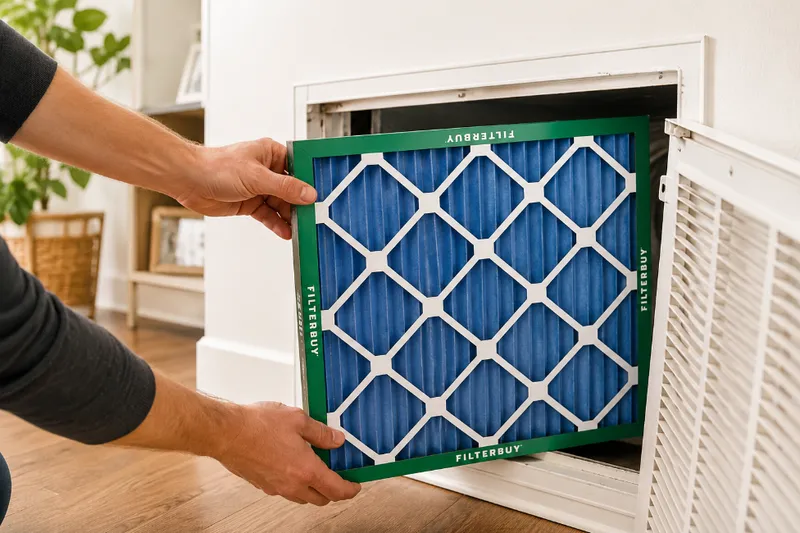
Not Every Nova Scotia Home Has a Furnace Filter to Upgrade
Before matching a filter to your home, it's worth checking whether you actually have a central filter slot in the first place. Statistics Canada's most recent household heating data found Nova Scotia's primary heating systems split almost evenly three ways: 23% forced air furnaces, 21% heat pumps, and 21% electric baseboard heaters, with the rest spread across oil or hot water boilers, wood stoves, and other systems. That's a meaningfully different mix than Ontario or the Prairies, where forced air furnaces dominate three-quarters or more of homes.
Forced air furnace or ducted heat pump: your home pushes air through central ductwork, so it has a filter slot the guidance below applies to directly.
Electric baseboard heat or a ductless mini-split heat pump: common across Nova Scotia and not tied into central ductwork, so there's no furnace filter to upgrade. Your equivalent move is a certified portable air cleaner with a HEPA filter, sized to the room you spend the most time in, per Health Canada's guidance above.
If you're not sure which category your home falls into, check for a rectangular slot near your furnace or air handler, usually in the basement or a utility closet, where a disposable filter slides in. No slot generally means no central filter to replace.
For homes that do have a central filter, that means matching the filter to the season:
MERV 8, Standard: solid, everyday filtration for homes without pets or significant allergy concerns.
MERV 11, Superior: a step up for households with pets or seasonal allergies, capturing more dust mites, mould spores, and pet dander.
MERV 13, Optimal: the highest-rated option in Filterbuy's Canadian lineup, worth considering ahead of wildfire smoke season for its ability to capture finer particles and smoke.
Odour Eliminator: carbon-infused filtration that also helps with smoke and cooking odours, useful during long stretches with windows closed.
Not sure which rating fits your system? See our full guide to MERV ratings, or set up a Filterbuy subscription so a fresh filter arrives before Nova Scotia's next long heating season, or its next smoke event, catches you with an overdue one.
“Nova Scotia's outdoor air is genuinely good most of the year, but that's exactly why people forget about their furnace filter. There's no smoky reminder to change it. I tell homeowners here the same thing I'd tell anyone in a long-heating-season climate: check your filter monthly through the winter, and if you're anywhere near a wildfire-prone area, have a MERV 13 on hand before smoke season starts, not after. The households I've seen caught off guard aren't in Halifax, where at least there's a station nearby to warn them. They're further out, in places like Shelburne County, relying on a reading from another part of the province entirely.” - David Clark, Licensed HVAC Technician
Frequently Asked Questions
Glossary
Air Quality Health Index (AQHI): Canada's official 1-to-10+ scale for reporting outdoor air quality and associated short-term health risk, calculated from PM2.5, ground-level ozone, and nitrogen dioxide.
AQI (Air Quality Index): The U.S. Environmental Protection Agency's 0-to-500 scale for reporting air quality, based on individual pollutant concentrations rather than a combined health-risk calculation.
PM2.5: Fine particulate matter measuring 2.5 microns or smaller in diameter, small enough to be inhaled deep into the lungs and, in some cases, enter the bloodstream.
Ground-Level Ozone (O3): A gas formed when pollutants react in sunlight, contributing to smog and respiratory irritation, and one of the three pollutants used to calculate the AQHI.
Nitrogen Dioxide (NO2): A gas produced largely by vehicle exhaust and combustion, and one of the three pollutants used to calculate the AQHI.
Transboundary Pollution: Air pollution that originates outside a region's own borders and is carried in by wind, such as pollution reaching Nova Scotia from the eastern United States or central Canada.
MERV Rating: Minimum Efficiency Reporting Value, a 1-to-20 scale describing how effectively an HVAC filter captures airborne particles; higher numbers indicate finer filtration.
HEPA Filter: High-Efficiency Particulate Air filter, capable of capturing at least 99.97% of particles at 0.3 microns; commonly used in portable air cleaners and roughly equivalent to a MERV 16 or higher rating.
Cleaner Air Space: A designated indoor area, either at home or in a community building, set up with filtration and ventilation intended to keep pollutant levels lower than outdoors during a smoke event.
Essential Resources
Every figure on this page traces back to one of the sources below. Use them to check today's exact reading, dig into the methodology, or go deeper on any of the topics covered above.
FILTERBUY RESOURCES
Match Your Filter's MERV Rating to Your Household's Needs
Filterbuy.ca: Guide to MERV Ratings — a plain-language breakdown of what each MERV rating actually captures, so you're not guessing between Standard, Superior, and Optimal.
Never Get Caught With an Overdue Filter Before Smoke Season
Filterbuy.ca: Air Filter Subscription — set your filter to arrive automatically on a schedule that matches your home's needs, so a fresh one is already on hand before the next long heating season or wildfire smoke event.
OFFICIAL NOVA SCOTIA & CANADIAN GOVERNMENT DATA
Check Live AQHI Readings for All Seven Nova Scotia Stations
Environment Canada: Nova Scotia AQHI Summary — the federal government's live, hourly Air Quality Health Index feed for Halifax, Sydney, Kentville, Pictou, Port Hawkesbury, and the rest of the province, updated straight from the monitoring network.
Understand How the AQHI Is Actually Calculated
Nova Scotia Environment: Air Quality Health Index — the province's own explainer of what goes into the AQHI score and how the health-risk categories are defined.
Get Straight Answers to the Most Common AQHI Questions
Nova Scotia Environment: AQHI Frequently Asked Questions — the source we fact-checked this entire page against, including the province's own response to the “tailpipe of North America” myth.
Pull Raw PM2.5, Ozone, and NO2 Numbers Station by Station
Nova Scotia Environment: Ambient Air Quality Monitoring Data — the underlying pollutant-by-pollutant measurements behind the AQHI, useful if you specifically want a raw PM2.5, ozone, or NO2 concentration rather than the blended index.
HEALTH GUIDANCE FROM HEALTH CANADA & THE U.S. EPA
Choose the Right Portable Air Cleaner for a Cleaner-Air Room
Health Canada: Using a Portable Air Cleaner to Improve Indoor Air — sizing and certification guidance for homes without central ductwork, which describes a meaningful share of Nova Scotia households.
Compare How the U.S. AQI Scale Works, Side by Side With the AQHI
AirNow.gov (U.S. EPA): AQI Basics — a useful cross-check if you're used to reading U.S. air quality numbers and want to see exactly how the 0-to-500 AQI differs from Canada's AQHI.
UNDERSTANDING THE 2023 WILDFIRES
Read the Full Story of Nova Scotia's Largest Wildfire
CBC News Nova Scotia: Record-Breaking Wildfire Coverage, Shelburne County (2023) — local reporting on the fire that became the largest in the province's recorded history, and the monitoring gap discussed earlier on this page.
About This Page
Written by Michelle Wan, content contributor at Filterbuy Canada. View author profile
Reviewed for technical accuracy by David Clark, Licensed HVAC Technician.
Filterbuy manufactures 100% of its air filters in the United States and ships factory-direct to homes across Canada through filterbuy.ca, with over 85,000 five-star customer reviews. This page is reviewed periodically and updated to reflect current air quality guidance for Nova Scotia.