
Air Quality in New Brunswick
Air quality index (AQI⁺) and PM2.5 air pollution in New Brunswick •
Live Air Quality Ratings in New Brunswick
Live city rankings are temporarily unavailable.
The Right Air Filter For High AQI Days
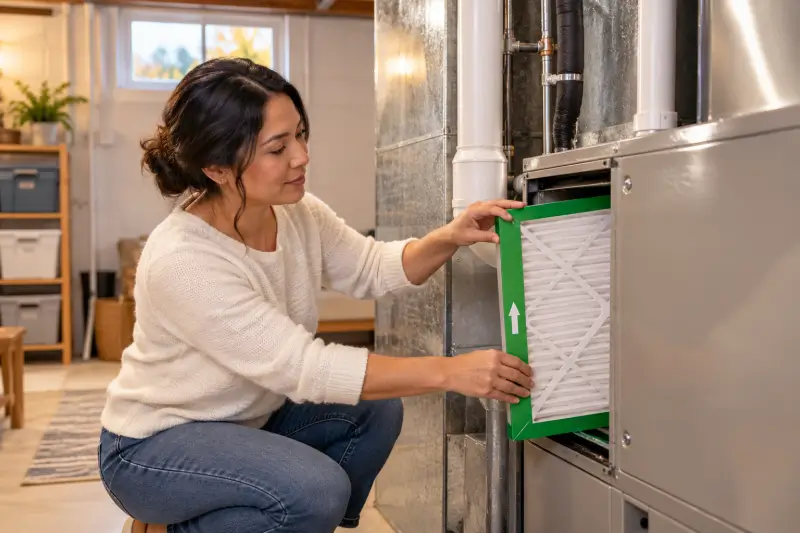
When outdoor air quality drops, the EPA recommends upgrading to a MERV 13 filter — or the highest-rated filter your HVAC system can handle — to help capture more of the fine particulate (PM2.5) that comes with poor air quality. MERV 13 is the highest rating most residential systems can run without restricting airflow.
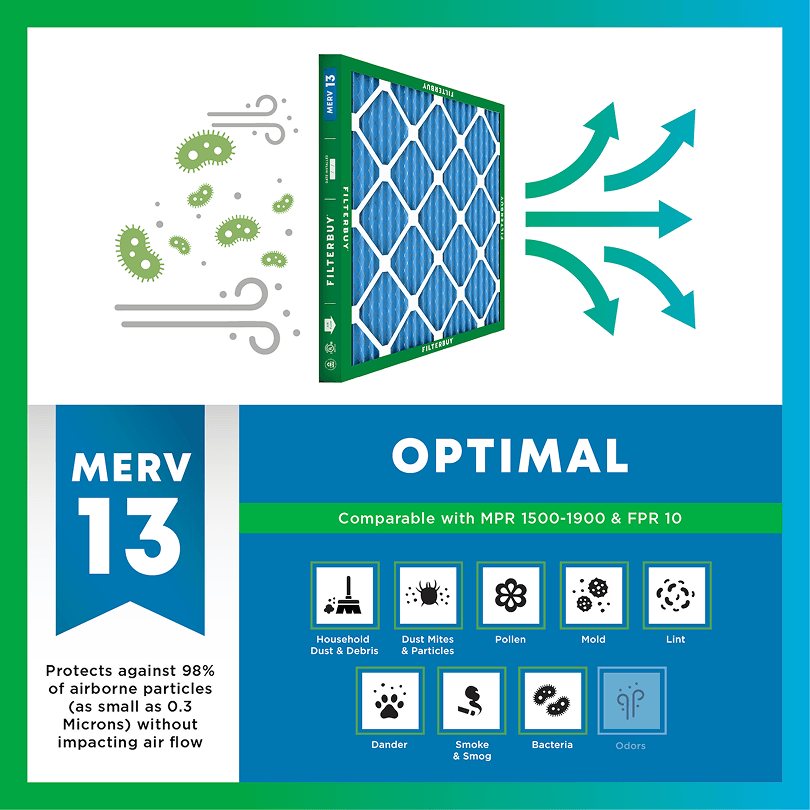
- Captures PM2.5 and other fine particulates
- Filters ash, soot, and smoke particles
- Rated to capture particles as small as 0.3 microns
- Matches the filter rating the EPA suggests during high-AQI and smoke events

AQI FAQs
What is AQI?
AQI stands for Air Quality Index, the EPA's scale for reporting daily air quality. It runs from 0 to 500. The higher the number, the greater the level of air pollution. Values at or below 100 are generally considered satisfactory; values above 100 mean air quality is unhealthy, first for sensitive groups, then for everyone as numbers climb.
What does AQI measure?
The AQI tracks five major pollutants regulated by the Clean Air Act: ground-level ozone, particle pollution (PM2.5 and PM10), carbon monoxide, sulfur dioxide, and nitrogen dioxide. The reported AQI value reflects whichever pollutant is highest at that time — most often ozone or fine particles (PM2.5).
How is AQI calculated?
Monitoring stations measure pollutant concentrations, and the EPA converts each into a standardized 0–500 score using set breakpoints. Each pollutant gets its own sub-index, and the highest sub-index becomes the reported AQI. That's why a single number can represent different pollutants on different days.
What is a good AQI?
An AQI of 0–50 is rated "Good" — air quality poses little or no risk. 51–100 is "Moderate," acceptable for most people though unusually sensitive individuals may want to limit prolonged outdoor exertion. Anything at or below 100 is generally considered satisfactory air quality.
What does an AQI of 100 (or 150) mean?
100 is the dividing line: at or below it, air quality is satisfactory for the general public. From 101–150, air is "Unhealthy for Sensitive Groups" — people with respiratory conditions, older adults, and children. From 151–200, it's "Unhealthy" and everyone may begin to feel effects.
Why is the AQI bad today?
Short-term AQI spikes usually come from wildfire smoke, temperature inversions that trap pollutants near the ground, high-ozone weather (hot, sunny, stagnant days), or heavy traffic and industrial activity. Check a real-time source like the map on this page to see which pollutant is driving today's reading in your area.
What AQI is bad for running or exercise?
Many runners follow the EPA category lines: below 50, no adjustment needed; 51–100, unusually sensitive people may shorten intense workouts; above 100, sensitive groups are advised to reduce prolonged or heavy outdoor exertion; above 150, that advice extends to everyone. Exercise increases how much air you breathe in, which is why thresholds matter more during workouts.
What AQI is safe to open windows?
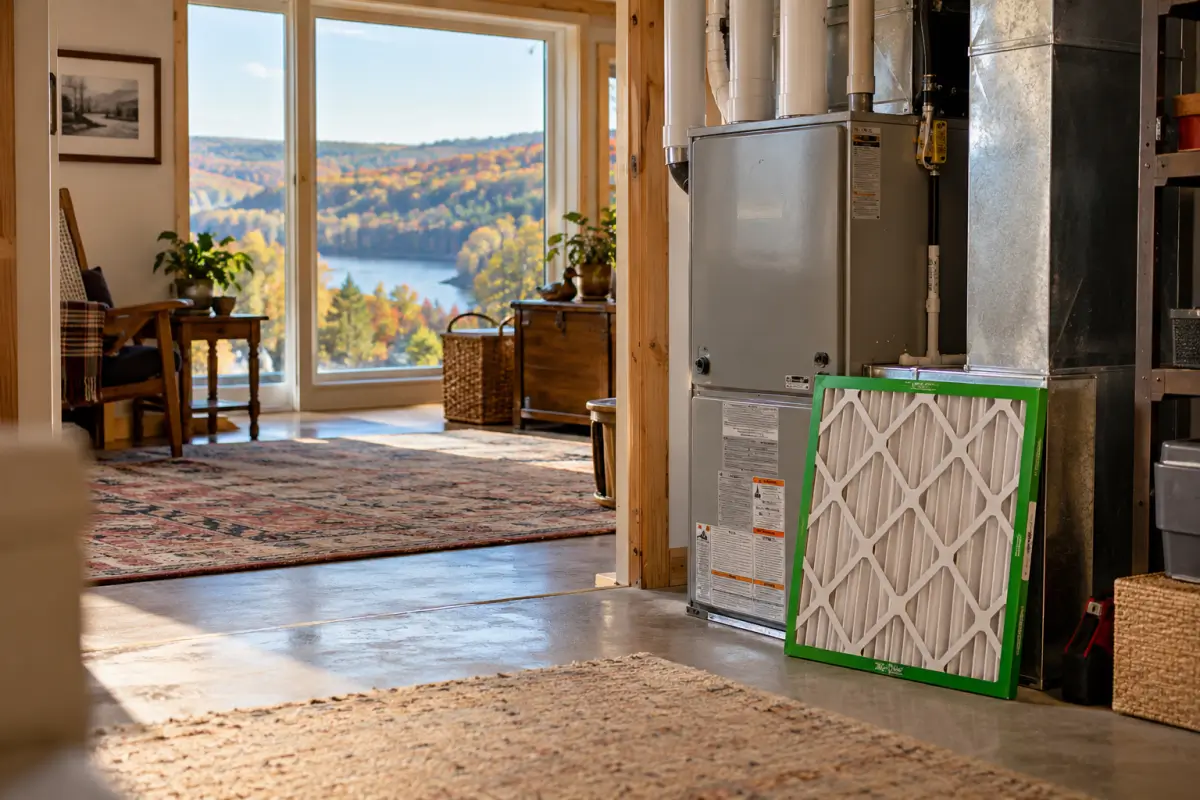
A common rule of thumb is to keep windows open when the AQI is under 100 and close them when it climbs above, especially during wildfire smoke events when fine particles are elevated. When windows are closed, running your HVAC system with a fresh filter helps capture particles circulating indoors.
Should I wear a mask based on AQI?
Public health agencies generally suggest considering a well-fitted N95-style respirator outdoors when the AQI exceeds 150, particularly during smoke events. Cloth and surgical masks don't filter fine particles effectively. Follow guidance from your local health department, which may adjust recommendations during severe episodes.
Live Air Quality Index AQI Map New Brunswick Today
TL;DR
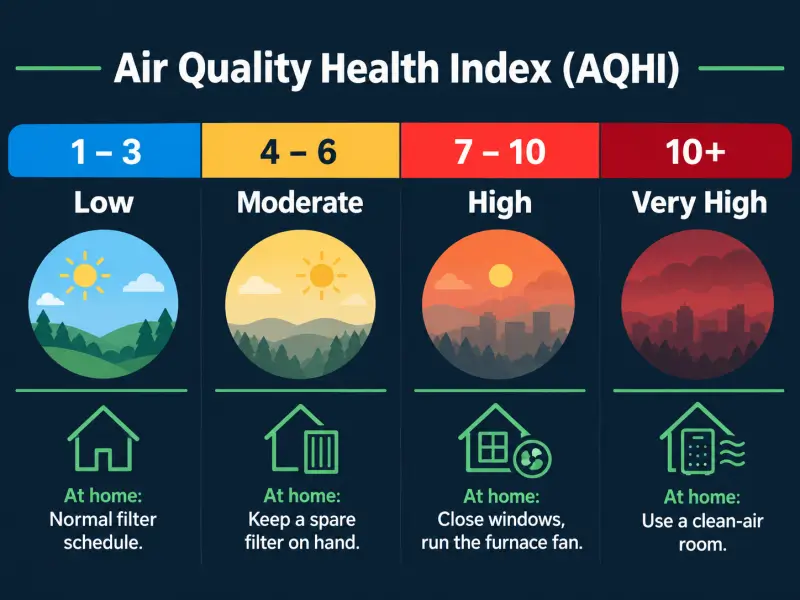
New Brunswick's air quality is usually good. It most often sits at 1 to 3, or "low risk," on Canada's Air Quality Health Index (AQHI). The live map below shows hourly conditions. When wildfire smoke pushes the AQHI to 4 or higher (AQI 100 on U.S.-scale apps), Filterbuy recommends four steps: a MERV 13 furnace filter, the thermostat fan set to On, a portable HEPA air cleaner in each occupied room and a closed-up house. Follow Environment Canada's guidance first.
Key Takeaways
• Canada measures air quality with the AQHI (1 to 10+), not the U.S. AQI (0 to 500). Many apps show U.S. AQI, so numbers differ.
• An AQHI of 1–3 is low risk, 4–6 is moderate, 7–10 is high and above 10 is very high.
• New Brunswick usually reads 1–3. During an August 2025 smoke event, smoke-affected areas registered 7, according to NB Lung.
• Health Canada recommends HVAC filters rated MERV 13 or higher during smoke to remove PM2.5, the fine particles that make up most of smoke.
Is Air Quality Bad in New Brunswick Today?
For most of the year, no. Readings usually sit at 1 to 3, the low-risk range. Check the live map above. AQHI values update hourly, and Environment Canada issues special air quality statements when smoke or pollution reaches the area.
How to Read the New Brunswick Air Quality Map
Official AQHI forecasts cover communities across the province, including Saint John, Fredericton, Moncton, Miramichi, Edmundston, Bathurst, Campbellton and Saint Andrews. Each community value is an average of local stations, so choose the location closest to you.
What Do AQHI Numbers Mean for Your Health?
The Air Quality Health Index gives separate advice for the general public and for people at higher risk. The table compares Environment and Climate Change Canada's current health recommendations for each level.
Table 1: AQHI health messages by risk level
Source: Environment and Climate Change Canada, About the Air Quality Health Index (updated 28 May 2026). At-risk: children, people over 65 and people with health conditions.
AQHI vs. AQI: Why Your App Shows a Different Number
The AQHI and the U.S. Air Quality Index (AQI) are two different scales. Canada's AQHI runs from 1 to 10+ and blends three pollutants into one health-risk number. The U.S. AQI runs from 0 to 500 and reports whichever single pollutant is worst.
aqicn.org, for one, converts New Brunswick's provincial monitoring data to the U.S. EPA AQI scale.
Table 2: AQHI (Canada) vs. U.S. AQI
There is no exact conversion between the two scales. The action line is a Filterbuy recommendation, not an agency threshold.
Find your size: Filterbuy builds every filter to order in American factories it runs itself, in 600+ sizes plus custom air filters, with free shipping to Canada on every order. CTA buttons: Find Your Size | Shop MERV 13 | Subscribe & Save
Supporting Statistics: What the Research Shows
1. 17% more asthma ER visits during Canadian smoke
• CDC tracked about 4,300 U.S. emergency departments during 2023 Canadian smoke.
• Asthma visits ran 17% above expected on 19 smoke days.
• Why it matters: 2023 Quebec fire smoke also reached New Brunswick.
• Source: CDC, Morbidity and Mortality Weekly Report (2023)
2. About 90% of our time is spent indoors
• U.S. EPA estimate for Americans.
• Some pollutants run 2 to 5 times higher indoors than outdoors.
• Source: U.S. EPA, Report on the Environment: Indoor Air Quality
3. Indoor smoke cut to about 22% of outdoor levels
• Tested: a Portland, Oregon home during 2020 wildfire smoke.
• MERV 13 furnace filter alone: indoor PM2.5 at 55% of outdoor.
• MERV 13 plus a HEPA portable air cleaner: 22%.
• Source: PNNL researchers, Pollutants (2024), NIH PubMed Central
How to Get Air Quality Alerts in New Brunswick
Environment Canada's free WeatherCAN app sends AQHI alerts at the level you choose. Advisories only go out at 7, so ECCC suggests sensitive households set alerts at 4–6.
Frequently Asked Questions
Why Does One Website Say New Brunswick Air Is "Unhealthy" When the AQHI Is Low?
The site is likely showing U.S. AQI values, or New Brunswick, New Jersey. Check the scale and the location.
Where Can I See New Brunswick PM2.5 Today?
For live PM2.5, use AQmap or NB Lung's park sensors. For official station readings, use the provincial Air Quality Data Portal.
What MERV Rating Do I Need for Wildfire Smoke?
MERV 13. EPA and Health Canada both recommend MERV 13 or higher in the central system during smoke. Filterbuy recommends making the switch at AQHI 4 or AQI 100.
Can I Use a MERV 13 Filter in My Furnace?
In most homes, yes. EPA notes most furnaces and HVAC systems handle MERV 13 without equipment problems when the filter is replaced often. Just confirm your size.
Glossary
AQHI (Air Quality Health Index): Canada's official 1-to-10+ scale for the short-term health risk of outdoor air, calculated from ozone, nitrogen dioxide and PM2.5.
AQI (Air Quality Index): The U.S. EPA's 0-to-500 scale, which reports the worst single pollutant.
PM2.5: Fine particulate matter 2.5 micrometres or smaller; the main pollutant in wildfire smoke.
Ground-level ozone (O3): A lung irritant formed when sunlight reacts with pollutants on hot days.
Nitrogen dioxide (NO2): A gas produced mainly by burning fuel.
Special air quality statement: An Environment Canada notice about smoke or pollution.
MERV (Minimum Efficiency Reporting Value): A 1-to-16 rating of how well an HVAC filter captures particles; higher is finer.
Portable air cleaner: A standalone device, often HEPA, that cleans one room's air.
HRV (heat recovery ventilator): A ventilator that swaps stale indoor air for fresh outdoor air, keeping heat.
WeatherCAN: Environment Canada's free weather app, with custom AQHI alerts.
Sources
• Environment and Climate Change Canada: About the Air Quality Health Index
• Environment Canada: New Brunswick AQHI provincial summary
• Government of New Brunswick: Air quality monitoring
• Government of New Brunswick: Air Quality Data Portal
• Government of New Brunswick: Fire Watch
• Health Canada: Guidance for Cleaner Air Spaces during Wildfire Smoke Events
• Environment and Climate Change Canada: WeatherCAN
• NB Lung: Air quality monitoring
• City of Saint John: Air quality alert (25 August 2025)
• U.S. EPA: Preparing for Smoke and Heat
• U.S. EPA: Research on DIY Air Cleaners to Reduce Wildfire Smoke Indoors
• CDC: Asthma-Associated ED Visits During the Canadian Wildfire Smoke Episodes, MMWR 2023
• U.S. EPA: Report on the Environment, Indoor Air Quality
• CBC News: Why Nova Scotia's wildfire smoke choked N.B. (August 2025)
• CBC News: Forest fire smoke prompts air quality statement for most of N.B. (June 2023)
• CTV News: Air quality warnings issued in New Brunswick (July 2026)
This page is for general information and is not medical advice. If you have symptoms such as wheezing, chest pain or severe cough, contact a health care provider or call Tele-Care 811, New Brunswick's free, bilingual 24-hour health line. In an emergency, call 911.
About the Author
Michelle Wan is Brand Manager and Air Quality Writer at Filterbuy. She works directly with Filterbuy's manufacturing team, so her advice reflects how filters are built, tested and used in real homes. B.A., University of California, Santa Cruz.
About the Reviewer
David Clark is a Licensed HVAC Technician and CEO of Filterbuy HVAC Solutions.