
Air Quality in British Columbia
Air quality index (AQI⁺) and PM2.5 air pollution in British Columbia •
Live Air Quality Ratings in British Columbia
Live city rankings are temporarily unavailable.
The Right Air Filter For High AQI Days
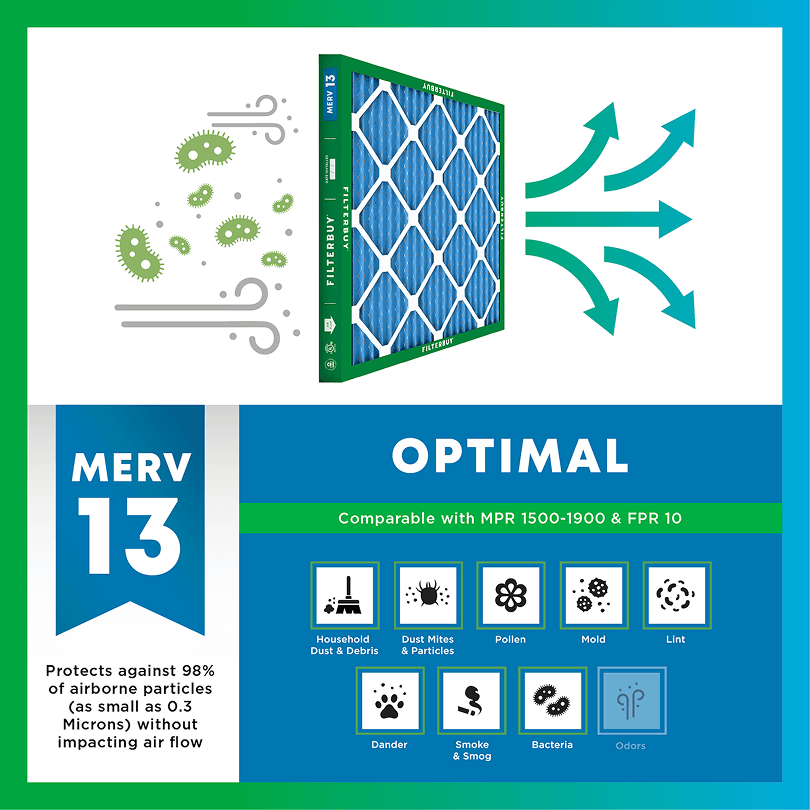
When outdoor air quality drops, the EPA recommends upgrading to a MERV 13 filter — or the highest-rated filter your HVAC system can handle — to help capture more of the fine particulate (PM2.5) that comes with poor air quality. MERV 13 is the highest rating most residential systems can run without restricting airflow.
- Captures PM2.5 and other fine particulates
- Filters ash, soot, and smoke particles
- Rated to capture particles as small as 0.3 microns
- Matches the filter rating the EPA suggests during high-AQI and smoke events

AQI FAQs
What is AQI?
AQI stands for Air Quality Index, the EPA's scale for reporting daily air quality. It runs from 0 to 500. The higher the number, the greater the level of air pollution. Values at or below 100 are generally considered satisfactory; values above 100 mean air quality is unhealthy, first for sensitive groups, then for everyone as numbers climb.
What does AQI measure?
The AQI tracks five major pollutants regulated by the Clean Air Act: ground-level ozone, particle pollution (PM2.5 and PM10), carbon monoxide, sulfur dioxide, and nitrogen dioxide. The reported AQI value reflects whichever pollutant is highest at that time — most often ozone or fine particles (PM2.5).
How is AQI calculated?
Monitoring stations measure pollutant concentrations, and the EPA converts each into a standardized 0–500 score using set breakpoints. Each pollutant gets its own sub-index, and the highest sub-index becomes the reported AQI. That's why a single number can represent different pollutants on different days.
What is a good AQI?
An AQI of 0–50 is rated "Good" — air quality poses little or no risk. 51–100 is "Moderate," acceptable for most people though unusually sensitive individuals may want to limit prolonged outdoor exertion. Anything at or below 100 is generally considered satisfactory air quality.
What does an AQI of 100 (or 150) mean?
100 is the dividing line: at or below it, air quality is satisfactory for the general public. From 101–150, air is "Unhealthy for Sensitive Groups" — people with respiratory conditions, older adults, and children. From 151–200, it's "Unhealthy" and everyone may begin to feel effects.
Why is the AQI bad today?
Short-term AQI spikes usually come from wildfire smoke, temperature inversions that trap pollutants near the ground, high-ozone weather (hot, sunny, stagnant days), or heavy traffic and industrial activity. Check a real-time source like the map on this page to see which pollutant is driving today's reading in your area.
What AQI is bad for running or exercise?
Many runners follow the EPA category lines: below 50, no adjustment needed; 51–100, unusually sensitive people may shorten intense workouts; above 100, sensitive groups are advised to reduce prolonged or heavy outdoor exertion; above 150, that advice extends to everyone. Exercise increases how much air you breathe in, which is why thresholds matter more during workouts.
What AQI is safe to open windows?
A common rule of thumb is to keep windows open when the AQI is under 100 and close them when it climbs above, especially during wildfire smoke events when fine particles are elevated. When windows are closed, running your HVAC system with a fresh filter helps capture particles circulating indoors.
Should I wear a mask based on AQI?
Public health agencies generally suggest considering a well-fitted N95-style respirator outdoors when the AQI exceeds 150, particularly during smoke events. Cloth and surgical masks don't filter fine particles effectively. Follow guidance from your local health department, which may adjust recommendations during severe episodes.
Check Today's Live Real Time Air Quality Index AQI Map In British Columbia Now
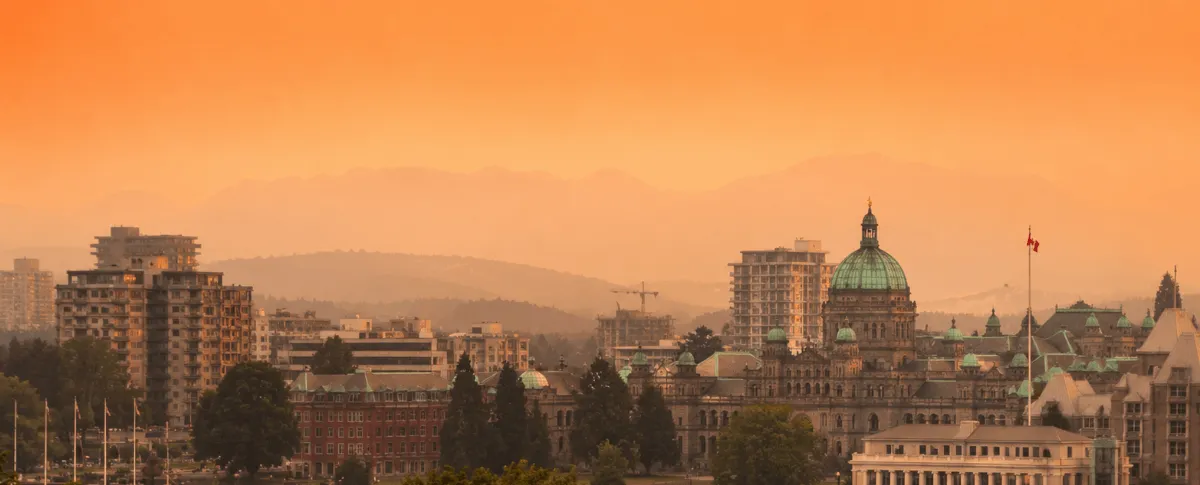
You step outside on a summer morning in British Columbia and the mountains look softer than they should, with the sun glowing a strange shade of orange. That soft-edged haze is usually not fog at all. More often it is fine particle pollution from wildfire smoke, and it carries a health risk you cannot see or smell until it has already reached deep into your lungs. Knowing how safe the air is today starts with one number and the live map that reports it across the province. Filterbuy built this resource to help British Columbians read that number with confidence and protect the air inside their own homes when the smoke rolls in.
Quick Answers: British Columbia Air Quality Right Now
What Is The Air Quality In British Columbia Right Now?
British Columbia reports live air quality on the Air Quality Health Index (AQHI), a scale of 1 to 10-plus from Environment and Climate Change Canada, not the 0 to 500 AQI you may see in some apps. Check the interactive map below for your community's current reading, updated every hour. During wildfire smoke, British Columbia's AQHI-Plus tracks fine particles (PM2.5) hour by hour so the number reflects the real health risk you face.
Top Takeaways
British Columbia's official live metric is the AQHI, a scale of 1 to 10-plus run by Environment and Climate Change Canada and Health Canada, not the United States 0 to 500 AQI.
The AQHI combines three pollutants, ground-level ozone, nitrogen dioxide, and PM2.5, into one health-risk number that updates every hour.
During wildfire smoke, British Columbia switches to AQHI-Plus, which calculates the number from hourly fine-particle pollution for a faster, more accurate warning.
An AQHI of 7 or higher means high health risk. Children, seniors, pregnant people, and anyone with heart or lung conditions should reduce outdoor activity earlier than the general population.
Reducing your exposure is the most effective protection during smoke, and running a MERV 13 furnace filter keeps indoor air cleaner while the event passes.
How British Columbia Measures Live Air Quality
How To Read British Columbia's Live Air Quality Map
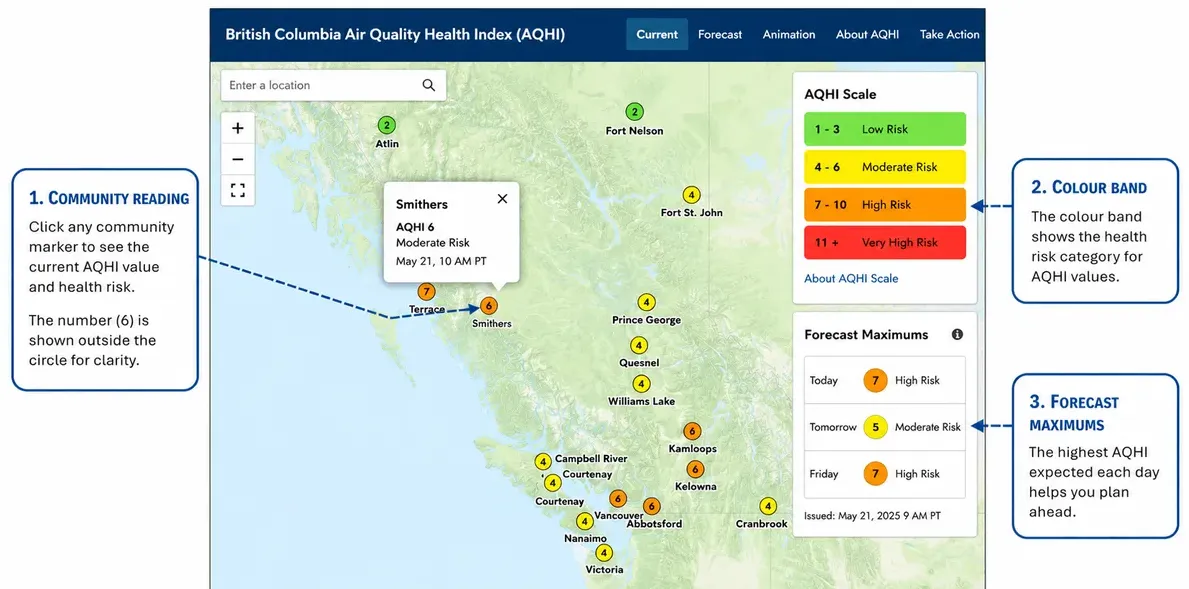
The Province of British Columbia and Environment and Climate Change Canada both publish live air quality maps that show the current AQHI for more than 25 communities, refreshed every 60 minutes. Find your community, read the number and its colour band, then check the forecast maximums for tonight and tomorrow before you plan any time outdoors.
Each community reading is usually an average of nearby monitoring stations, because air pollution shifts from block to block and an average better reflects the air you actually move through during the day. Areas next to busy roads or industry tend to read higher. Environment and Climate Change Canada also notes that live AQHI values arrive too quickly for full quality control, so treat a single reading as a strong guide rather than a laboratory-grade measurement, and watch the trend over a few hours during a fast-moving smoke event.
AQHI Versus AQI: Why Your App And The Government Show Different Numbers
If a weather app shows British Columbia an AQI of 42 while the government shows an AQHI of 4, both can be correct. The two scales were built for different jobs. The AQHI measures the combined health risk of three pollutants on a scale of 1 to 10-plus, while the United States AQI reports the single worst pollutant on a scale of 0 to 500. In British Columbia, the AQHI is the number that health authorities use and the one worth trusting for daily decisions.
Source: Environment and Climate Change Canada and the Province of British Columbia. ECCC = Environment and Climate Change Canada.
What Each AQHI Level Means For Your Health
The AQHI sorts air quality into four health-risk bands. A reading of 1 to 3 is low risk, 4 to 6 is moderate, 7 to 10 is high, and anything above 10 is very high. The higher the number climbs, the stronger the reason to move activity indoors, and at-risk groups such as children, older adults, and people with heart or lung conditions should act one band sooner than everyone else.
Source: Air Quality Health Index health messages, Environment and Climate Change Canada and Health Canada. Wording condensed. Check the live AQHI for full health messages.
Why British Columbia Uses AQHI-Plus During Wildfire Smoke
British Columbia adopted AQHI-Plus in March 2021 because the standard AQHI sometimes under-reported the danger of wildfire smoke. The regular index blends three pollutants over a three-hour average, which can lag when smoke arrives fast and fine-particle levels spike. During a smoke event, AQHI-Plus calculates the number from hourly PM2.5 alone, so the reading climbs quickly and gives you an earlier, more honest warning.
The change followed a pilot that began in 2018 and two peer-reviewed health studies, and British Columbia now applies the AQHI-Plus formula year-round across the province. For a British Columbian, the practical takeaway is simple. When smoke is in the air, the number you see already reflects the fine particles doing the most harm, so you can trust it to guide when to head indoors.
Key Terms: Air Quality In British Columbia
AQHI (Air Quality Health Index): Canada's official air quality scale, from 1 to 10-plus, reporting the combined short-term health risk of ground-level ozone, nitrogen dioxide, and fine particulate matter. Environment and Climate Change Canada and Health Canada operate it.
AQHI-Plus: A British Columbia adjustment to the AQHI, used year-round since March 2021, that calculates the number from hourly PM2.5 during smoke events for a faster health warning.
AQI (Air Quality Index): The United States air quality scale, from 0 to 500, set by whichever single pollutant is worst. Some apps display an AQI for Canadian locations even though Canadian agencies report the AQHI.
PM2.5: Fine particulate matter 2.5 micrometres wide or smaller, small enough to reach deep into the lungs and bloodstream. Wildfire smoke is a major source in British Columbia.
Ground-level ozone (O3): A gas that forms when sunlight reacts with pollution from vehicles and industry, and one of the three pollutants in the AQHI.
Nitrogen dioxide (NO2): A gas produced mainly by burning fuel in vehicles and power plants, and the third pollutant in the AQHI.
After manufacturing filters for over a decade and serving more than two million households, we've learned that the air you breathe indoors is the part you can actually control. When wildfire smoke pushes British Columbia's air quality into the high-risk range, a properly rated filter running in your HVAC system is one of the simplest ways to protect the people under your roof.
— David Heacock, Founder and CEO, Filterbuy
7 Essential Resources For British Columbia Air Quality
The Province of British Columbia's interactive AQHI map, refreshed hourly for communities across the province. Source: British Columbia's official live air quality map.
Current AQHI values and forecast maximums for every reporting community, from the federal agency behind the index. Source: Environment and Climate Change Canada's British Columbia air quality summary.
A plain-language explanation of the 1 to 10-plus scale and the health messages tied to each level. Source: Health Canada's guide to reading the Air Quality Health Index.
Two-day forecasts of ground-level fine-particle smoke from the University of British Columbia's modelling team. Source: the BlueSky Canada wildfire smoke forecast.
Provincial health guidance on reducing your exposure and recognizing smoke-related symptoms. Source: the BC Centre for Disease Control's wildfire smoke and health guidance.
Regional advisories and monitoring for the Lower Mainland, where most British Columbians live. Source: Metro Vancouver's air quality advisories.
Health advice for smoke season, plus the free 8-1-1 line for non-emergency medical questions. Source: HealthLink BC's guide to wildfires and your health.
3 Supporting Statistics On Air Quality And Wildfire Smoke
A 10 µg/m³ rise in wildfire-specific PM2.5 raised respiratory hospitalizations by 1.3 to 10 percent in Southern California, compared with about 1 percent for the same rise in PM2.5 from other sources, which shows wildfire smoke is more harmful than ordinary fine-particle pollution.
Source: Aguilera et al., 2021, Nature Communications
By early August 2023, Canada's record wildfire season had already burned more than 12 million hectares, far above the 25-year average of about 2.2 million hectares for that point in the season, and British Columbia stayed among the hardest-hit provinces through 2025.
Source: NASA Earth Observatory
The World Health Organization estimates that outdoor air pollution caused about 4.2 million premature deaths worldwide in 2019, with fine particulate matter (PM2.5), the main pollutant in wildfire smoke, as the leading driver.
Source: World Health Organization ambient air pollution fact sheet
Final Thoughts And Opinion
Air quality in British Columbia now moves with the fire season, which makes checking the AQHI as ordinary a habit as checking the weather. The households that handle smoke season best treat the index as part of their daily routine. They check the official reading first, and they set up their homes to hold clean air well before the smoke arrives. Wherever you are in the province, from the Lower Mainland to the Interior, the goal stays the same, which is to make the invisible visible and then act on it.
Next Steps To Protect Your Air Today
Bookmark British Columbia's live AQHI map so today's reading is one tap away.
Set free AQHI alerts in Canada's WeatherCAN app so your phone warns you when the risk climbs.
Upgrade your furnace filter to a smoke-rated MERV 13 air filter, and run your HVAC fan during smoke events to keep circulating and cleaning the air.
On a high-risk day, keep windows and doors closed and avoid activities that add indoor particles, such as frying, vacuuming, or burning candles.
Frequently Asked Questions
Breathe Easier On The Next High-AQHI Day
Clean air indoors is the part of smoke season you can control. Filterbuy manufactures furnace filters in more than 600 sizes, built to capture the fine particles that wildfire smoke drives into your home. shop air filters for smoke season at Filterbuy.ca and protect the people under your roof before the next high-AQHI day arrives.