
Winter Weather Advisory: What It Means and How It Differs From a Warning
October 3, 2026
A winter weather advisory is a National Weather Service alert that snow, sleet, freezing rain, or blowing snow is on the way or already falling. It's a step below a winter storm warning, but it isn't an all-clear.
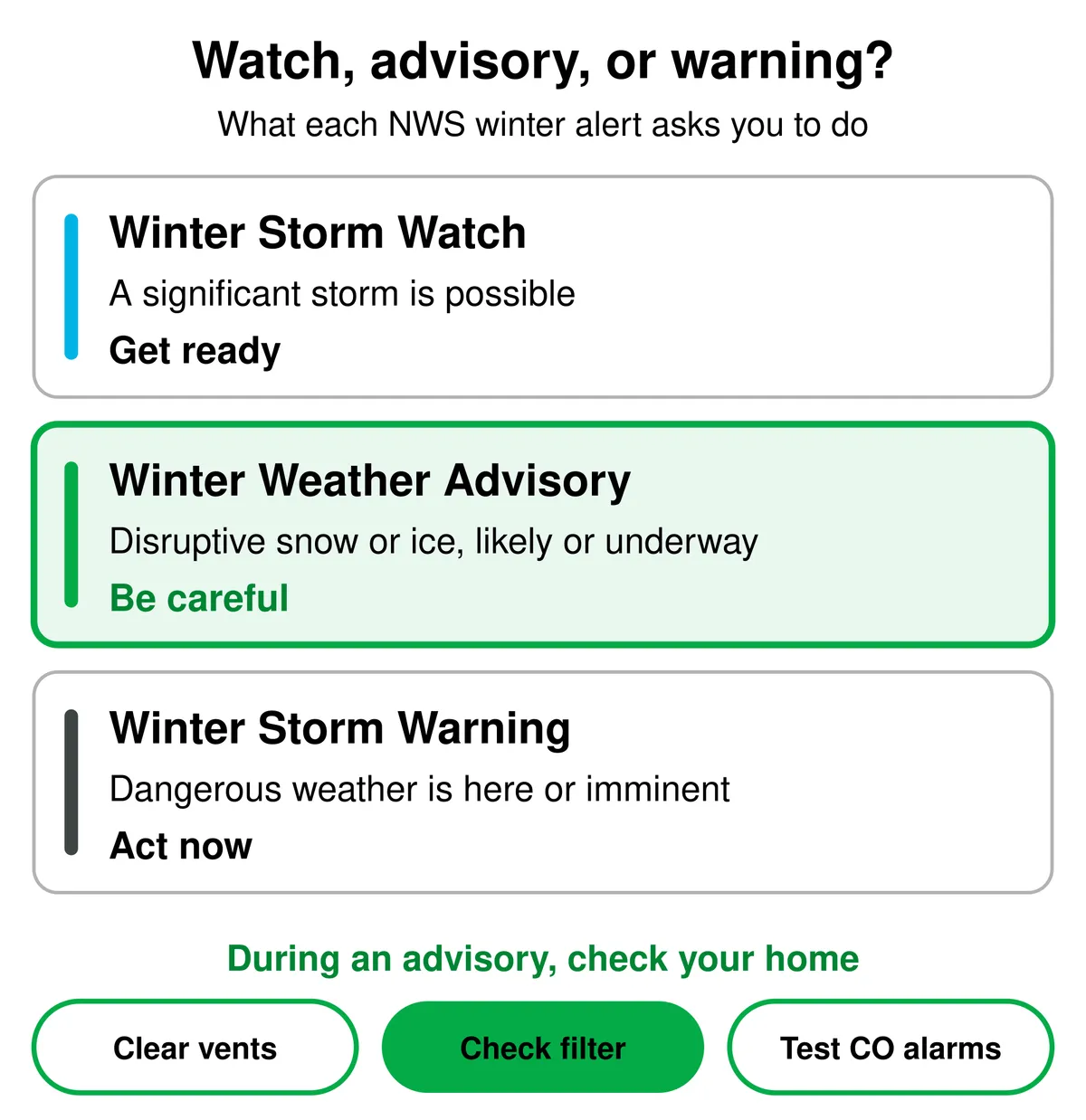
Watch: a significant storm is possible, usually 12 to 48 hours out. Get ready.
Advisory: disruptive snow or ice is likely or underway. Be careful.
Warning: dangerous winter weather is happening or imminent. Act now.
Your furnace can run for hours during an advisory, so clear your vents and check your air filter before the snow starts. Not sure which filter fits your home? Take the quick match quiz below.
Answer a few quick questions and we'll match you to the right filter before the next storm.
Already know your size? Every Filterbuy filter is cut to order in the U.S. and ships within 24 hours.
Shop air filtersTL;DR
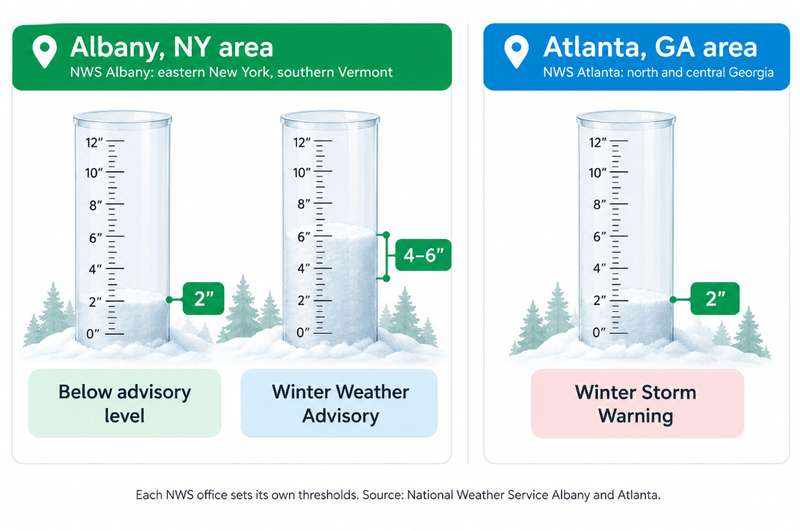
A winter weather advisory is a National Weather Service (NWS) alert that snow, sleet, freezing rain, or blowing snow is on the way or already falling. A winter storm warning means heavier, more dangerous weather. Local offices set the snow totals, so 2 inches can trigger a warning in Atlanta while 4 to 6 inches earns only an advisory near Albany, New York.
Key Takeaways
A winter weather advisory means disruptive wintry weather is expected or underway but stays below warning criteria.
A winter storm warning signals a more dangerous event, while a winter storm watch means a significant storm is possible but not yet certain.
Each local NWS office sets the thresholds for its area, so the same snowfall can bring different alerts in different regions.
At home, an advisory is a good moment to clear your vents and check both your air filter and carbon monoxide alarms.
Where are winter weather advisories active right now? The National Weather Service keeps a running list of active winter weather advisories nationwide and updates it as local offices post changes.
What Is a Winter Weather Advisory?
A winter weather advisory is a National Weather Service alert issued when snow, sleet, freezing rain, freezing drizzle, or blowing snow is expected to cause significant inconvenience but isn't severe enough for a warning. It isn't an all-clear. NWS Amarillo's winter alert definitions point out that advisory-level weather can still threaten life and property when people skip precautions.
Many offices issue an advisory up to about 36 hours ahead, or once the weather has started, as NWS Atlanta's winter weather product guide explains. Since 2017, every advisory has followed the same five-part format, which we walk through below.
Winter Weather Advisory vs. Winter Storm Warning vs. Winter Storm Watch
These alerts differ in severity and in how sure forecasters are. A watch means a significant storm is possible, usually 12 to 48 hours out. A warning means dangerous winter weather is happening or about to. An advisory flags a less severe but still disruptive event that is likely or already underway.
Timing follows NWS Atlanta's definitions, so your office may differ a little. Our shorthand: a watch means get ready, an advisory means be careful, and a warning means act now.
What Triggers a Winter Weather Advisory? It Depends on Where You Live
No single national snowfall number triggers a winter weather advisory. Each NWS Weather Forecast Office sets criteria to fit its local climate and communities. An advisory covers snow, sleet, or ice below the local warning threshold, and many offices issue one for any freezing rain.
The same alert name can mean very different weather depending on where you live. Two inches of snow wouldn't rate an advisory in eastern New York, according to NWS Albany's winter definitions. In metro Atlanta, where plows and drivers see far less snow, those 2 inches bring a winter storm warning. Your area's threshold is on the NWS heavy snow criteria map. Nearly 70% of Americans live in regions averaging more than 5 inches of snow a year, according to the FHWA Road Weather Management Program.
How to Read a Winter Weather Advisory in 30 Seconds
Every NWS winter weather advisory uses the same five-part layout: What, Where, When, Additional Details, and Precautionary/Preparedness Actions. Once you know what each part is for, you can read one in under a minute.
What: the hazard and how much is expected, such as a few inches of snow or a light glaze of ice. This tells you whether to plan for shoveling and salt or for a possible power outage.
Where: the counties or forecast zones covered. A neighboring county can be under a different alert, so check the zone you'll drive through.
When: the start and end times. Finish vent and filter chores before the weather begins.
Additional Details: what the weather will likely affect, such as the morning commute. Watch for any mention of ice, which weighs down tree limbs and power lines.
Precautionary/Preparedness Actions: NWS safety advice for this event.
Older apps may still show retired alert names. In 2017 the NWS folded the Freezing Rain Advisory and Lake Effect Snow Advisory into the winter weather advisory, and in 2024 it renamed the Wind Chill Advisory as the Cold Weather Advisory.
What to Do During a Winter Weather Advisory: A Home Checklist
When an advisory takes effect, give yourself extra time on the road, then turn to the house with what Filterbuy calls an advisory home check: clear snow from vents, check the air filter, keep the heat pump clear, test carbon monoxide alarms, and plan safe backup power.
"During an advisory, your furnace can run for hours without a break, and your air filter does the heavy lifting. Check it before the snow starts and swap it if it looks gray. MERV 8 is fine for most homes, but if you have pets or allergies, MERV 11 is the better pick," says Filterbuy Brand Manager Michelle Wan.
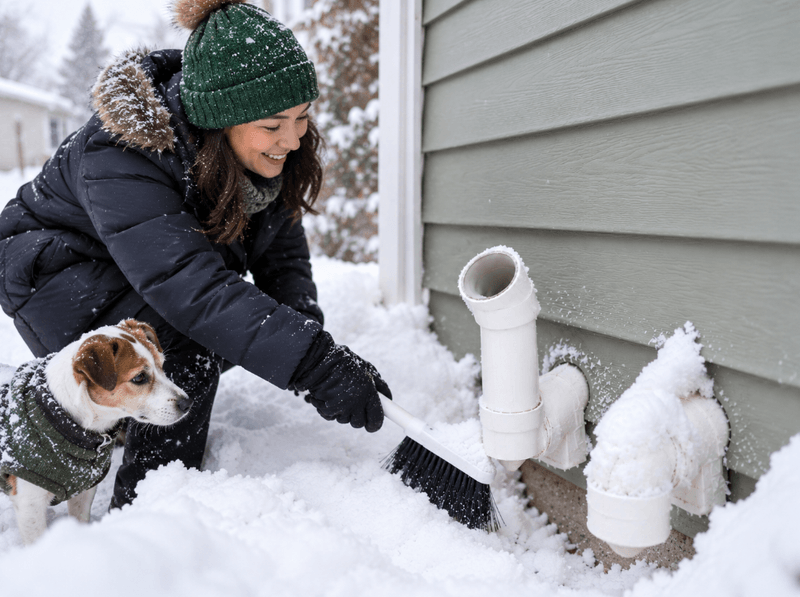
Clear exhaust and intake vents. Snow packed against furnace, fireplace, and dryer vents can trap carbon monoxide inside. After each snowfall, brush the vents clear, as the U.S. Environmental Protection Agency's winter weather and indoor air quality guide recommends.
Check your air filter. Cold snaps keep your furnace or heat pump running longer, and a clogged filter chokes airflow. ENERGY STAR, the EPA and Department of Energy efficiency program, advises checking your filter every month in winter and changing it at least every three months. At Filterbuy, we've seen filters pulled in February that were completely black after just 30 days.
Keep your outdoor heat pump unit clear. Snow, ice, and roof runoff can block airflow around the outdoor unit. NYSERDA, New York's state energy agency, advises keeping the outdoor unit clear of snow, ice, and debris. Brush it off gently, and never chip ice with a sharp tool.
Test your carbon monoxide alarms. The EPA recommends CO alarms outside each sleeping area and on every level, with battery backup for outages.
Plan backup power safely. Run generators outside, at least 20 feet from doors, windows, and vents, per CDC carbon monoxide guidance, and never heat your home with a gas oven.
Pro Tip: Order your filter before the advisory, not during it. Every Filterbuy filter is cut to order in our U.S. plants and ships within 24 hours, yet one ordered once the snow starts can still arrive after the storm. A spare on the shelf from November through March solves that, and filter auto-delivery can keep it stocked.
How a Winter Weather Advisory Affects Your Indoor Air
During a winter weather advisory, windows stay shut and your furnace recirculates the same air for hours, so your HVAC air filter becomes the main barrier against dust and pet dander building up indoors. A clean, properly rated filter keeps that air fresher until the storm passes.
"After shipping millions of filters to homes across the country, we've seen firsthand what winter does to indoor air," says the Filterbuy team.
With pets or allergies, a MERV 11 or MERV 13 filter captures more fine particles. Confirm your system can handle a higher rating, then compare options on Filterbuy's MERV rating chart. Read why indoor air quality gets worse in winter and how often to change your HVAC filter. Before ordering, find your filter size. While you wait out the weather, you can check your local air quality on Filterbuy's live AQI map and sign up for unhealthy-air alerts.
Supporting Statistics: What the Research Shows
1. More than 1,300 people are killed and 116,800 injured each year in crashes on snowy, slushy, or icy pavement. That's 24% of all weather-related crashes. Source: FHWA Road Weather Management Program.
2. Carbon monoxide kills more than 500 Americans each year. Source: CDC, Avoiding Carbon Monoxide Poisoning.
3. Nearly half the energy used in a home goes to heating and cooling, so a dirty filter that makes the system work harder costs real money. Source: ENERGY STAR, Heat & Cool Efficiently.
Frequently Asked Questions
Is a winter weather advisory serious?
It can be. The NWS winter safety guide notes that thousands of people are injured or killed each year in accidents on slippery winter roads.
Can a winter weather advisory be upgraded or extended?
Yes. As the forecast changes, your NWS office can extend it or upgrade it to a winter storm or ice storm warning.
What's the difference between a winter weather advisory and a cold weather advisory?
A winter weather advisory is about snow, sleet, and ice. A cold weather advisory is about dangerous temperatures or wind chills, even when nothing is falling.
Where can I see active winter weather advisories?
Use the NWS list linked near the top of this page, or enter your ZIP code at weather.gov.
Glossary
National Weather Service (NWS): The NOAA agency that issues official U.S. forecasts and weather alerts.
Winter Weather Advisory: An NWS alert for wintry weather that causes significant inconvenience but stays below warning criteria.
Winter Storm Watch: An NWS alert that a significant winter storm is possible.
Winter Storm Warning: An NWS alert that hazardous winter weather is occurring or imminent.
Ice Storm Warning: An NWS alert for damaging ice.
Blizzard Warning: An NWS alert for 35+ mph winds with snow cutting visibility below ¼ mile for 3+ hours.
Cold Weather Advisory: An NWS alert for cold or wind chills that call for caution but fall short of extreme cold.
Freezing rain: Rain that freezes on contact with cold surfaces, coating roads and power lines in ice.
Sleet: Ice pellets that form when raindrops freeze before reaching the ground.
Lake-effect snow: Intense, narrow snow bands formed when cold air crosses warmer Great Lakes water.
Carbon monoxide (CO): An odorless, colorless gas from burning fuel that can build up indoors.
MERV (Minimum Efficiency Reporting Value): A 1–16 rating of how well an HVAC filter captures particles, with higher numbers capturing smaller ones. Filterbuy makes pleated filters in MERV 8, 11, and 13.