
Winter Storm Warning: What It Means, Watch vs. Warning, and Active Alerts
October 2, 2026
What Does a Winter Storm Warning Mean?
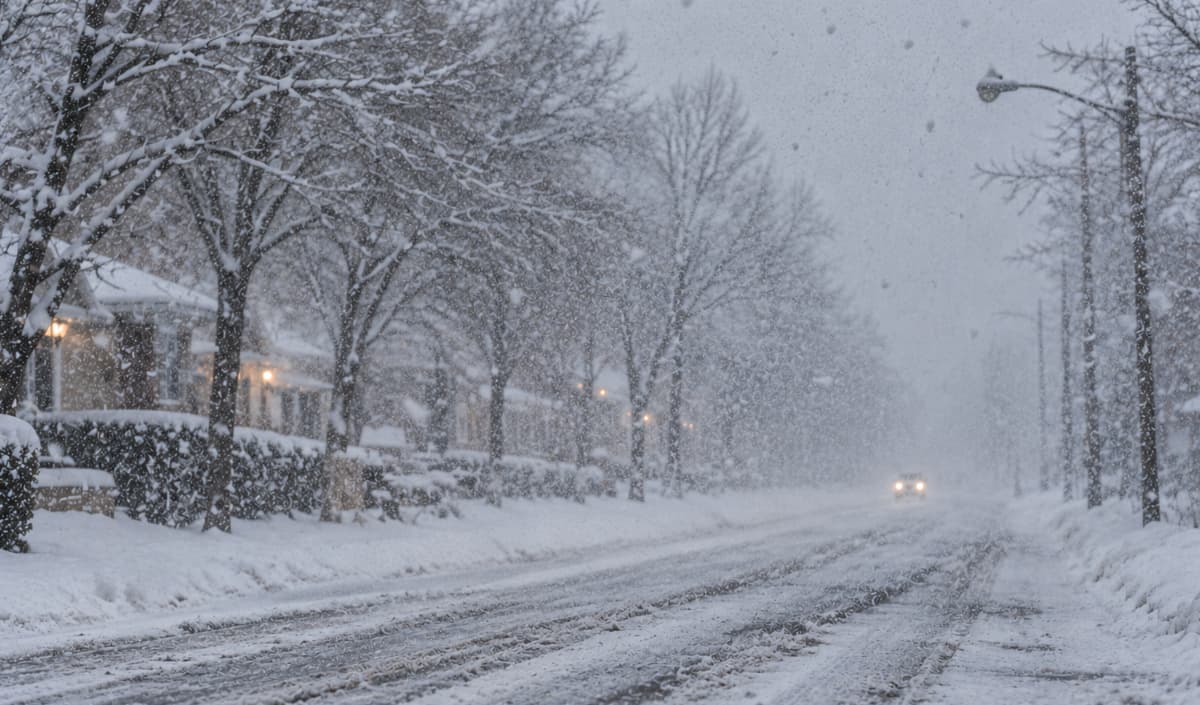
A winter storm warning means the National Weather Service expects heavy snow, sleet, or ice in your area within 12 to 36 hours, or the storm has already started. A watch comes earlier, usually 24 to 72 hours out, when the storm is possible but not certain.
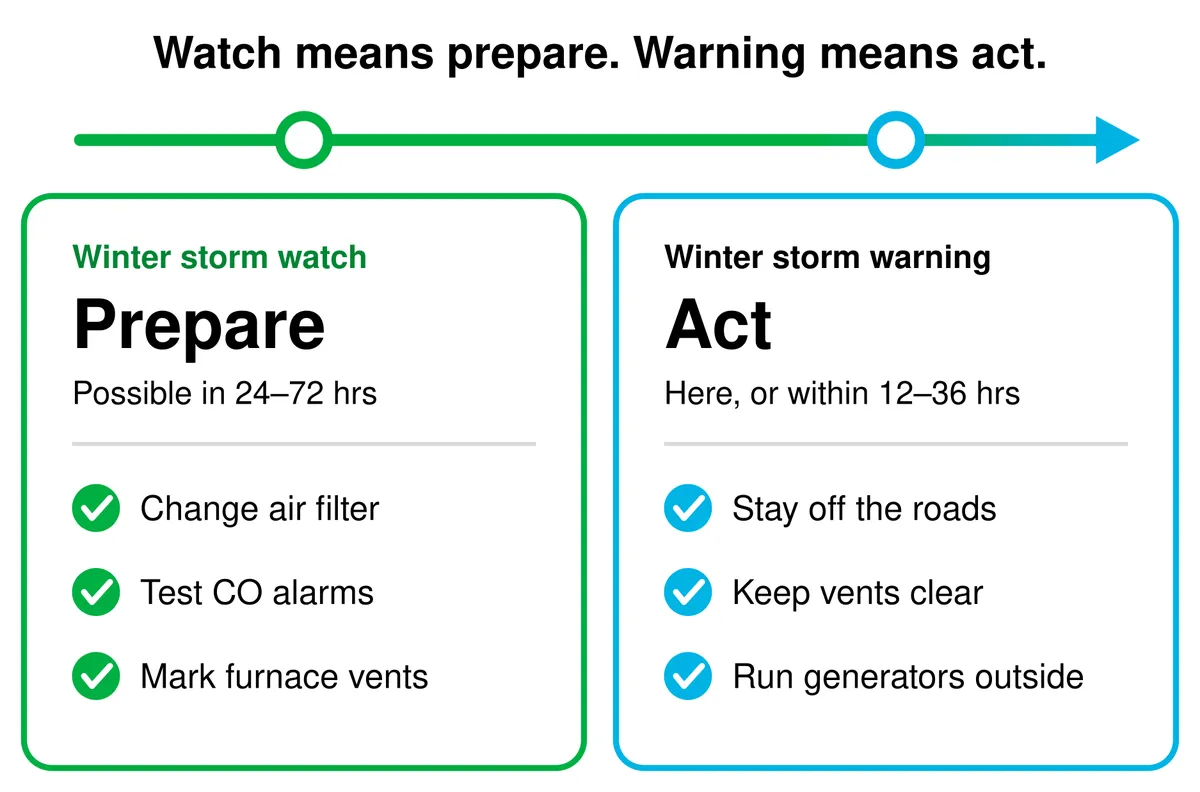
- Watch: prepare. Change your air filter, test CO alarms, and mark furnace vents.
- Warning: act. Stay off the roads, keep vents clear, and run generators only outdoors.
Your furnace may run almost nonstop once the storm hits, so find the right filter now with the quick quiz below.
Answer a few quick questions and we'll match you to the right filter before the storm.
Already know your size? Filterbuy makes every filter to order in the U.S. and ships free in 600+ sizes.
Shop air filters before the stormTL;DR
A winter storm warning means the National Weather Service (NWS) expects heavy snow, sleet, or ice in your area within 12 to 36 hours, or the storm has started. A watch comes earlier, usually 24 to 72 hours out, when that storm is possible but not certain. Once a warning is issued, stay off the roads and keep furnace vents clear. Run generators only outdoors.
Key Takeaways
A winter storm watch means a storm is possible in 24 to 72 hours; a warning means it's underway or expected within 12 to 36 hours.
Snowfall thresholds depend on where you live: about 3 inches in 12 hours in central North Carolina, 7 or more in northern Vermont.
A snow squall warning covers a short, intense whiteout.
"Winter storm emergency" is not an NWS alert. It usually means a government emergency declaration or a city snow emergency.
Before the storm, change your air filter and test your carbon monoxide alarms, then mark your furnace vent pipes with a stake.
How to Check Active Winter Storm Warnings Near You
The fastest check is the National Weather Service's alert map. On weather.gov, enter your city or ZIP code, or click your state, to read the full alert from your local office.
Winter storm warnings don't reach phones as emergency alerts, so keep NOAA Weather Radio or a weather app with NWS alerts on. You can also check your local air quality on our live AQI map.
What Is a Winter Storm Warning?
A winter storm warning is the National Weather Service's way of telling you dangerous winter weather has arrived or is close. Your local office issues one when heavy snow, sleet, ice, or wind-driven snow is expected to reach local winter storm warning criteria within 12 to 36 hours.
How Much Snow Triggers A Winter Storm Warning?
It depends on where you live. Each NWS office sets criteria to match what its communities and road crews can handle. NWS Raleigh warns central North Carolina for about 3 inches in 12 hours, while NWS Burlington waits for 7 inches or more in northern Vermont. Offices may warn for less when timing or ice threatens travel or power.
How To Read The Alert Text
NWS winter alerts use four headings: What, Where, When, and Impacts. Read them in this order:
When: Plan to finish preparing before the start time.
What: Expected snow, sleet, ice, and wind totals.
Impacts: What forecasters expect for roads and power.
Where: Confirm your county or zone is on the list.
Winter Storm Watch vs. Warning: What's the Difference?
The difference comes down to certainty and timing. A watch says a dangerous storm is possible, usually 24 to 72 hours ahead, so prepare. A warning says it's here or imminent, usually within 12 to 36 hours, so act. Lead times vary by office.
Winter Storm Watch Vs. Warning
Source: National Weather Service. Lead times are typical; your local NWS office may issue alerts earlier or later.
A watch means watch the forecast; a warning means take action.
Other Winter Weather Alerts You May See
Local NWS offices also issue blizzard, ice storm, and cold alerts. Since October 2024, Extreme Cold and Cold Weather alerts have replaced the old wind chill alerts, because cold is dangerous with or without wind.
Other Winter Weather Alerts
Source: National Weather Service. Wind chill alerts were renamed Extreme Cold and Cold Weather alerts on October 1, 2024; local criteria vary by NWS office.
What Is a Snow Squall Warning?
A snow squall warning is a short-fused NWS alert for a sudden burst of heavy snow and gusty wind that drops visibility to near zero, usually for 30 to 60 minutes. It covers a small area and mostly affects drivers. The danger is a whiteout over a road that freezes in minutes, which is how highway pileups start.
Since early 2023, only snow squall warnings tagged "Significant" trigger a Wireless Emergency Alert on your phone.
If a squall warning covers the road ahead, wait it out; most pass within an hour. If you can't exit in time, the NWS advises slowing down gradually, turning on headlights and hazard lights, leaving extra space, and avoiding hard braking.
What Is a Winter Storm Emergency?
"Winter storm emergency" isn't an NWS alert. It usually means one of two things. Either a governor or local official has declared a state of emergency, which frees up resources and can bring travel restrictions, or your city has declared a snow emergency, which typically bans parking on marked snow routes so plows can get through.
What to Do When a Winter Storm Warning Is Issued: Your Home Heating Plan
When a winter storm warning is issued, stay home and protect the heating system that keeps you safe. Filterbuy, a U.S. air filter manufacturer since 2013, built this plan, and David Clark of Filterbuy HVAC Solutions reviewed it. Start with your system's weak point, since each type fails differently.
Know Your System's Storm Weak Point
Heating System Storm Weak Points
Based on EPA, CDC, and county safety guidance. Confirm details for your equipment with a licensed HVAC technician.
When A Watch Is Issued (1 To 3 Days Out)
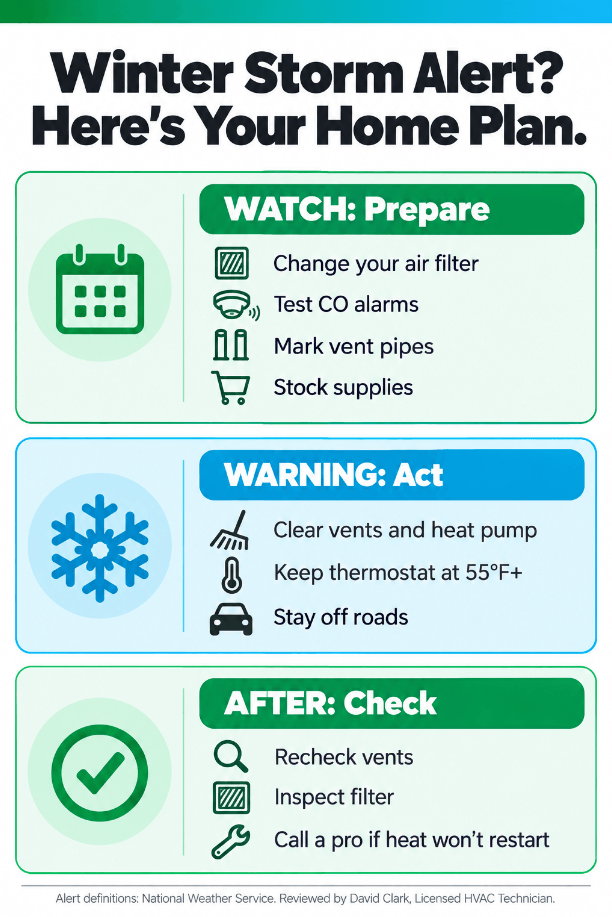
Change your air filter. A sealed-up house recirculates the same air for days, and a furnace running nonstop against a clogged filter can overheat and shut off. See how often to change your air filter.
Test your carbon monoxide and smoke alarms and replace the batteries. You need a CO alarm on every level and outside each sleeping area.
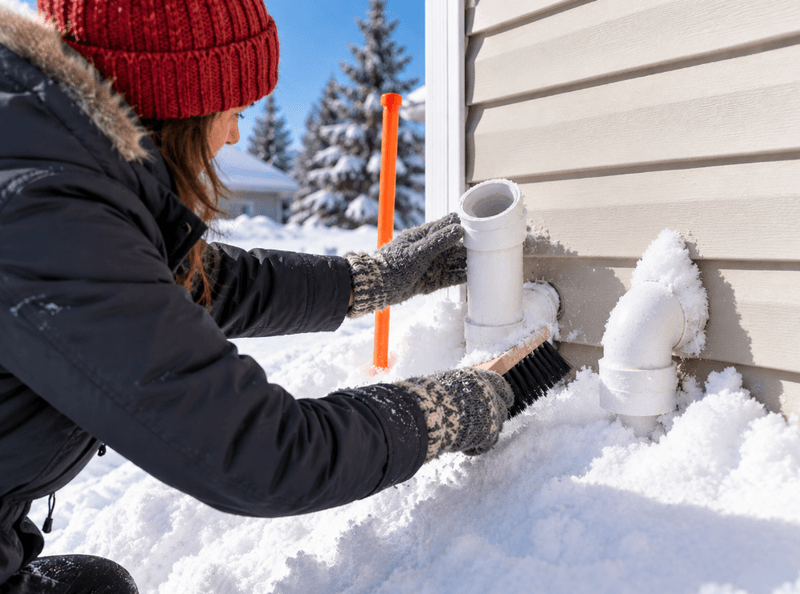
Find your exterior vent pipes. High-efficiency furnaces and boilers usually vent through two white PVC pipes on a side wall, often 12 to 24 inches off the ground. Mark them with a tall stake.
Stock several days of supplies: water, food, medications, flashlights, batteries, and pet supplies.
Test your generator outdoors and store the fuel outside your living space.
When A Warning Is Issued
Keep furnace vent pipes clear. If snow blocks a high-efficiency furnace's intake or exhaust, a safety switch shuts the furnace down, and carbon monoxide can be pushed back inside. New Castle County, Delaware advises clearing a 3-foot radius with a soft broom rather than a shovel and checking again after drifting, as does the EPA.
Clear the heat pump's outdoor unit. Gently brush snow off the top and keep at least 18 inches clear on all sides. Never chip at ice with sharp tools. Steam during a defrost cycle is normal.
Keep the gas meter and dryer vent clear of snow and ice.
Hold the thermostat steady day and night, and never below 55°F, as the American Red Cross recommends to keep pipes from freezing.
If The Power Goes Out
Run generators outdoors only, more than 20 feet from windows, doors, and vents, per the CDC. Never use one in a garage or basement, even with the door open.
Never heat your home with a gas oven, grill, camp stove, or a car running in an attached garage.
Know the signs of CO poisoning: headache, dizziness, weakness, nausea, and confusion. Get everyone into fresh air and call 911.
Each year, more than 400 Americans die from unintentional, non-fire carbon monoxide poisoning, and more than 100,000 visit an emergency department (CDC). No air filter removes this gas, including the activated carbon filters Filterbuy makes. Only a working CO alarm can warn you. Learn why no air filter removes carbon monoxide.
After The Storm
Plows and wind can bury vents again after the snow stops, so check them once more. A blocked vent often shows these warning signs:
The furnace starts, then shuts off within minutes.
You notice unusual smells or extra condensation on windows.
A CO alarm sounds. Get everyone outside first, then call 911.
If the furnace won't restart after you clear the vents and check the filter, call a licensed HVAC technician. After days of nonstop heating, a fresh Filterbuy filter also helps restore your winter indoor air quality.
"Most no-heat calls during a winter storm trace back to two things a homeowner can check in five minutes: a snow-blocked vent pipe and a clogged filter. Clear the vents and swap the filter before the snow starts." — David Clark, Licensed HVAC Technician
Never get caught without a spare filter. Filterbuy makes every filter to order in its U.S. plants and ships it free in 600+ sizes. Find your filter size or set up auto-delivery every 30, 60, or 90 days.
Supporting Statistics
Snowy and icy roads kill 1,300+ people a year.
Another 116,800+ are injured on snowy, slushy, or icy pavement.
Source: Federal Highway Administration
Portable generators cause about 85 CO deaths a year.
81% of those deaths happen at home.
Storm power outages are the top reason people run them.
46% of home heating fires happen December–February.
Heating equipment is a leading cause of U.S. home fires.
Frequently Asked Questions
Will my phone alert me to a winter storm warning?
Usually not. The NWS doesn't send Wireless Emergency Alerts for winter storm, blizzard, or ice storm warnings; only "Significant" snow squall warnings trigger one. Use a weather app, NOAA Weather Radio, or your county's alert sign-up.
Should I change my furnace filter before a winter storm?
Yes, if it's due within a few weeks. That's Filterbuy's rule of thumb, since your furnace may run almost nonstop once the storm hits.
How long does a winter storm warning last?
As long as the storm is expected to. Every warning lists start and end times, and your NWS office can extend, expand, or cancel it as the storm changes.
What's the difference between a blizzard warning and a winter storm warning?
A blizzard warning targets wind and visibility, not snow totals. A winter storm warning targets how much snow, sleet, or ice will fall.
Is it safe to use a space heater during a winter storm?
Yes, with care. The EPA advises an electric heater with automatic shut-off, at least 3 feet from anything that can burn, plugged straight into the wall.
How do I keep pipes from freezing if the power goes out?
Let taps on exterior walls drip, and open cabinet doors so warmer air reaches the pipes, as the EPA and American Red Cross recommend.
Sources
NWS Burlington, VT: Expanded winter weather terminology and warning criteria
NWS: Revised watch, warning, and advisory products for cold (2024)
Federal Highway Administration: Snow and ice road weather statistics
Glossary
National Weather Service (NWS): The federal agency, part of the National Oceanic and Atmospheric Administration (NOAA), that issues official U.S. weather warnings.
Winter Storm Watch: An NWS alert that a hazardous winter storm is possible.
Winter Storm Warning: An NWS alert that a hazardous winter storm is occurring or imminent.
Snow Squall Warning: A short-fused NWS alert for brief, intense snow and wind causing near-zero visibility.
Wireless Emergency Alert (WEA): A government alert pushed to phones in an affected area.
High-efficiency furnace: A furnace rated about 90% AFUE (Annual Fuel Utilization Efficiency) or higher that vents through side-wall PVC pipes.
Carbon monoxide (CO): An odorless, colorless, poisonous gas produced by burning fuel.