Why Is One Room Always Colder? 8 Causes and Fixes (and When a Mini Split Makes Sense)
October 21, 2026
One room runs colder than the rest of the house when it gets too little warm air, loses heat too fast, or both. Start with the cheapest check: your air filter, then your vents and return air path.
A gap of 6°F or more is worth fixing. If the room is an addition, bonus room, or garage conversion your ducts were never built to reach, a ductless mini split can heat and cool it without new ductwork.
Why one room runs cold
It’s one of two problems — or both.
Too little
warm air gets in
Check:
- ●Air filter
Cheapest fix — start here - ●Vents and dampers
- ●Return air path
- ●Duct leaks
Heat escapes
too fast
Check:
- ●Insulation
- ●Drafts and air leaks
- ●Windows and sun
Still cold after the easy fixes?
↓
Is a mini split right for your cold room?
Answer a few quick questions and we’ll match you to the right system for your space.
Already know what you need? Shop mini split systems →
A room stays colder than the rest of the house when it gets less warm air, loses heat faster, or both. Filterbuy is a U.S. manufacturer of HVAC air filters: we check the filter first. It's also the cheapest fix. Work through the eight causes below before buying anything.
TL;DR
A cold room is short on warm air, losing heat too fast, or both. Start with the filter and vents, which cost little. If the room was never designed into your duct system, a mini split is often the best fix.
Key Takeaways
A clogged air filter cuts airflow to every room, and the room farthest from the furnace feels it first.
In Filterbuy's testing, a 4-inch MERV 13 filter has roughly the same airflow resistance as a 1-inch MERV 8.
A 2°F to 3°F gap between rooms is normal; a room 6°F or more colder than the rest is worth fixing.
Closing vents in unused rooms tends to raise energy use in homes with ducts outside the living space, according to Lawrence Berkeley National Laboratory.
Rooms over garages, bonus rooms, and additions have more exposed surfaces and sit at the far end of the duct system.
Why Is One Room Colder Than the Rest of the House? Find Your Cause Fast
A simple test tells you where to start. Put one thermometer in the cold room and one beside your thermostat, then read both while the heat runs and an hour after it stops.
How big a gap is normal? A U.S. Department of Energy Building America field study of 37 homes in a hot-humid climate found rooms averaged 2.2°F apart in single-story homes and 3.3°F in two-story homes, staying within 6°F of each other 95% of the time. Our rule of thumb at Filterbuy: if the gap widens when the heat comes on, suspect airflow (causes 1 to 5). If it holds or grows on the coldest nights, suspect heat loss (causes 6 and 7).
1. A Clogged Air Filter Is Choking Airflow
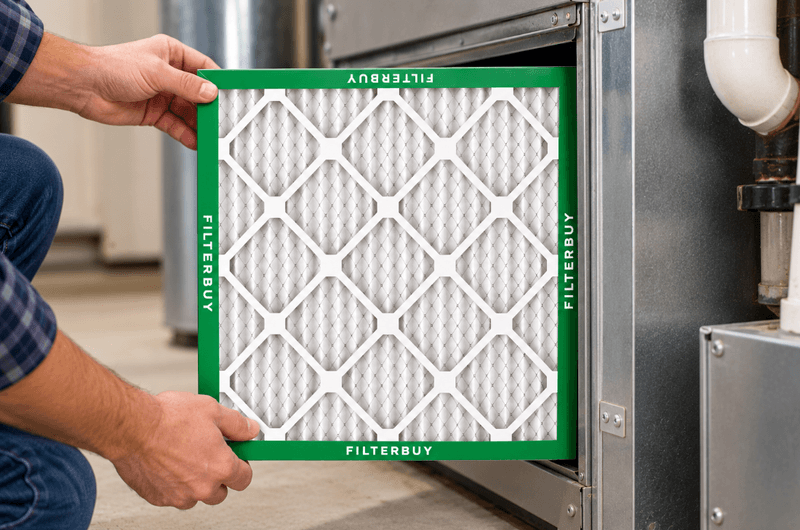
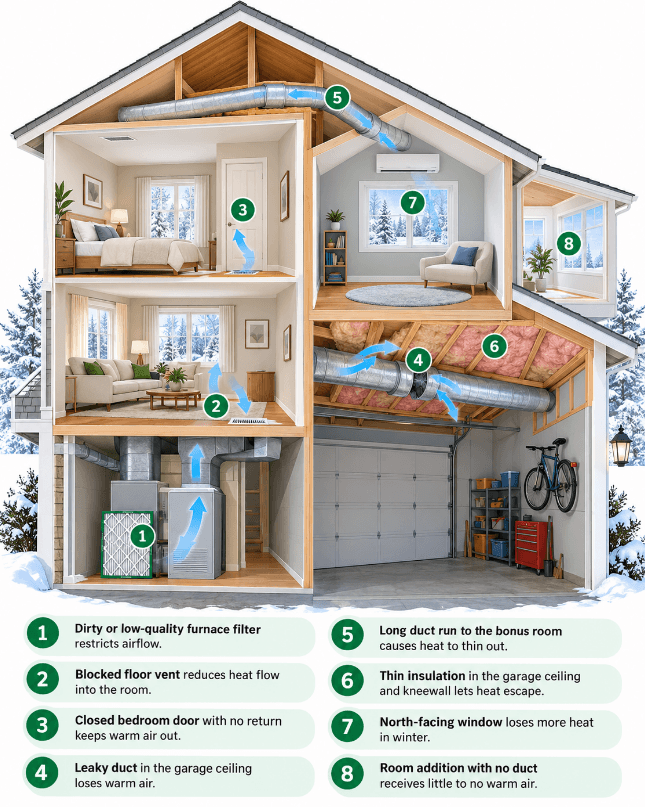
A dusty filter resists airflow, so the room at the end of the longest duct run gets whatever warm air is left. Pull the filter and hold it against white paper. If it looks gray and matted, replace it. A 1-inch or 2-inch pleated filter typically lasts 60 to 90 days, or 30 to 45 with a pet.
Also check for a second filter behind another return grille, and close any loose filter door, a leak ENERGY STAR lists among common duct problems. Our support team suggests dating the frame and comparing it to a new filter after 30 days (how often to change your air filter).
Pro tip from the Filterbuy plant floor: Order the nominal size printed on your old frame. We cut every filter about half an inch under it so it seats without gaps (how to find your air filter size).
From the Filterbuy test lab: In our testing of 20x25 filters at 1,000 CFM, a 1-inch MERV 13 starts at about 0.22 inches of water gauge, double a 1-inch MERV 8 (0.10), while a 4-inch MERV 13 starts at 0.11. If your slot fits a thicker filter, upgrade depth before MERV (MERV ratings and pressure drop).
2. Supply Vents Are Closed or Blocked
A vent that's partly closed or hidden behind furniture can't deliver its share of heat. Open the damper and hold a tissue over it while the heat runs; it should flutter.
Don't close vents elsewhere to compensate. A Lawrence Berkeley National Laboratory study found closing registers raised energy use in homes with ducts outside the living space, because extra duct pressure forces more heated air out through leaks.
3. The Room Has No Path for Air to Return
Warm air flows into a room only as fast as air flows out. In bedrooms without a return grille, closing the door chokes the only exit. If the room warms with the door open, a technician can add a transfer grille or jumper duct.
4. Ducts Are Leaking or Disconnected
In a typical house, 20 to 30 percent of duct air is lost to leaks and poor connections, according to ENERGY STAR. Seal reachable joints with mastic or foil tape, not cloth duct tape, and insulate ducts in unheated spaces.
5. The Duct Run Is Too Long or the System Is Out of Balance
The farthest room gets the least air, because every foot of duct and every bend adds resistance. A technician can rebalance the dampers or resize the duct.
6. Insulation Is Thin or Outside Air Is Leaking In
Some rooms get enough warm air and simply lose it faster. If an exterior wall feels noticeably cooler than one in a comfortable room, suspect thin insulation. Weatherstripping and outlet gaskets stop small drafts (ENERGY STAR's seal and insulate guide), and an energy audit finds the rest.
7. Windows and Sun Exposure Are Working Against the Room
North-facing rooms and single-pane windows lose heat fastest. Close thermal curtains at night and open them on sunny days.
8. The Room Was Never Designed Into Your Heating System
Additions and garage conversions often hang off a system sized for the original house; a room-by-room load calculation (ACCA Manual J) shows whether your furnace can serve them. A smart thermostat with a remote room sensor keeps a warm hallway from shutting the heat off early.
Why Rooms Over Garages, Bonus Rooms, and Additions Run Cold
A room over a garage faces cold on more sides than any other: an unheated garage below, attic beside it, and usually the longest duct run. Fix it in this order:
Seal and insulate ducts that pass through the garage or attic.
Insulate the floor over the garage.
Air-seal the kneewalls and attic access.
Make sure the room has a return.
Sealing the garage ceiling also keeps car exhaust out of the room.
When Does a Mini Split Make Sense for a Cold Room?
A ductless mini split makes sense when your system can't reach the room affordably, as with many additions and garage conversions. The U.S. Department of Energy's Building America Solution Center notes ductless units often serve additions because they skip extending ductwork. Full disclosure: Filterbuy sells ductless mini split systems, but rules out a filter swap first.
A mini split avoids duct losses but costs more up front, and an oversized unit will short cycle. The federal 25C tax credit covers only installations through December 31, 2025, so check the ENERGY STAR Rebate Finder for local rebates.
*Relative up-front cost for one room.
A typical installed mini split runs $3,000 to $8,000 or more, according to Filterbuy's mini split pros and cons guide. For a space heater in the meantime, follow CPSC guidance: plug it into a wall outlet, keep it 3 feet from anything flammable, and turn it off before bed.
When to Call an HVAC Pro
Call a licensed technician if the room stays cold after the free fixes, or sooner if a duct is disconnected or you smell burning. If a carbon monoxide alarm sounds, leave the house, then call 911. In Florida, our own service team at Filterbuy HVAC Solutions seals ducts and installs ductless systems.
Supporting Statistics
1. Space heating accounted for 42% of energy use in U.S. homes in 2020, more than any other end use. Source: U.S. Energy Information Administration, 2020 Residential Energy Consumption Survey.
2. Sealing air leaks and adding insulation can save up to 10% on annual energy bills. Source: U.S. EPA ENERGY STAR, Seal and Insulate.
3. Portable heaters were involved in an average of 1,600 home fires a year from 2020 to 2022, with about 70 deaths and 150 injuries annually. Source: U.S. Consumer Product Safety Commission, January 2026.
Frequently Asked Questions
Why Is My Bedroom Colder Than the Rest of the House at Night?
A closed door blocks its only return path. To fix a cold bedroom, leave the door cracked overnight; if it warms, ask about a transfer grille.
Can a Higher-MERV Filter Make a Cold Room Worse?
It can on systems not built for the extra resistance. In Filterbuy's testing, a 4-inch MERV 13 resists airflow like a 1-inch MERV 8, so go thicker if your slot allows.
How Do I Heat a Room Addition Without Ductwork?
Insulate and air-seal it, then add a ductless mini split sized for the room. The DOE notes mini splits often serve additions because they need no new ducts.
Why Is My Bonus Room Cold in Winter and Hot in Summer?
It's exposed on more sides and sits at the end of a long duct run, so it loses heat in winter and gains it in summer. Sealing ducts and insulating help year-round.
How Often Should I Check My Filter If One Room Runs Cold?
Check it monthly in the heating season and replace a 1-inch or 2-inch pleated filter every 60 to 90 days, sooner with pets. Filterbuy auto-delivery can handle that schedule.
Glossary
MERV rating: Minimum Efficiency Reporting Value, a 1–16 filter capture scale.
Return air grille: The opening that pulls room air back to the system.
Balancing damper: A plate inside a duct branch that controls airflow to a room.
Transfer grille / jumper duct: An opening or short duct that lets air leave a closed room.
Ductless mini split: A heat pump that heats and cools rooms without ducts.
ACCA Manual J: The standard method for calculating each room's heating needs.
Short cycling: Equipment turning on and off too often.
Inches of water gauge: The unit for a filter's airflow resistance.
Keep Warm Air Flowing to Every Room
"I don't want anyone to feel like they need an HVAC license just to pick the right filter. My job is to give you the straight answer, explain why it matters, and let you get back to your day."
— Michelle Wan, Brand Manager and Air Quality Writer, Filterbuy
We make every Filterbuy filter in our own U.S. plants, in 600+ sizes. Shop your exact Filterbuy filter size, order a custom air filter for an odd slot, or set up auto-delivery so a fresh filter arrives before airflow drops.