
Wind Chill Chart: Fahrenheit And Celsius Tables With Frostbite Times
October 27, 2026
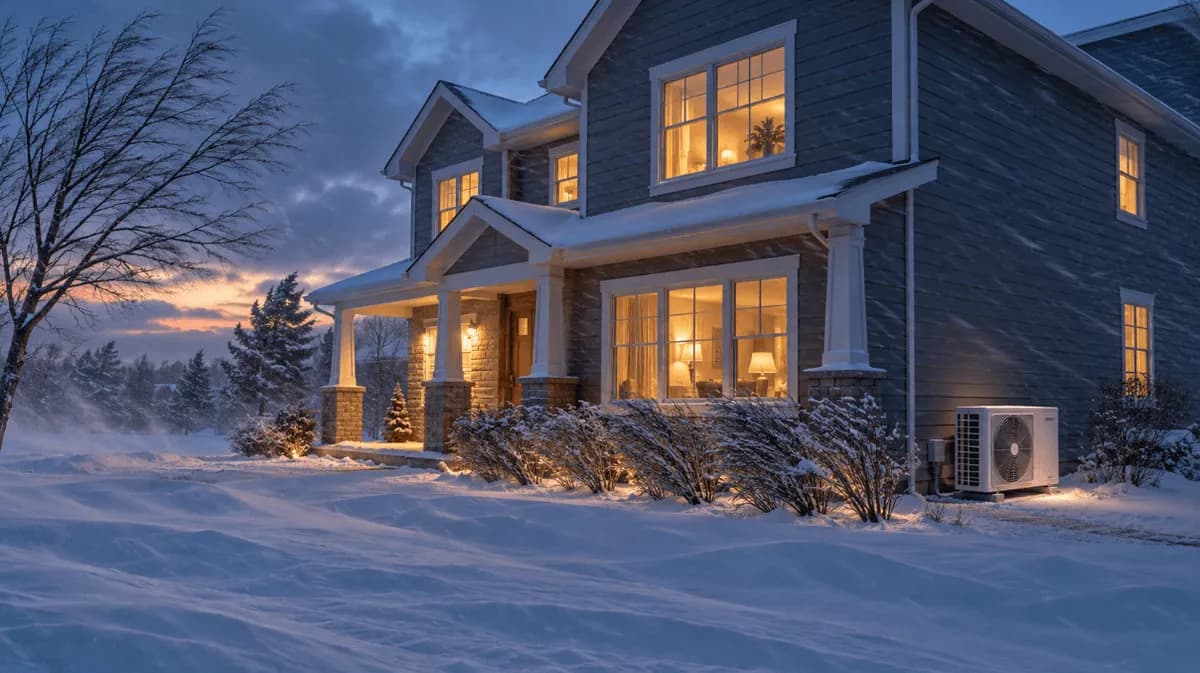
Before a windy cold snap, check two things at home: the gaps that let cold air in, and the air filter your furnace pulls that air through.
Wind pushes cold air through gaps around windows, doors and the attic, so your heating system runs longer to keep up. Longer run times pull more air through your filter, which means it loads faster than usual. Check it monthly through winter, and swap it before a stretch of below-zero wind chills, when your system is about to run its longest. Filterbuy pleated filters come in MERV 8, MERV 11 and MERV 13 in hundreds of sizes. Your HVAC manual lists the highest MERV rating your system can handle.
Shop Your Filter Size Before The Cold Snap
Fast and free 2-day delivery to most US states.
Wind chill on exposed skin when the air temperature is 0°F
Your Pipes And Furnace Still Sit At 0°F
Dress for the wind chill. Protect your home for the air temperature.
Wind chill values: NWS formula. Frostbite threshold: ECCC Wind Chill Index.
Answer a few quick questions and we'll match you with the right filter for winter.
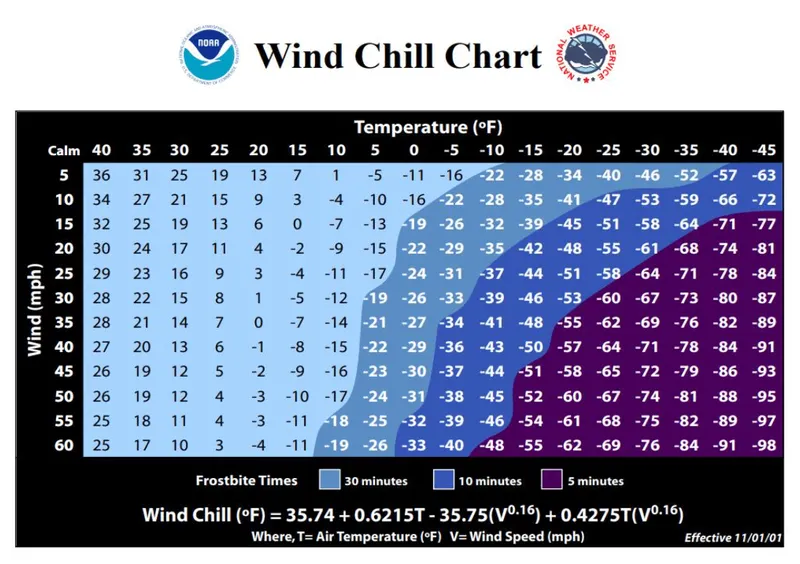
A wind chill chart shows how cold the air feels on exposed skin once wind and temperature work together. Find the air temperature along the top and the wind speed down the side. Where they meet is the wind chill. At 0°F with a 15 mph wind, the wind chill is -19°F, cold enough for exposed skin to freeze in 30 minutes, according to th e National Weather Service.
TL;DR
Wind chill is the "feels like" temperature for bare skin, calculated with the formula the National Weather Service (NWS) has used since 2001. The charts below cover °F and °C and show where frostbite can start within 30 minutes. Let wind chill guide how you protect people and pets, and air temperature guide how you protect your home.
Key Takeaways
The NWS wind chill formula applies only at 50°F or colder with wind faster than 3 mph.
In winds of 15 mph or more, frostbite can start within 30 minutes above 0°F, per the NWS formula and ECCC thresholds.
Wind chill applies to skin, not to pipes or HVAC equipment, according to the NWS.
Wind Chill Chart In Fahrenheit From The NWS And NOAA
This Fahrenheit chart uses the formula the National Weather Service adopted on November 1, 2001. The NWS is part of the National Oceanic and Atmospheric Administration (NOAA). Every value comes from the NWS formula and matches the official NWS chart. The color bands follow ECCC frostbite thresholds instead of NWS shading.
| Wind | 40°F | 30°F | 20°F | 10°F | 0°F | -10°F | -20°F | -30°F | -40°F |
|---|---|---|---|---|---|---|---|---|---|
| 5 mph | 36 | 25 | 13 | 1 | -11 | -22 | -34 | -46 | -57 |
| 10 mph | 34 | 21 | 9 | -4 | -16 | -28 | -41 | -53 | -66 |
| 15 mph | 32 | 19 | 6 | -7 | -19 | -32 | -45 | -58 | -71 |
| 20 mph | 30 | 17 | 4 | -9 | -22 | -35 | -48 | -61 | -74 |
| 25 mph | 29 | 16 | 3 | -11 | -24 | -37 | -51 | -64 | -78 |
| 30 mph | 28 | 15 | 1 | -12 | -26 | -39 | -53 | -67 | -80 |
| 40 mph | 27 | 13 | -1 | -15 | -29 | -43 | -57 | -71 | -84 |
| 50 mph | 26 | 12 | -3 | -17 | -31 | -45 | -60 | -74 | -88 |
| 60 mph | 25 | 10 | -4 | -19 | -33 | -48 | -62 | -76 | -91 |
Frostbite time. Amber: 10–30 minutes. Red: 5–10 minutes. Bold red: 5 minutes or less.
Compare it with the NWS wind chill chart page. The formula, with T in °F and V in mph:
Wind chill (°F) = 35.74 + 0.6215T - 35.75(V0.16) + 0.4275T(V0.16)
How To Read A Wind Chill Chart
You need two numbers from any forecast: air temperature and sustained wind speed.
Find the air temperature in the top row. Between columns, use the colder one.
Find the sustained wind speed in the left column.
Read the wind chill where they meet.
At 10°F with a 25 mph wind, the chart reads -11°F. Bright sunshine can add 10°F to 18°F, the NWS says, but plan around the chart value.
The NWS formula also shows two patterns. A 15 mph wind drops the felt temperature over half as far as a 60 mph wind. And wind bites harder the colder it gets: going from 5 to 20 mph lowers the wind chill 6°F at 40°F but 17°F at -40°F.
Wind Chill Chart In Celsius And Km/H
Canada reports wind chill in Celsius, with wind in kilometers per hour (km/h). Environment and Climate Change Canada (ECCC), Canada's national weather agency, uses the same 2001 formula.
| Wind | 0°C | -5°C | -10°C | -15°C | -20°C | -25°C | -30°C | -35°C | -40°C |
|---|---|---|---|---|---|---|---|---|---|
| 10 km/h | -3 | -9 | -15 | -21 | -27 | -33 | -39 | -45 | -51 |
| 20 km/h | -5 | -12 | -18 | -24 | -30 | -37 | -43 | -49 | -56 |
| 30 km/h | -6 | -13 | -20 | -26 | -33 | -39 | -46 | -52 | -59 |
| 40 km/h | -7 | -14 | -21 | -27 | -34 | -41 | -48 | -54 | -61 |
| 50 km/h | -8 | -15 | -22 | -29 | -35 | -42 | -49 | -56 | -63 |
| 60 km/h | -9 | -16 | -23 | -30 | -36 | -43 | -50 | -57 | -64 |
Same color key as Table 1, from the ECCC Wind Chill Index.
The metric formula uses T in °C and V in km/h. To convert mph to km/h, multiply by 1.609.
Wind chill = 13.12 + 0.6215T - 11.37(V0.16) + 0.3965T(V0.16)
Wind Chill Chart For Frostbite: How Fast Can Exposed Skin Freeze?
The lower the wind chill, the less time skin has. On the ECCC scale, skin can freeze within 30 minutes at a wind chill of -28 and in under 2 minutes at -55 or colder. The NWS notes that frostbite needs air below freezing, but hypothermia can strike above it.
| Wind Chill (°C) | Approx. (°F) | Risk | Skin Can Freeze In |
|---|---|---|---|
| -28 to -39 | -18 to -38 | High | 10–30 minutes |
| -40 to -47 | -40 to -53 | Very high | 5–10 minutes |
| -48 to -54 | -54 to -65 | Severe | 2–5 minutes |
| -55 and colder | -67 and colder | Extreme | Under 2 minutes |
Source: ECCC. °F values converted from °C.
Frostbite does not need temperatures below 0°F. The NWS formula shows the air temperature at which each wind speed reaches ECCC's high-risk wind chill of -28 (about -18°F). At 15 mph and above, that starting line sits above 0°F.
| Wind Speed | Air Temperature Where Skin Can Freeze Within 30 Minutes |
|---|---|
| 5 mph | -7°F |
| 15 mph | 1°F |
| 20 mph | 3°F |
| 30 mph | 5°F |
| 60 mph | 10°F |
Calculated with the NWS formula and the ECCC high-risk threshold, rounded.
Early frostbite starts with redness or pain, then the skin turns white or grayish-yellow and feels firm or waxy, according to frostbite prevention guidance from the Centers for Disease Control and Prevention. Move the person somewhere warm and get medical care. Avoid rubbing the skin or using direct heat.
What Wind Chill Does And Does Not Do To Your Home
Wind chill describes heat loss from skin, not from objects. Wind cools pipes and heat pump coils faster but cannot push them below the air temperature. At -5°F with a -31°F wind chill, the NWS notes, a car radiator stays at -5°F.
Filterbuy uses a two-number rule for windy cold. Plan time outdoors for your family and pets around the wind chill. Plan home protection around air temperature and wind speed, because wind drives cold air indoors.
| Part Of Your Home | Does Wind Chill Apply? | What To Do |
|---|---|---|
| Water pipes | No, but wind cools pipes in exterior walls faster. | Seal gaps where outside air reaches pipes. |
| Heat pump outdoor unit | No, but wind drifts snow against the coil. | Keep the unit clear of snow and ice. |
| Furnace side-wall vents | No, but blowing snow can block them. | Check vents after windy storms. |
| Whole-house heat loss | Indirectly. Wind pushes cold air through gaps. | Weatherstrip drafts and seal attic gaps. |
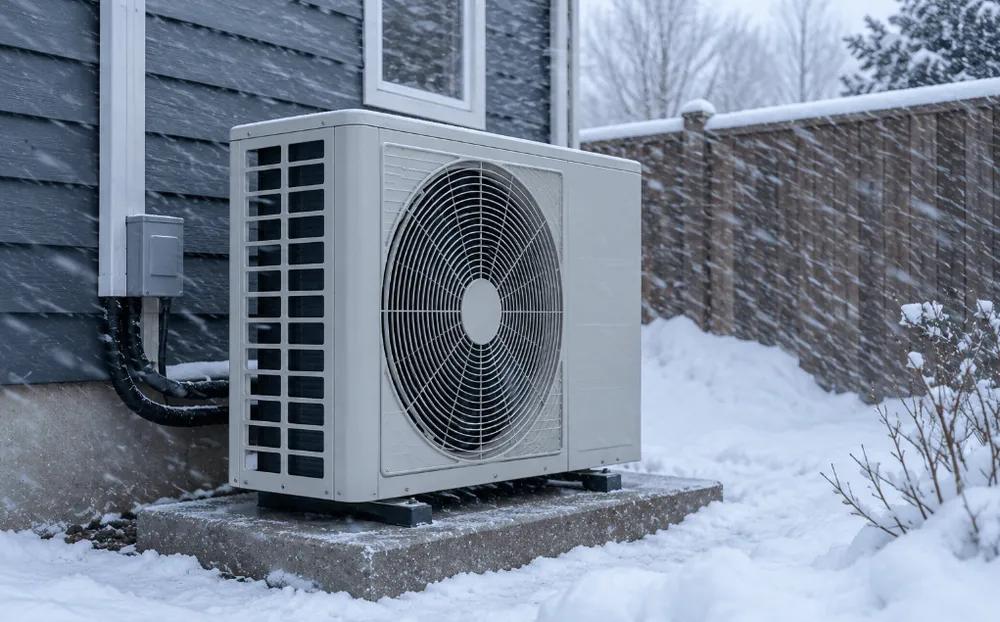
When a furnace runs constantly in extreme cold, air leaks can be to blame, and fixing drafts and air pressure imbalances eases the load. Snow drifts can also block high-efficiency furnace vents, so learn to clear a frozen furnace vent pipe safely. Heat pump owners should know why a heat pump filter can freeze in winter.
As an air filter maker, Filterbuy watches one effect of windy cold closely: longer run times pull more air through your filter, so it loads faster. Our guide on how often to change your furnace filter in winter recommends a monthly check. Filterbuy pleated filters come in MERV 8, MERV 11, and MERV 13 in hundreds of sizes. Your HVAC manual lists the highest MERV rating your system can handle.
Pro Tip: When several days of below-zero wind chills are coming, check your filter before the cold snap, when your system is about to run its longest.
Wind Chill Chart For Motorcycles
On a motorcycle, your riding speed acts as wind. At 60 mph on a calm 40°F day, the NWS formula puts a rider's wind chill near 25°F. It models a person walking, so treat these as estimates.
| Air Temp | 30 mph | 45 mph | 60 mph |
|---|---|---|---|
| 40°F | 28°F | 26°F | 25°F |
| 30°F | 15°F | 12°F | 10°F |
NWS formula, rounded.
Wind Chill Chart For Dogs
No official wind chill chart exists for dogs. The NWS formula models human facial skin, and a dog's coat and size change how fast it chills. The American Veterinary Medical Association (AVMA) advises knowing your dog's cold tolerance and shortening walks in very cold weather.
Its cold weather safety tips also suggest a coat for short-coated dogs and wiping off de-icing salt after walks. In extreme cold, even outdoor pets belong inside. See our tips on keeping indoor air clean with pets in winter.
Wind Chill Chart For Work And Outdoor Jobs
The Occupational Safety and Health Administration (OSHA) has no specific cold standard, but employers must still protect workers from recognized cold stress hazards.
OSHA's cold stress guidance recommends short, frequent breaks in warm, dry areas and a buddy system, with outdoor work scheduled for the warmest part of the day. It notes hypothermia can set in above 40°F when a worker is chilled by rain, sweat, or cold water.
Printable Wind Chill Chart
Print the official NWS wind chill chart, which includes its frostbite times, for a mudroom or job site wall.
Wind Chill Alerts From The National Weather Service
In October 2024, the NWS merged Wind Chill Warnings into Extreme Cold Warnings and renamed Wind Chill Advisories as Cold Weather Advisories. Local offices set the criteria. In the NWS example for the Rochester, New York, area, an Extreme Cold Warning goes out at an expected apparent temperature of -25°F or colder.
For the differences, compare a Cold Weather Advisory vs. an Extreme Cold Warning.
Supporting Statistics
$15,400: the average homeowners claim for water damage and freezing, 2019–2023, per the Insurance Information Institute.
52%: the share of U.S. household energy used for heating and air conditioning in 2020, per the U.S. Energy Information Administration.
190: cold-exposure cases that cost private-industry workers days away from work in 2020, per the Bureau of Labor Statistics.
Frequently Asked Questions
Can you get frostbite above 0°F?
Yes. In a 30 mph wind, the NWS formula reaches ECCC's 30-minute frostbite level of -28 at an air temperature of about 5°F.
What wind chill is dangerous?
ECCC rates frostbite risk as high from a wind chill of -28 (about -18°F), when exposed skin can freeze within 30 minutes.
Does wind chill make my furnace work harder?
Not directly. Your furnace responds to heat loss indoors, and wind adds to that loss by pushing cold air through gaps. Sealed drafts and a clean filter help it keep up.
Can wind chill freeze pipes above 32°F?
No. Wind chill cannot freeze water or pipes while the air temperature stays above 32°F. Below freezing, follow the American Red Cross guide to frozen pipes.
Is wind chill the same as the "feels like" temperature?
In cold, windy weather, the NWS "feels like" (apparent) temperature is the wind chill. In hot, humid weather, it is usually the heat index.
Glossary
Wind Chill: The temperature bare skin feels when wind and cold air combine.
NWS: The National Weather Service, the U.S. forecasting and alert agency.
NOAA: The National Oceanic and Atmospheric Administration, the federal agency that includes the NWS.
ECCC: Environment and Climate Change Canada, publisher of the Canadian Wind Chill Index.
Frostbite: Freezing of skin and underlying tissue, most often on the nose, ears, cheeks, chin, fingers, and toes.
Hypothermia: A drop in body temperature below 95°F, which is a medical emergency.
Cold Weather Advisory: The NWS alert that replaced the Wind Chill Advisory in 2024.
Extreme Cold Warning: The NWS alert that replaced the Wind Chill Warning in 2024.
MERV: Minimum Efficiency Reporting Value, the ASHRAE 52.2 air filter rating. Your HVAC manual lists your system's maximum.
Get Your Home Ready For The Next Cold Snap
You protect your family from the wind chill. Give your home and HVAC system the same care with the right Filterbuy filter for your system, with fast and free 2-day delivery to most US states.