
Frozen Heat Pump Outside Unit: What's Normal and What to Do
November 4, 2026
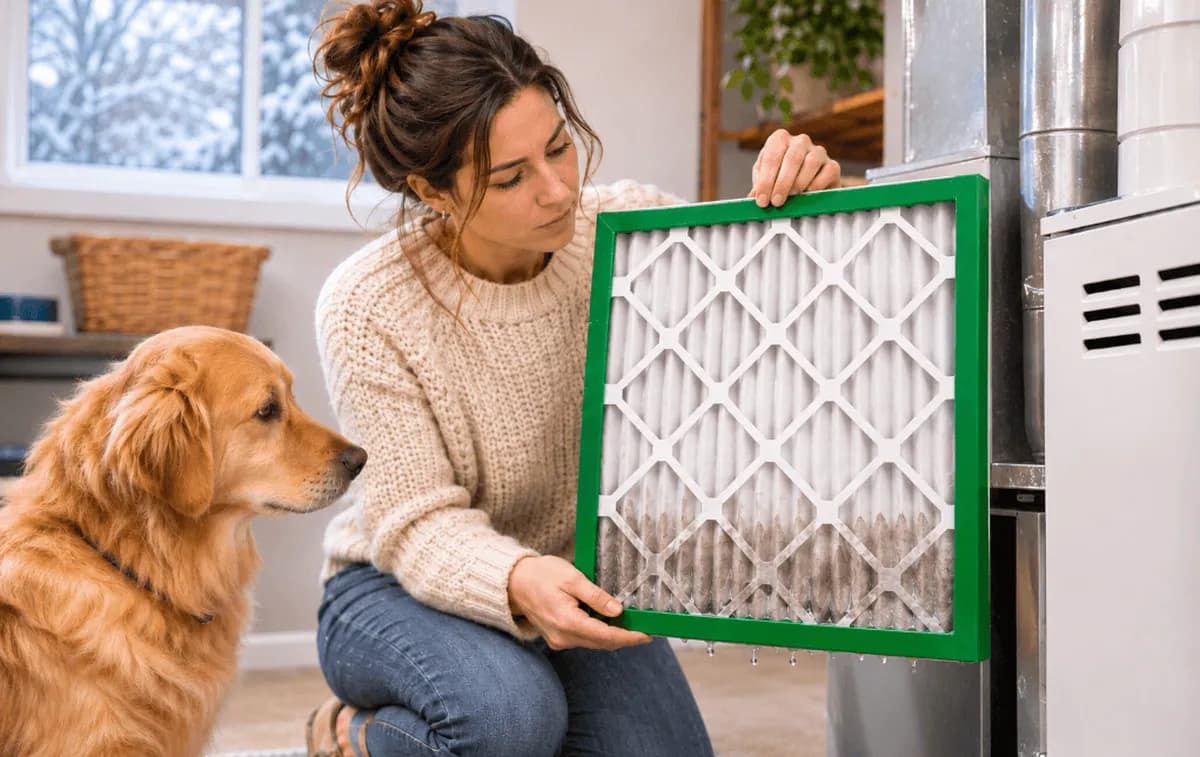
A thin coat of frost on your heat pump's outdoor coil on a cold, damp morning is part of normal winter operation. The unit runs a defrost cycle to melt it, so the fan may pause and you may see steam rise. Ice that stays after that cycle is the part to look into.
Start indoors. A clogged air filter cuts the airflow your heat pump depends on, and manufacturers list it among the common causes of freeze-ups. Long winter run times load a filter faster, and a gray, dusty one is the one fix on the list you can finish in a few minutes.
Frost Or Ice? Read Your Outdoor Unit
Normal
Light Frost That Melts
A thin white coat that clears during a defrost cycle. Steam and a paused fan are part of the process. Heat pumps typically defrost every 30 to 90 minutes in cold, humid weather.
Check It Today
Ice That Stays Put
Switch the thermostat to emergency heat so the unit can thaw while the house stays warm. Clear snow and leaves two feet back, keep gutters from dripping on it, and replace a dirty indoor air filter.
Call A Pro
A Solid Block Of Ice
Call a licensed HVAC technician if ice covers the coil and fan, the fan won't spin, the ice hasn't melted in 6 to 8 hours, or it refreezes soon after thawing.
Never chip at the ice or pour hot water on the unit. Both can damage the coil, fins, and fan blades.
Fast and free 2-day delivery to most US states.
Not sure which filter fits your heat pump? Answer a few quick questions to find your match.
TL;DR
A wet or frozen furnace filter means water is getting into your system from somewhere else. In winter, that's usually a backed-up condensate drain on a high-efficiency furnace, an overflowing whole-house humidifier, condensation inside cold return ducts, or freezing air leaking into the return. Put in a dry filter today, then let the wet spot on the old one point you to the source.
Key Takeaways
Condensing furnaces (90%+ AFUE) make about a gallon of water an hour for every 100,000 BTU, according to HVAC trade publication ACHR News, so a blocked drain backs up quickly.
A whole-house humidifier with a clogged drain or a setpoint set too high is a winter-only cause.
Never dry and reuse a wet filter; the U.S. Environmental Protection Agency (EPA) says damp materials not dried within 24 to 48 hours can grow mold.
Is It Normal for a Furnace Filter to Be Wet in Winter?
No. Your filter sits in the return air path, where it should only see dry indoor air. If it's damp or icy, moisture is coming from a drain, a humidifier, a cold duct, or an outdoor air leak.
At Filterbuy, we build pleated filters in our own U.S. plants, and every one is made for dry, moving air. Soaked media packs tight and chokes off airflow, so the furnace overheats and shuts down, one of the common winter airflow problems caused by filters.
Is It Safe to Keep Running the Furnace?
Usually you can swap the filter and keep investigating. Stop right away if:
A carbon monoxide alarm goes off, or anyone feels headachy, dizzy, or nauseated. Get everyone outside, then call 911, as the U.S. Consumer Product Safety Commission (CPSC) advises.
Water is pooling inside the furnace cabinet or near wiring. Turn the thermostat off and flip the furnace's service switch before you touch anything.
The furnace keeps shutting down with an error code or smells like burning. Leave it off and call a technician.
Do You Have a Condensing Furnace? Check in 10 Seconds
One or two white PVC pipes leaving your furnace mean a condensing furnace (90% AFUE or higher), which makes water as it runs and drains it through a trap, hose, or pump. A single metal flue pipe means a standard furnace, around 80% AFUE, that shouldn't make water at all, so look at the humidifier, ducts, or a coil drain pan instead.
What Does the Wet Spot on Your Filter Mean?
Water runs downhill, so where it lands points back to where it started. Filterbuy's team built this table as the shortcut we'd want ourselves. Note the wettest edge, any frost or mineral crust, and where the filter sits: one in a wall or ceiling return grille is too far from the furnace for condensate to reach.
| What you see on the filter | Most likely source | Check first |
|---|---|---|
| Wet bottom edge, water in the filter rack or at the furnace base | Condensate backing up: clogged trap or drain, failed pump, or frozen drain line | Drain outlet, pump reservoir, error code |
| Wet patch on the side nearest the condensate trap or hoses | Leaking trap or a loose or cracked hose | Visible hoses and fittings |
| Drips or streaks from above, often with white or tan crust | Whole-house humidifier overflow | Humidifier drain tube and water panel |
| Evenly damp face, musty smell, no drips | Humid air condensing on cold return ducts | Indoor humidity; ducts in unheated spaces |
| Frost or ice on the incoming-air side | Below-freezing air through a return leak or fresh-air intake | Duct joints, intake damper |
| Wet filter in a ceiling or wall return grille | Condensation in the duct above it, a roof leak or ice dam, or a bath fan venting into the attic | Attic above the grille |
Moisture patterns point to the most likely source. A licensed HVAC technician should confirm the cause if water is inside the furnace cabinet or keeps returning.
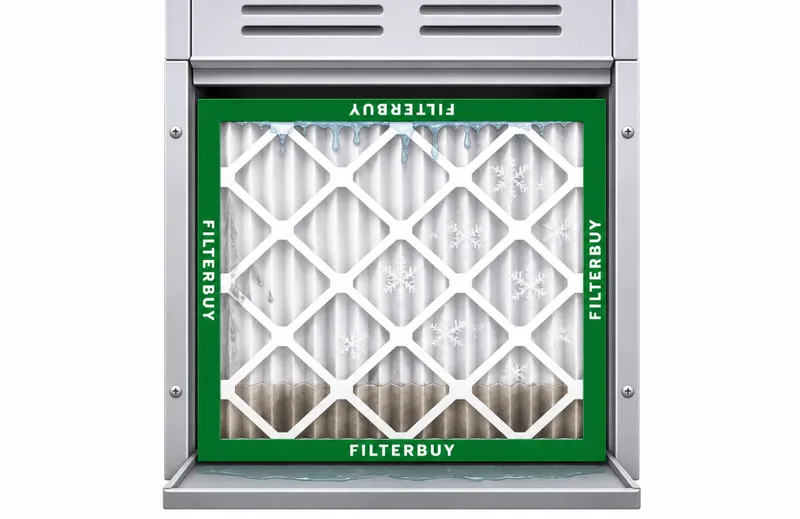
Cause 1: A Clogged or Frozen Condensate Drain
With a condensing furnace, check the condensate drain first. Its mildly acidic water runs through a trap to a floor drain or pump, and when sludge clogs the trap or the pump fails, it backs up toward the filter.
Freezing causes the same backup. Lines that pass through unheated attics and crawlspaces, or end outdoors, can freeze on cold nights and hold water until a safety switch shuts the burners down.
What you can safely do: make sure the condensate pump is plugged in and its reservoir isn't full, then clear the drain outlet with a wet/dry vacuum. Leave the internal trap and frozen lines to a technician.
Cause 2: A Whole-House Humidifier That's Overflowing or Set Too High
Bypass and fan-powered whole-house humidifiers trickle water over a water panel and send the excess down a drain tube. When scale clogs that tube or crusts the panel, water spills into the ductwork toward the filter.
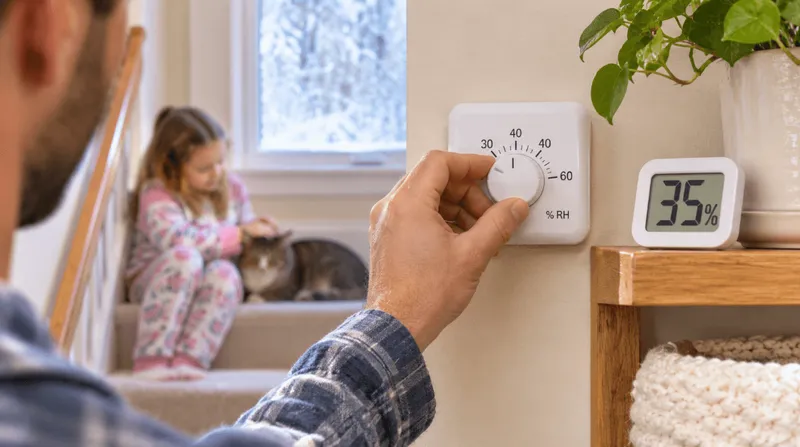
A setpoint that's too high causes condensation on cold ducts and the filter rack instead. EPA's mold and moisture guide recommends keeping indoor humidity below 60%, ideally between 30% and 50%, and the safe ceiling drops as it gets colder. The nonprofit Center for Energy and Environment recommends these winter limits:
| Outdoor temperature | Recommended indoor humidity |
|---|---|
| 20°F to 40°F | Below 40% |
| 10°F to 20°F | Below 35% |
| 0°F to 10°F | Below 30% |
| -10°F to 0°F | Below 25% |
| -20°F to -10°F | Below 20% |
| Below -20°F | Below 15% |
Source: Center for Energy and Environment (mncee.org), Managing indoor humidity levels, all year round. EPA recommends keeping indoor humidity below 60%, ideally 30%–50%.
What you can safely do: lower the humidistat to match the forecast, replace the water panel each heating season, flush the drain tube, and make sure the water valve shuts off when the furnace does. If your windows fog up on the inside, the setting is too high.
Cause 3: Condensation from Cold, Leaky Return Ducts
Return ducts in unheated attics, garages, crawlspaces, or exterior walls get cold in winter. Humid house air condenses on the cold metal and drips toward the filter, while leaky joints pull in cold air at the rack. ENERGY STAR estimates that 20% to 30% of the air moving through a typical duct system is lost to leaks and poor connections.
What you can safely do: seal visible gaps near the furnace with mastic or metal foil tape, not cloth duct tape.
Why Do Furnace Filters Freeze?
A filter freezes when air below 32°F reaches it while it's already damp. The cold air usually comes through a return leak in an attic or crawlspace, or a fresh-air intake with a stuck damper. A furnace in an unheated space can also freeze during a power outage. Don't just block a fresh-air intake, since many homes need it for ventilation; ask a technician about a motorized damper.
How to Fix a Wet or Frozen Furnace Filter
Turn the system off at the thermostat, and at the service switch if there's water in the cabinet.
Photograph the old filter, then throw it away. As a filter maker, Filterbuy doesn't recommend reusing one: soaked media may not seal or filter like new, even after drying, and it can grow mold.
Dry the filter rack and cabinet floor, and check for musty smells or visible mold. If it's frozen in place, don't pry it out; a bent rack won't seal. Let the ice soften, and find the cold-air source before restarting.
Find and fix the source with the wet-spot table and DIY checks above.
Install a dry filter in the exact size, with the airflow arrow pointing toward the furnace. If the size has worn off, here's how to measure your air filter; odd sizes come as custom air filters. Filterbuy cuts filters roughly half an inch under the printed size so they slide in and still fill the slot.
Check the new filter after 24 hours, then weekly for a month.
When Should You Call a Licensed HVAC Technician?
"When a homeowner tells me the filter is wet in January, I check the condensate trap and drain first, then the humidifier. The filter tells you where to look," says David Clark, Licensed HVAC Technician.
Call a pro if the new filter gets wet again, water comes from inside the cabinet, the furnace locks out with an error code, the drain line is frozen, or you spot soot or a yellow burner flame. If you find mold in the blower or ducts, EPA advises against running the system, since it can spread mold.
A wet filter won't make carbon monoxide, but some problems behind it call for a combustion safety check. The CPSC also urges a yearly professional inspection of fuel-burning heating systems and advises CO alarms on every level of the home and outside sleeping areas.
How to Keep Your Furnace Filter Dry All Winter
The Filterbuy take: treat your filter as a moisture gauge, not just a dust catcher.
Check the filter monthly during heating season for dampness and frost, not just dust. See how often to change your furnace filter.
Book a pre-season tune-up that includes cleaning the condensate trap and drain.
Keep a spare filter on hand, or set up Filterbuy filter auto-delivery.
For summer wet filters, see how to avoid a wet air filter in your HVAC system.
Supporting Statistics
60% of U.S. homes heat with a furnace (74.4 million of 123.5 million). Source: EIA, 2020 RECS
Heating systems were linked to 31% of U.S. consumer-product carbon monoxide deaths in 2021 (an estimated 63 of 204). Source: CPSC, 2021 Annual Estimates
Carbon monoxide poisoning peaks in December and January, and 80% of poison center cases happen at home. Source: CDC study, 2023
Frequently Asked Questions
Can a wet furnace filter cause mold?
Yes. A damp filter holds dust and moisture, which is all mold needs. EPA says wet materials should be dried within 24 to 48 hours, so replace a wet filter the same day.
Can I run my furnace without a filter until a new one arrives?
Avoid it, since unfiltered air coats the blower with dust. If it's the only way to keep pipes from freezing, a short run is the lesser risk.
Why is my furnace filter frozen?
Air below 32°F is reaching a filter that's already damp, usually through a return leak in an attic or crawlspace or a fresh-air intake with a stuck damper. Let the ice soften before you remove the filter.
Can a whole-house humidifier make my furnace filter wet?
Yes. A clogged drain tube or crusted water panel can spill water into the ductwork, and a setpoint that's too high for the outdoor temperature causes condensation near the filter.
Is a wet furnace filter a carbon monoxide risk?
The wet filter itself doesn't create carbon monoxide, but some faults behind it warrant a combustion safety check. Keep CO alarms on every level of your home, and leave right away if one sounds.
Glossary
AFUE (annual fuel utilization efficiency): The share of a furnace's fuel turned into heat.
Condensing furnace: A high-efficiency furnace whose second heat exchanger condenses water from exhaust.
Condensate: Mildly acidic water from a condensing furnace or AC coil.
Condensate trap: A U-shaped fitting that drains condensate while blocking exhaust gases.
Condensate pump: A small pump that lifts condensate to a drain when gravity can't.
Water panel: The replaceable humidifier pad water evaporates from.
Relative humidity (RH): Moisture in the air as a share of its maximum at that temperature.
Return duct: Ductwork carrying house air back to the furnace.
Fresh-air intake: A duct bringing outdoor air into the return.
Need a Replacement Filter?
To replace a wet or frozen filter, find your filter size. Filterbuy makes 600+ standard sizes, plus custom cuts built to order in its U.S. plants, with free shipping.