
Christmas Tree Syndrome: Why Holiday Trees Trigger Allergies and What Helps
October 23, 2026

Christmas tree syndrome is the informal name for allergy symptoms that start after a holiday tree comes indoors. At Filterbuy, we see it from the furnace side: the tree brings mold and dust inside at the peak of heating season, and the HVAC system carries that air to every room.
Christmas tree syndrome is the informal name for sneezing, stuffy noses, and itchy eyes that start after a holiday tree comes indoors. It usually traces to mold spores on live trees and dust on stored artificial ones, not the tree itself. In winter, your furnace pulls that air through the return vent and sends it to every room. A fresh filter, installed the week the tree arrives, captures airborne mold spores and dust on every cycle.
- MERV 11: captures finer particles like pet dander and mold spores.
- MERV 13: captures microscopic particles; our highest residential filtration.
Check your HVAC manual for the highest rating your system supports, or take the quick quiz below to find your match.
Where holiday tree mold and dust go
1. The tree
brings in mold
spores and dust
2. The filter
captures particles
as the furnace runs
3. Every room
gets the air your
filter sends on
MERV 11
finer particles like mold spores
MERV 13
microscopic particles
Get your furnace tree-season ready
Answer a few quick questions and we’ll match you to the right filter for your home.
Already know your size? Shop filters at Filterbuy
TL;DR
Christmas tree syndrome is holiday sneezing and congestion caused mostly by mold on live trees and dust on stored artificial ones. Prep the tree outdoors and keep indoor humidity at or below 50%. Before the tree goes up, install a fresh Filterbuy MERV 11 or MERV 13 filter your system supports.
Key Takeaways
Christmas tree syndrome is a nickname, not a diagnosis, and tree mold is the usual trigger.
In a 2007 study, airborne mold near a live tree rose about sixfold in two weeks.
Artificial trees can cause symptoms too, from dust and mold gathered in storage.
Winter furnace cycles can carry tree particles into every room.
A MERV 11 or MERV 13 filter captures airborne mold spores and dust if your system supports it.
What Is Christmas Tree Syndrome?
Christmas tree syndrome is an informal term for the sneezing, stuffy nose, itchy eyes, and wheezing some people notice once a Christmas tree comes inside. Allergists usually trace it to what the tree carries, mostly mold spores and dust, rather than the tree itself.
Is it the tree or a cold? Suspect the tree if symptoms start days after it arrives, feel worse in that room, and ease away from home. Itchy eyes without a fever also point away from a cold.
Why Do Live Christmas Trees Raise Indoor Mold Levels?
Live Christmas trees bring outdoor mold into the house, and spore counts climb the longer the tree stays up. In a 2007 study, airborne mold in an apartment with a live Christmas tree rose from about 800 to 5,000 spores per cubic meter over two weeks, roughly a sixfold increase.
Ochsner Health summarizes that research in its guide to Christmas tree allergy triggers and notes that central heating spreads those spores. A separate SUNY Upstate Medical University study, led by Dr. Lawrence Kurlandsky, found a variety of molds on tree samples, most of them potential allergens. For Filterbuy, the key detail is timing: exposure builds over days, so prep and a short indoor stay matter most.
Before You Buy: A Tree Lot Checklist
Ask whether the lot washes trees, as the Upstate researchers suggested, or has a mechanical shaker.
Skip trees with white or gray fuzz at the trunk base or a musty smell.
Pick a tree stored off the ground and under cover.
For less pollen, UCLA Health's Christmas tree allergy guide points to the Leyland cypress, which produces none, though any cut tree can still carry mold.
Are Artificial Christmas Trees Better for Allergies?
Artificial Christmas trees avoid tree-lot mold, but they are not allergen-free. After about 11 months boxed in an attic, garage, or basement, they carry settled dust and sometimes mold, and unpacking releases it into the room.
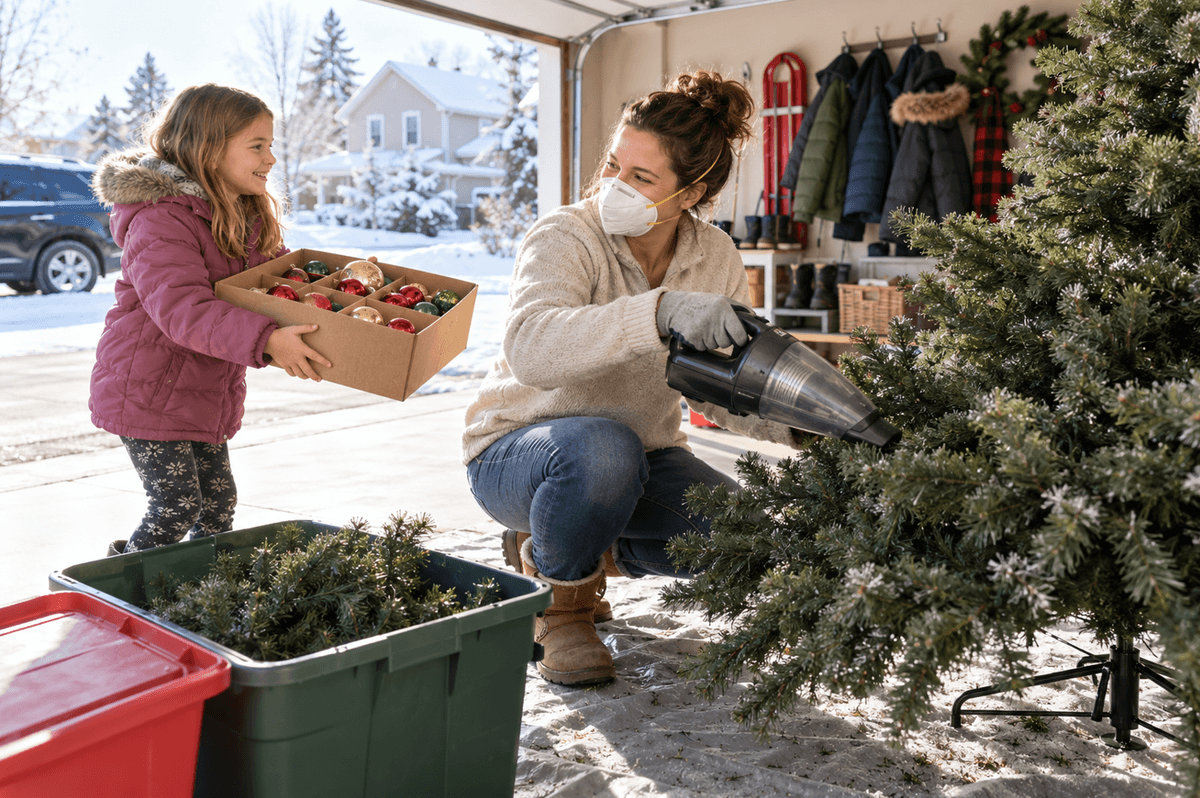
The American College of Allergy, Asthma and Immunology (ACAAI) recommends a handheld vacuum for the dust and an N95 mask while cleaning trees and decorations in its winter holiday allergy and asthma tips. Do that work in the garage or driveway, and skip flocking and spray-on snow, which can irritate the airways. After the holidays, store the tree in a sealed plastic bin, since cardboard holds moisture.
Filterbuy Pro Tip: Unbox the tree away from the furnace. In many basements, the return vent draws from that same space, so shaken-off dust can end up in the ductwork.
How Does Winter Make Christmas Tree Syndrome Worse?
Winter traps allergens indoors and spreads them. An NIH study of allergens in U.S. homes found three or more detectable allergens in over 90% of homes, and closed windows keep them in. The furnace then pulls room air through the return vent and pushes it outof every supply register, carrying tree spores to every bedroom.
Humidity is the other winter factor. A humidifier near the tree adds moisture to a room that already holds a mold source, one reason why indoor air quality gets worse in winter. The Centers for Disease Control and Prevention (CDC) recommends keeping indoor humidity no higher than 50% in its guidance on mold and indoor humidity.
Keep the tree at least three feet from heat vents and fireplaces, a rule from the NFPA holiday fire safety tips. Our guide to winter mold problems and how filtration supports prevention covers seasonal moisture in more depth.
Live vs. Artificial Christmas Trees: Allergy Triggers Compared
Live trees bring mold that builds over time, while artificial trees release stored dust and mold mostly at unboxing.
A Holiday Tree Air Plan from Setup to Takedown
Filterbuy's six-step plan treats the tree like any seasonal allergen source, from lot or storage bin to curb.
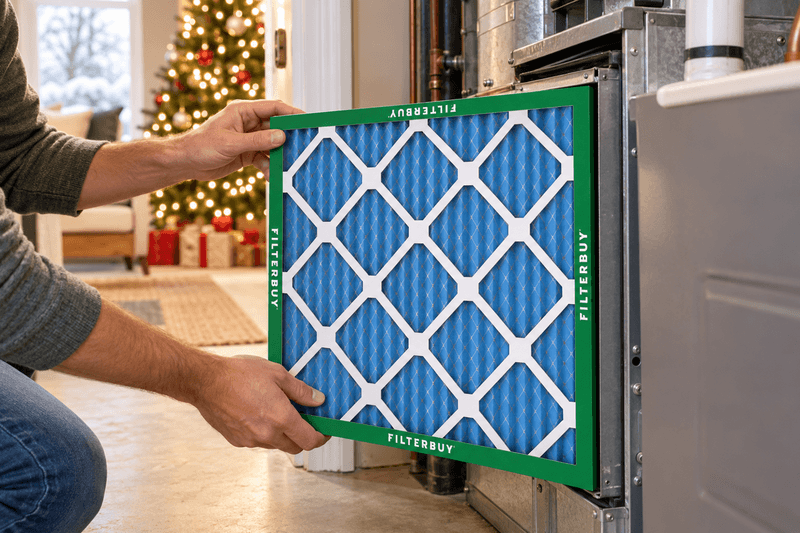
Start with a fresh filter. Install a new HVAC filter the week the tree arrives. Our step-by-step guide to replacing your air filter covers arrow direction and sizing.
Prep the tree outdoors. Rinse a live tree and let it dry completely, or rest it a week in the garage and shake it well. Unbox and dust an artificial tree outside.
Protect yourself during setup. Wear long sleeves and gloves, and let someone without allergies carry the tree in.
Manage the tree room. Keep humidity at or below 50% and run a portable air purifier nearby. Setting the thermostat fan to On for part of the day sends more air through the filter.
Keep the indoor stay short. Set the tree up closer to the holiday and take it down promptly.
Clean up and check the filter. Bag the tree on the way out and vacuum, then replace the filter if it looks gray.
What Air Filter Rating Helps with Christmas Tree Allergies?
A MERV 11 or MERV 13 pleated HVAC filter is the most practical whole-home upgrade for holiday allergy season. Both capture airborne mold spores and dust, and MERV 13 captures more of the finest particles. Your HVAC manual lists the highest rating your system supports.
The U.S. Environmental Protection Agency (EPA) recommends at least MERV 13, or as high a rating as your system fan and filter slot can accommodate, in its explanation of MERV ratings.
Filterbuy MERV 11 air filters suit homes with allergy-prone family members or pets. Filterbuy MERV 13 air filters are our highest residential capture level, for strong mold or dust reactions. Confirm either rating against your HVAC manual, and see our complete guide to MERV ratings and picks for the best furnace filters for winter allergens.
When to change it: Filterbuy recommends a fresh filter the week the tree comes in, not after symptoms start, then a monthly check. With a 90-day filter and a tree going up December 1, that means a new filter around November 25 and the next change in late February, so one filter covers tree season and the coldest weeks. See how often to change your HVAC filter for other setups.
Filterbuy has made HVAC filters for over a decade, in hundreds of standard and custom sizes, with fast and free 2-day delivery to most US states. An air filter subscription from Filterbuy keeps a replacement on hand.
When Should You See a Doctor About Holiday Allergy Symptoms?
See a healthcare provider if symptoms outlast the tree or you notice wheezing or shortness of breath. A board-certified allergist can test for mold allergy, and severe breathing trouble needs emergency care.
"As a manufacturer, we treat the holidays as the toughest stretch of the year for a filter. A tree adds a new mold source right when the furnace runs longest, so the filter is working overtime until the tree comes down."
David Heacock, Founder and CEO, Filterbuy
Supporting Statistics
1. 21.58 million real trees.
The National Christmas Tree Association projects that shoppers bought 21.58 million farm-grown trees in 2023. For Filterbuy, that frames the problem: millions of mold sources come indoors as homes seal up.
Source: National Christmas Tree Association, Farm-Grown Christmas Tree Supply for 2024
2. About 1 in 3 people in the U.S. have allergies.
More than 106 million people in the U.S. live with allergies, per 2024 CDC data.
Source: Asthma and Allergy Foundation of America, Allergy Facts and Figures
3. 24.7 million U.S. adults have asthma.
That is 9.8% of adults, per a 2023 analysis of CDC survey data, and Filterbuy wrote the tree plan with them in mind.
Source: American Lung Association, Asthma Trends Brief: Current Demographics
Frequently Asked Questions About Christmas Tree Syndrome
Is Christmas Tree Syndrome Real?
Yes, as a pattern of symptoms, though it is an informal name rather than a medical diagnosis. The usual cause is mold or dust carried in on the tree, not the tree itself.
Can You Be Allergic to the Christmas Tree Itself?
True tree allergies are uncommon. Pine pollen is an unlikely cause in December, since pines release it in spring, but ACAAI notes that terpene, a compound in tree sap, can cause skin reactions on contact. Long sleeves and gloves during setup help.
How Long Should a Live Christmas Tree Stay Up If Someone Has Allergies?
There's no fixed limit, but shorter is better because mold counts rise the longer a live tree stays indoors. In the 2007 apartment study, spore levels were highest at the two-week mark.
Does an Air Purifier Help with Christmas Tree Allergies?
A portable air purifier helps in the tree room itself, which is why UCLA Health and Ochsner Health both suggest one. It works alongside the HVAC filter, which cleans air from the whole house each time the furnace runs.
Stop Holiday Tree Allergies Before They Start
The fix for Christmas tree syndrome starts before the tree comes inside. Prep it outdoors, then find your Filterbuy filter size and install a fresh MERV 11 or MERV 13 filter your HVAC manual supports.
Glossary
Christmas Tree Syndrome: Allergy symptoms that follow a Christmas tree indoors, usually from mold or dust on it.
Mold Spores: Microscopic mold particles that drift in the air and can trigger allergies.
Terpene: A fragrant compound in real tree sap that can cause contact skin reactions.
Flocking: A spray-on snow coating that can release airway irritants.
MERV (Minimum Efficiency Reporting Value): An ASHRAE scale rating how well an HVAC filter captures 0.3 to 10 micron particles.
MERV 11: A rating built to capture dust, pollen, mold spores, and pet dander.
MERV 13: The highest Filterbuy residential rating, built for finer particles. Not equivalent to HEPA.
HEPA Filter: A high-efficiency particulate air filter used in portable purifiers, held to a stricter standard.
ACAAI: American College of Allergy, Asthma and Immunology.
CDC: Centers for Disease Control and Prevention.
EPA: U.S. Environmental Protection Agency.
NFPA: National Fire Protection Association.
NIH: National Institutes of Health.
Filterbuy: A manufacturer of pleated MERV 8, 11, and 13 HVAC filters.