
What Is the Purpose of a Cabin Air Filter?
July 21, 2026
By Michelle Wan · Reviewed by David Clark, Licensed HVAC Technician · Published July 21, 2026 · Updated July 21, 2026
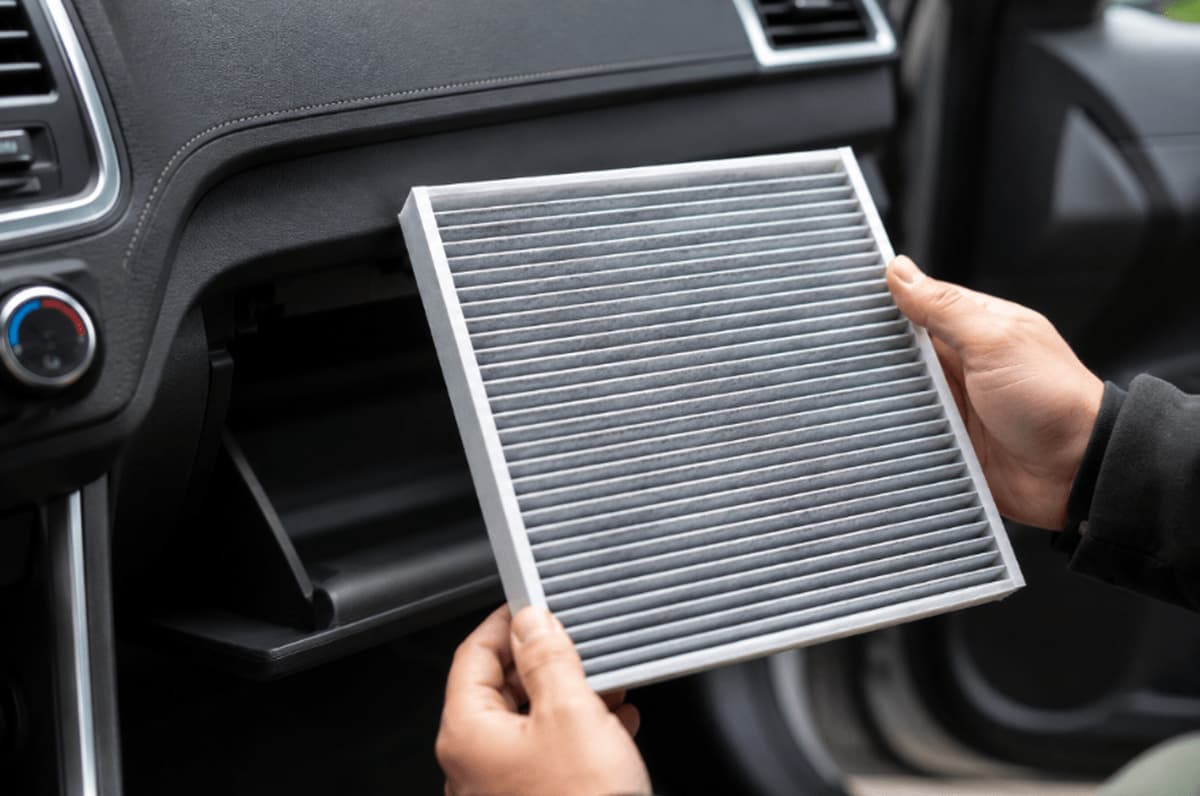
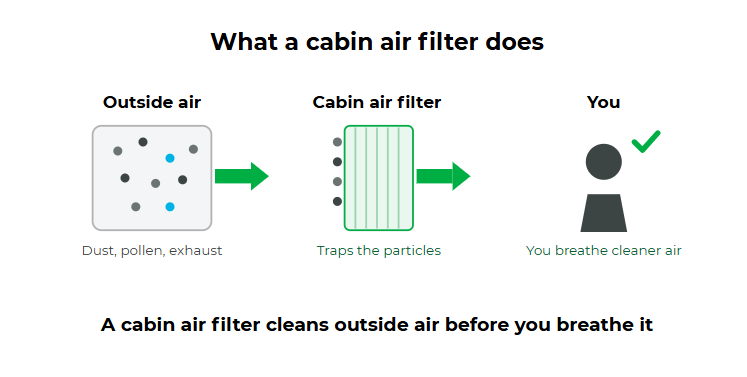
A cabin air filter’s purpose is to clean the outside air before it reaches you and your passengers. As your car pulls air in through the vents, the filter traps dust, pollen, and exhaust, so the air you breathe inside is cleaner than the air on the road. It sits behind your glove box and works whenever the fan or A/C is running. Take the quick match quiz below to find the right cabin air filter for your car.
Answer a few quick questions and we’ll match you to the right cabin air filter for your car.
Already know it’s time? Shop auto cabin air filters for your vehicle →
TL;DR
A cabin air filter’s purpose is to clean the outside air before it enters your vehicle’s passenger compartment through the heating and air conditioning system. It traps dust, pollen, mold spores, exhaust, and other particles so you breathe cleaner air while you drive. Replace it roughly once a year or every 12,000–15,000 miles.
Key Takeaways
A cabin air filter cleans the air you breathe inside the car, not the air your engine burns. That’s a separate part called the engine air filter.
It sits in the HVAC path, usually behind the glove box, and filters every bit of outside air pulled in through your vents.
It traps dust, pollen, mold, soot, brake dust, and exhaust particles, which matters most for allergy sufferers and city or highway commuters.
A clogged cabin filter weakens airflow from your vents, strains the blower motor, and can leave a musty smell or foggy windows.
Most manufacturers recommend replacement every 12,000–15,000 miles or once a year, and sooner if you drive in dusty, smoky, or high-pollen conditions.
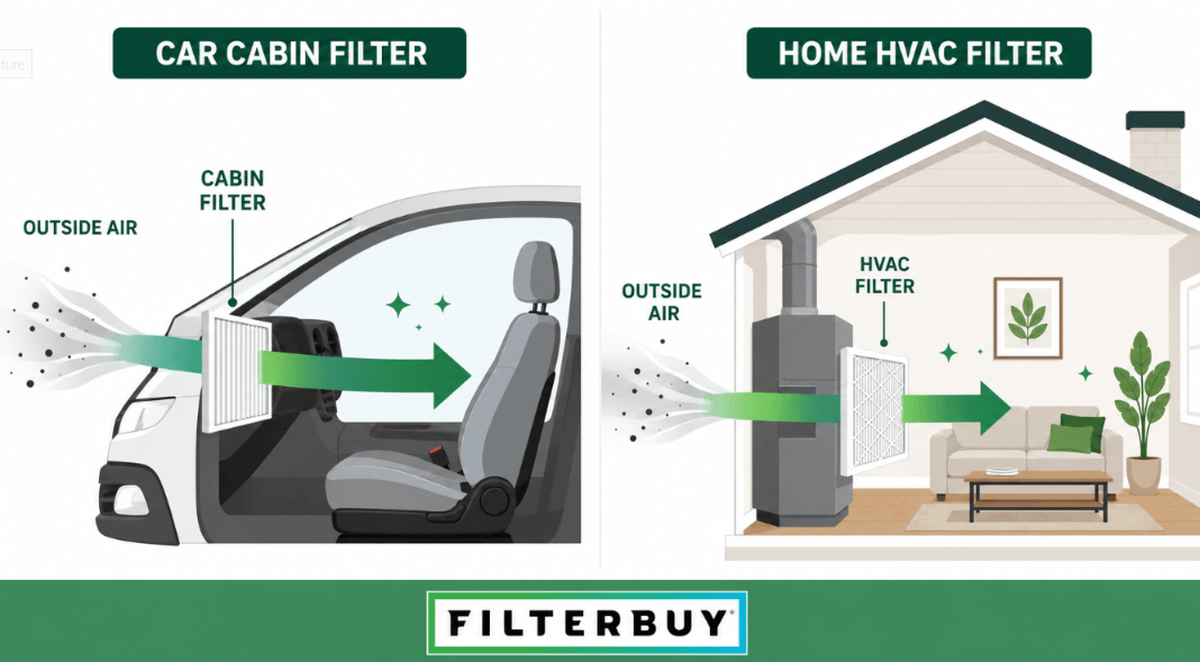
The same filtration science protects your home. A car cabin filter and a home HVAC filter both clean the air you breathe indoors; only one of them runs 24/7.
What is the purpose of a cabin air filter?
The purpose of a cabin air filter is to remove airborne particles from the outside air before it reaches you and your passengers. Positioned inside your car’s heating, ventilation, and air conditioning (HVAC) system, the cabin air filter catches dust, pollen, mold spores, soot, and exhaust so the air blowing through your vents is cleaner than the air on the road.
Think of it as the last checkpoint between a busy highway and your lungs. Every time you run the fan, defroster, heat, or A/C with the vents open, outside air is pulled into the cabin, and the cabin air filter screens that air on its way in. Cars didn’t always have them; automakers began adding cabin filters widely around the year 2000 in response to drivers wanting cleaner air inside the vehicle. Today most cars and trucks on the road include one.
We look at this part a little differently than a repair shop might. Filterbuy has manufactured air filters in the USA since 2013 (now including HEPA-certified cabin filters cut to each vehicle’s exact specs), so we spend our days on one question: how do you pull the most junk out of the air before someone breathes it? Through that lens, a cabin filter isn’t a “car part”; it’s air-quality equipment that happens to live behind your glove box.
What does a cabin air filter actually do?
A cabin air filter does one job well: it traps solid particles suspended in the incoming air so they don’t circulate inside your car. Depending on the type, it can also absorb odors and gases. The filter media is usually pleated paper or synthetic fiber, folded to pack more surface area into a small housing.
Here’s what a cabin air filter typically captures:
Dust and road grit kicked up by traffic
Pollen during allergy season
Mold and bacteria spores carried in humid air
Soot and exhaust particles from vehicles ahead of you
Brake dust and other fine debris common in stop-and-go traffic
Many of these are fine particulate matter (PM2.5), particles small enough, the EPA notes, to be inhaled deep into the lungs.
An upgraded version, the activated carbon cabin filter, adds a layer of carbon that also absorbs odors, fumes, and some gases, which helps when you’re stuck behind a diesel truck or idling in a parking garage.
Cabin air filter vs. engine air filter: what’s the difference?
A cabin air filter cleans the air you breathe inside the car; an engine air filter cleans the air the engine breathes for combustion. They share a goal, blocking contaminants, but they protect different things, sit in different places, and are not interchangeable. Confusing the two is the single most common cabin-filter mistake.
A clogged cabin air filter won’t hurt your engine or your fuel economy, but it will make the air inside your car dirtier and your vents weaker.
Why is a cabin air filter important?
A cabin air filter is important because it affects the air quality you breathe in an enclosed space where you may spend hours each week. Without it, dust, pollen, and exhaust flow straight into the cabin, so the air inside your car can end up dirtier than the air outside it, especially in traffic. The American Lung Association links these fine particles to asthma attacks and other respiratory problems, which is exactly what a working filter helps keep out.
The benefits fall into three buckets:
Health and comfort. Cleaner cabin air means fewer allergens and irritants reaching sensitive passengers, a real difference for anyone with asthma or seasonal allergies.
HVAC performance. A fresh filter lets your heat, A/C, and defroster move air freely, so the system cools, warms, and defogs the way it should.
Fewer odors and foggy windows. A clean filter helps prevent that musty smell and reduces the moisture buildup that fogs your windshield in humid weather.
The Numbers Behind Cleaner Cabin Air
Independent government and health research backs it up:
1 in 4 U.S. adults (25.2%) had a seasonal allergy in 2024, and your cabin filter traps the pollen that triggers it. (CDC, 2024)
156 million Americans (about 46%) breathe air graded “failing.” Your filter is the last barrier before it reaches your lungs. (American Lung Association, 2025)
The average U.S. driver logs about 13,500 miles a year, right inside the 12,000–15,000-mile swap window, so once a year works. (Federal Highway Administration)
Two types of cabin air filters
Cabin air filters come in two main types: particulate and activated carbon. Both trap solid particles; only carbon filters also absorb odors and gases. Choosing between them comes down to what you’re trying to keep out of the cabin.
Which cabin air filter is right for you?
The “best” cabin air filter has less to do with price and more to do with where and how you drive. Here’s the quick guidance we give when people ask us to match a filter to their situation:
If you have allergies or asthma: choose a high-efficiency (HEPA-style) filter to capture the most pollen and fine particles.
If you sit in heavy traffic or drive near exhaust: pick an activated carbon filter to cut odors and fumes on top of trapping particles.
If you mostly do light suburban or highway driving: a quality standard particulate filter is usually all you need.
If you live with wildfire smoke or heavy dust: go with the highest-efficiency filter that fits your housing, and replace it more often than the manual suggests.
When unsure, size up in efficiency rather than down. The airflow trade-off is small, and your lungs get the benefit. For the top tier, Filterbuy’s auto cabin filters use HEPA-certified media rated to capture 99.97% of particles down to 0.3 microns, cut to your vehicle’s exact specs.
Signs your cabin air filter needs replacing
The clearest signs of a clogged cabin air filter are weaker airflow from your vents and a lingering musty smell when the fan runs. Because the filter hides behind the glove box, most drivers notice symptoms before they ever see the filter. Watch for these:
Reduced airflow even with the fan on high
A musty, dusty, or stale odor when the vents are open
Foggy windows that are slow to clear
A whistling or straining sound from the vents
Worse allergy symptoms specifically while driving
If you notice several at once, it’s time to check the filter. In most vehicles it lives behind the glove box and can be swapped in minutes. Your owner’s manual shows the exact location and part size.
How often should you replace a cabin air filter?
Most automakers recommend replacing a cabin air filter every 12,000–15,000 miles or about once a year, though intervals range from 10,000 to 30,000 miles depending on the vehicle. Filterbuy’s approved interval for its auto cabin filters is 12 months or 12,000 miles, but your owner’s manual is the final word. Replace it sooner if you regularly drive in dusty areas, heavy pollen, wildfire smoke, or bumper-to-bumper traffic, since those conditions clog a filter faster.
A good habit: check the cabin filter every time you change your oil, and replace it at least once a year regardless of mileage.
The cabin air filter mistakes we see most often
A handful of the same missteps come up again and again, and avoiding them saves you money and gets you cleaner air:
Trying to clean and reuse it. Most cabin filters are disposable paper or carbon media. Vacuuming or tapping one out won’t restore it and can tear the media. Replace it, don’t rinse it.
Waiting for a smell. By the time you notice odor, airflow and filtration have already dropped off. Go by mileage and season, not just symptoms.
Assuming “premium” always means “healthier.” A carbon filter is great for odors but isn’t automatically better at catching particles. Match the type to your actual need, not the highest price tag.
Skipping it because you don’t have allergies. Even if pollen doesn’t bother you, a clogged filter strains the blower motor and fogs your windows, so it’s a comfort and safety issue too, not just a health one.
The bigger picture: the air you breathe indoors
Your car is one small room you breathe in. Your home is the big one, and the same filtration science applies. A car cabin filter and a home HVAC air filter both do the same fundamental job: pull particles out of the air before it reaches your lungs. The difference is scale and runtime. Your car filter works when you drive; your home’s filter can work around the clock as your HVAC system cycles.
“As filter makers, we think about one thing all day: pulling the most out of the air before someone breathes it. A cabin filter is that same job, just scaled down to the space between your dashboard and your lungs.”
– The Filterbuy Team
Here’s something we notice as filter makers that most drivers never hear: home HVAC filters are rated on the standardized MERV scale, which tells you exactly how effectively a filter captures particles of a given size. Automotive cabin filters usually aren’t labeled with a MERV number, so their efficiency is harder to compare head-to-head. Our honest take: if you care about the air in your car, care at least as much about the air at home, where a rated filter running daily does far more for your total exposure.
That’s Filterbuy’s world. We’ve made air filters in the USA since 2013: 600+ sizes for the home, plus HEPA-certified, exact-fit cabin air filters for hundreds of vehicles, all shipped factory-direct. So when yours is due, you can find the right cabin filter for your car. And since the same science protects your home, it’s worth checking your local air quality and finding your home filter too.
Frequently asked questions
What is the main purpose of a cabin air filter?
Its main purpose is to clean the outside air entering your car’s passenger compartment through the HVAC system, trapping dust, pollen, mold, and exhaust so you breathe cleaner air while driving.
Does a cabin air filter affect engine performance?
No. The cabin air filter only cleans air for the passengers. Engine performance depends on the separate engine air filter located under the hood.
Can I drive with a dirty cabin air filter?
Yes, but you’ll notice weaker airflow, possible odors, and foggier windows, and cabin air quality drops. It won’t damage your engine, but replacing it restores comfort and airflow.
Where is the cabin air filter located?
In most vehicles, it sits behind the glove box or dashboard. Your owner’s manual shows the exact location and the correct replacement part.
Is an activated carbon cabin filter worth it?
If you drive in traffic, near exhaust, or deal with strong outside odors, an activated carbon filter helps by absorbing smells and gases in addition to trapping particles.
Sources
U.S. Environmental Protection Agency: Particulate Matter (PM) Basics. EPA.gov.
American Lung Association: Particle Pollution. Lung.org.
CDC, National Center for Health Statistics: Allergic Conditions, U.S. 2024. CDC.gov.
American Lung Association: State of the Air 2025. Lung.org.
Federal Highway Administration: Average Annual Miles per Driver. FHWA.dot.gov.
About the author
Michelle Wan is Filterbuy’s Brand Manager and air quality writer (B.A., University of California, Santa Cruz). Working directly with Filterbuy’s U.S. manufacturing team across its factories in Alabama, Florida, Pennsylvania, and Utah, she bases her guidance on how filters are actually built and used, not just spec sheets.
Reviewed for technical accuracy by David Clark, a Licensed HVAC Technician. Filterbuy has manufactured air filters in the USA since 2013 and ships factory-direct in 600+ sizes, including auto cabin air filters.
Glossary
Cabin air filter: A filter inside a vehicle’s HVAC system that removes airborne particles from outside air before it enters the passenger compartment.
Engine air filter: A separate filter, located under the hood, that cleans the air an engine uses for combustion; unrelated to cabin air quality.
HVAC system: Heating, Ventilation, and Air Conditioning; the system that moves and conditions air in a car or a building.
Particulate filter: A cabin filter made of pleated paper or fiber that traps solid particles like dust and pollen but does not absorb odors.
Activated carbon filter: A cabin filter with a carbon layer that traps particles and also absorbs odors, fumes, and some gases.
MERV: Minimum Efficiency Reporting Value, the standardized 1–20 scale that rates how effectively a home HVAC filter captures particles of a given size.
HEPA-style filter: A high-efficiency filter media that captures a very high percentage of fine particles; in cars it is usually sold as a premium, allergy-focused cabin filter.
Blower motor: The fan motor that pushes conditioned air through a vehicle’s vents; a clogged cabin filter makes it work harder.