
Outdoor Air Quality: How Winter and Summer Seasons Compare
July 21, 2026
By Michelle Wan | Reviewed by David Clark, Licensed HVAC Technician | Published: July 21, 2026 | Updated: July 21, 2026
Is Outdoor Air Quality Worse in Winter or Summer?
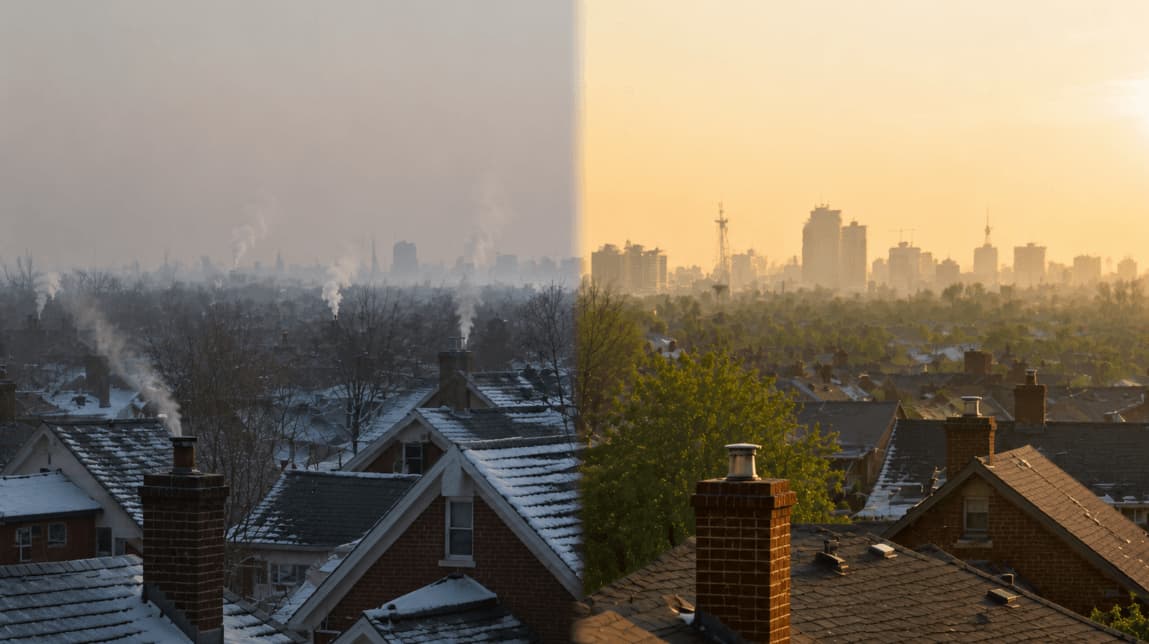
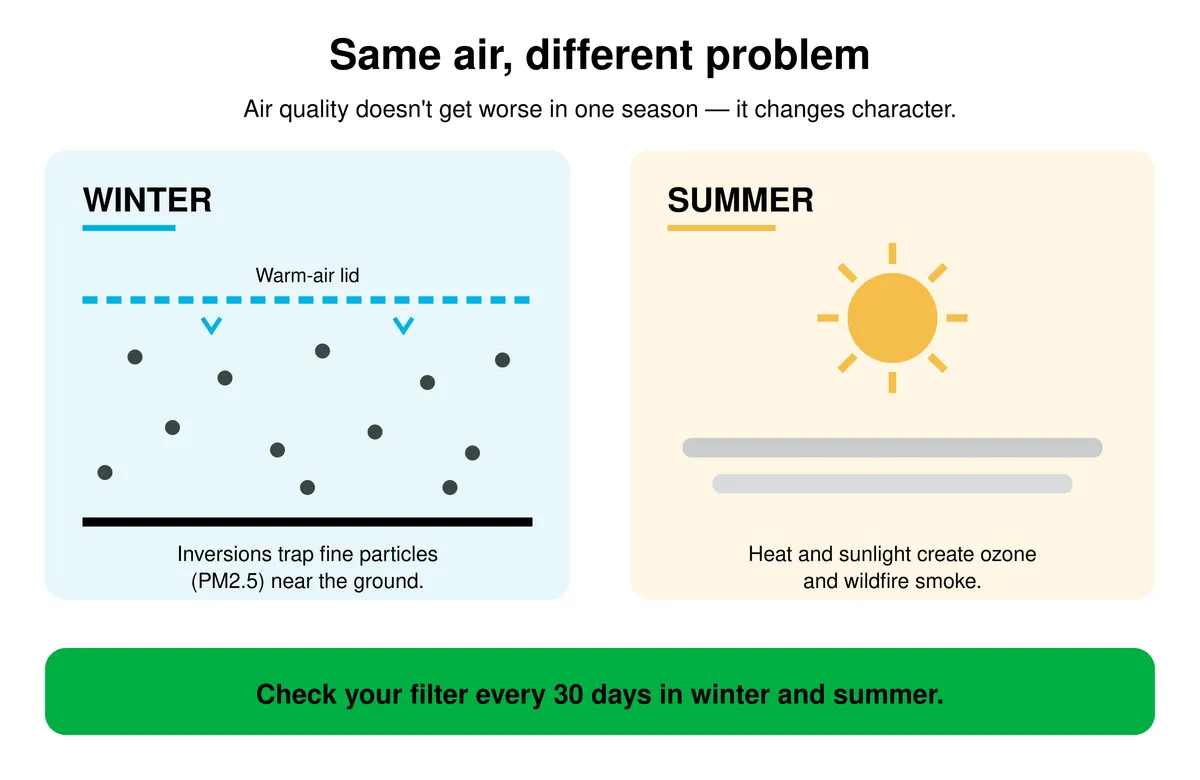
Neither season is reliably worse — the air just changes character. Winter temperature inversions trap fine particles (PM2.5) near the ground, while summer heat and sunlight create ground-level ozone and wildfire smoke.
Both seasons run your HVAC system hardest, which is exactly when your filter loads up fastest. Knowing which season you are in tells you what to watch for.
- Winter: inversions trap PM2.5 from heating and vehicle exhaust near the ground.
- Summer: heat and sunlight build ground-level ozone, plus wildfire smoke.
A filter rated to capture fine particles common to both seasons, such as a MERV 13, helps your system keep up when it works hardest. Shop air filters at Filterbuy →
Not sure which filter keeps up with both seasons? Answer 3 quick questions and we'll match you to your perfect filter.
Readers keep asking a version of the same question: is the air worse in January or in July? The honest answer is neither, consistently. It depends on what's happening in the sky that day. This guide gives you the tools to read those signs yourself, the same way we walk Filterbuy customers through it every season change. — Michelle Wan, Brand Manager and Air Quality Writer
TL;DR
Outdoor air quality does not get uniformly better or worse across the year. It changes character by season. Winter traps pollution near the ground through temperature inversions, while summer heat and sunlight drive ground-level ozone and wildfire smoke. Both seasons carry real health risks from different pollutants, and knowing which one you're in helps you read local AQI numbers correctly and time your filter changes to when your HVAC system works hardest.
Key Takeaways
Temperature inversions trap cold, polluted air near the ground on calm winter days and nights, preventing normal dispersion.
Ground-level ozone, the main summer pollutant, forms when heat and sunlight react with vehicle and industrial emissions.
Wildfire smoke is a major summer and early fall contributor to unhealthy air days across much of the U.S.
Fine particulate matter (PM2.5) rises in winter from wood stoves, fireplaces, and vehicle exhaust trapped near the surface.
Both ozone and PM2.5 worsen asthma and other respiratory conditions, though through different exposure patterns.
HVAC systems run hardest during peak heating and cooling months, which is also when filters load up fastest.
Quick Diagnostic: What's Behind Today's Bad Air
Match what you're noticing outside to the likely cause:
Hazy, dull sky on a still, cold morning: a winter temperature inversion trapping particle pollution.
Shimmering heat and brownish haze worsening by mid-afternoon: summer ground-level ozone building through the day.
Orange-tinted sky or a smoky smell, in any season: wildfire smoke, which can travel hundreds of miles from the source.
Dusty smell when your heat or AC first kicks on: a filter that needs checking, and a good moment to confirm your Filterbuy filter size before the season's first heavy-use week.
Weather determines whether pollutants disperse or accumulate as much as emissions do. The same sources release pollutants year-round, but temperature, sunlight, wind, and humidity decide whether they clear out or build up, through a winter inversion or summer ozone chemistry.
Winter Vs Summer Air Quality Comparison
Sources: U.S. EPA, AirNow.gov, National Weather Service
Winter Air Pollution: Temperature Inversions and Particle Pollution
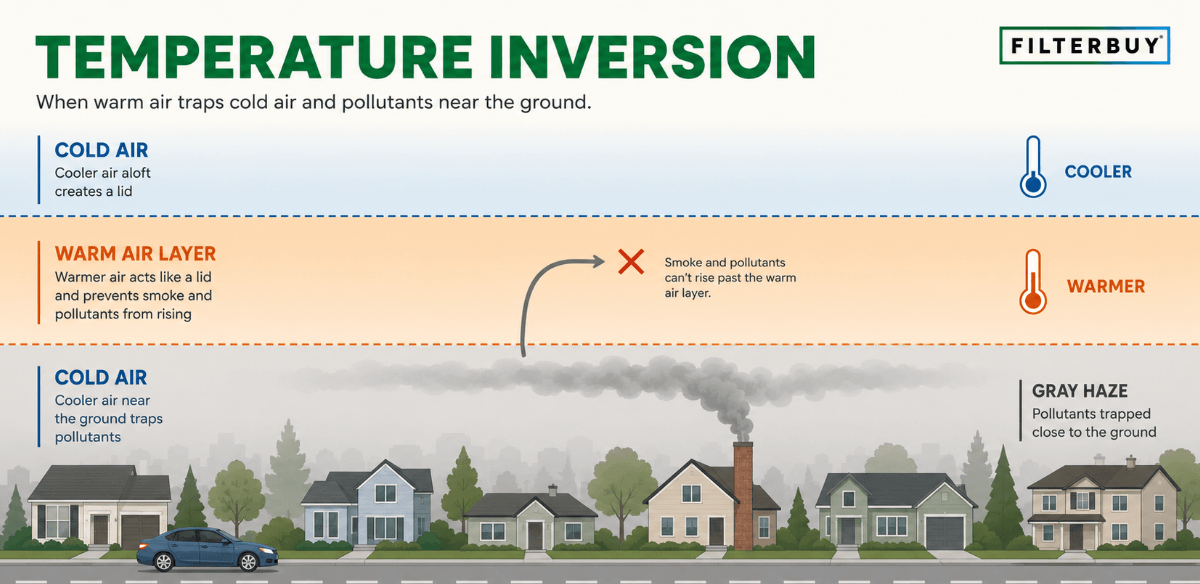
Winter air pollution intensifies mainly through temperature inversions, which occur when a layer of warm air settles above cold air near the ground and acts like a lid, trapping pollutants that would normally rise and disperse. The effect is strongest on clear, calm nights and mornings, and worst in valleys where cold air pools. Winter also adds more PM2.5, as wood stoves, fireplaces, and cold-start vehicle exhaust release fine particles directly into air that inversions keep from clearing out. At Filterbuy, we see this indoors too. Homes in inversion-prone valleys often pull a dustier, sootier filter after a stretch of still winter weather, even when nothing else about the household has changed.
Summer Air Pollution: Ground-Level Ozone and Wildfire Smoke
Summer air pollution centers on ground-level ozone, which forms when nitrogen oxides and volatile organic compounds react with heat and sunlight. Because ozone is created by that reaction rather than emitted directly, it builds through the day and peaks on hot, sunny afternoons with light wind. Wildfire smoke is the other defining summer pollutant across much of the country, and wildfire-specific PM2.5 carries stronger respiratory risks than PM2.5 from other sources. Hospitalizations rose 1.3 percent to 10 percent for every 10 micrograms per cubic meter increase in wildfire-specific PM2.5, versus a smaller 0.67 to 1.3 percent increase for PM2.5 from other sources. That gap is why smoke days deserve extra caution even when the AQI looks like an ordinary hazy day. We hear a similar story every summer from Filterbuy customers in wildfire-prone regions. A filter that looked clean in June can be visibly gray by August, well before its rated change date.
The Shoulder-Season Overlap Most Guides Miss
Most explanations treat winter and summer air quality as two separate stories with a clean break between them. Real weather rarely cooperates. Early fall can carry the tail end of wildfire season alongside the year's first clear, calm nights, the exact setup for an inversion. Late spring can bring an early ozone spike on an unusually warm afternoon, weeks before summer starts on the calendar. Actual conditions on a given day predict the pollutant more reliably than the date.
Health Impacts: Who Winter and Summer Air Quality Affect Most
Both seasons raise respiratory risk through different exposure patterns. In winter, prolonged exposure to trapped PM2.5 increases irritation and breathing difficulty, particularly for people with asthma, COPD, or heart disease. In summer, ozone irritates the airways directly, and even healthy adults exercising outdoors on high-ozone afternoons can experience chest tightness, coughing, and reduced lung function. Children, older adults, and outdoor workers carry elevated risk in both seasons.
What Seasonal Air Quality Means for Your Filter Change Schedule
HVAC systems pull in outdoor air and work hardest exactly when outdoor pollution peaks, so filters move more air, and often dirtier air, during the coldest and hottest weeks. Checking your filter monthly during those months, and changing it at the first sign of dirt rather than waiting the full three, keeps the system from working harder than it needs to. Pair that habit with a filter rated to capture fine particles common in both seasons, such as a MERV 13 air filter.
Seasonal Filter Check Schedule
Source: ENERGY STAR, Heat and Cool Efficiently
In Filterbuy's experience, the calendar is a rough guide at best. The households that stay ahead of both seasons check the filter itself, not just the date on the box.
"After manufacturing filters for over a decade and serving more than two million households, we've seen how differently winter and summer air quality problems show up at the register. Winter brings in fine soot and smoke particles trapped by temperature inversions, while summer brings ozone byproducts and wildfire smoke. A filter that handles both means checking it more often during the two seasons when your HVAC system works hardest, not just replacing it on a fixed schedule."
David Heacock, Founder and CEO, Filterbuy
Explore More From Filterbuy
Wildfire Smoke AQI Levels: What each AQI reading means during a smoke event and when to act indoors.
AQI Ranges Explained: What each AQI category, from Good to Hazardous, means for your health.
MERV 13 Air Filters: Filters rated to capture the fine particles common to wildfire smoke and winter particulate matter.
Essential Resources for Understanding Seasonal Air Quality
1. Learn Exactly How Summer Ozone Forms
The EPA's ozone primer explains the heat-and-sunlight reaction that drives summer smog and who faces the highest risk.
Source: U.S. EPA, Ground-Level Ozone Basics
2. See How Winter Air Gets Trapped Near the Ground
This AirNow explainer shows how a temperature inversion locks cold, polluted air in place on a still morning.
Source: AirNow.gov, Temperature Inversions
3. Get a Meteorologist's Plain-Language Breakdown of Inversions
The National Weather Service walks through the clear-sky, calm-wind setup that produces winter inversions.
Source: National Weather Service, What Is an Inversion?
4. Understand What Ozone and Particle Pollution Do to Your Body
The CDC's pollutant guide explains how PM2.5 and ozone affect the lungs and heart differently by season.
Source: CDC, Air Pollutants
5. Find Out Who Faces the Highest Risk from Summer Smog
The American Lung Association details how ozone irritates the airways during outdoor activity, with guidance for people with asthma, older adults, and children.
Source: American Lung Association, Ozone
6. Get Asthma-Specific Guidance for Both Ozone and Particle Pollution
The Asthma and Allergy Foundation of America outlines how ozone and particulate matter trigger asthma, with AQI thresholds for adjusting activity or medication.
Source: Asthma and Allergy Foundation of America, Air Pollution and Asthma
7. See the Research Behind Wildfire Smoke's Added Health Risk
This peer-reviewed study found wildfire-specific PM2.5 raises respiratory hospitalization rates more sharply than PM2.5 from other sources.
Source: Aguilera et al., Nature Communications, 2021 (PMC7935892)
Supporting Statistics
1. HVAC filters need monthly checks during peak seasons, shortening the normal 90-day interval to 30 days, since heating and cooling systems run longest and load filters faster then.
Source: ENERGY STAR, Heat and Cool Efficiently
2. Wildfire activity, tracked year-round by the National Interagency Fire Center, consistently peaks during the hottest, driest months, when ozone and wildfire smoke often stack on top of each other.
Source: National Interagency Fire Center, Statistics
3. U.S. household electricity use peaks in July and August, lining up with the months your cooling system works hardest and pulls the most outdoor air through your filter.
Source: U.S. EIA, Air Conditioning and Other Appliances Increase Residential Electricity Use in the Summer
Frequently Asked Questions
Is air quality worse in winter or summer?
Neither season is consistently worse. Winter traps fine particle pollution near the ground through temperature inversions, while summer brings higher ground-level ozone and wildfire smoke. The greater risk depends on your region's climate, heating sources, and wildfire exposure.
What is a temperature inversion and why does it happen in winter?
A temperature inversion occurs when a layer of warm air settles above cooler air near the ground, preventing pollutants from dispersing. These conditions are most common on clear, calm winter nights when the ground cools faster than the air above it.
Why does ozone pollution peak in summer?
Ground-level ozone forms when nitrogen oxides and volatile organic compounds react in sunlight. Hot, sunny weather speeds up this process, causing ozone concentrations to rise during summer afternoons before dropping again overnight.
Should I change my air filter more often during winter and summer?
Yes. Filterbuy recommends checking your HVAC filter every month during peak heating and cooling seasons instead of following a fixed 90-day schedule. Because your system runs longer during these periods, filters collect particles more quickly and should be inspected before they restrict airflow.
Glossary
Temperature Inversion: Warm air sitting above cold air near the ground, trapping pollutants and blocking normal vertical mixing.
Ground-Level Ozone: Also called smog, this pollutant forms when NOx and VOCs react with heat and sunlight, peaking on hot summer afternoons.
PM2.5 (Fine Particulate Matter): Airborne particles 2.5 micrometers or smaller, small enough to reach deep into the lungs.
AQI (Air Quality Index): The EPA's 0 to 500 scale for reporting daily air quality based on the most concerning pollutant measured.
VOCs (Volatile Organic Compounds): Carbon-based chemicals from vehicle exhaust, paints, and solvents that react with sunlight to help form ozone.
NOx (Nitrogen Oxides): Gases from fuel combustion that act as a key ozone precursor alongside VOCs.
MERV Rating: The scale measuring how effectively an air filter captures airborne particles, with higher numbers indicating finer filtration.