Shop by
July 30, 2026
By Michelle Wan · Technically reviewed by David Clark, Licensed HVAC Technician · Published July 30, 2026 · Updated July 30, 2026
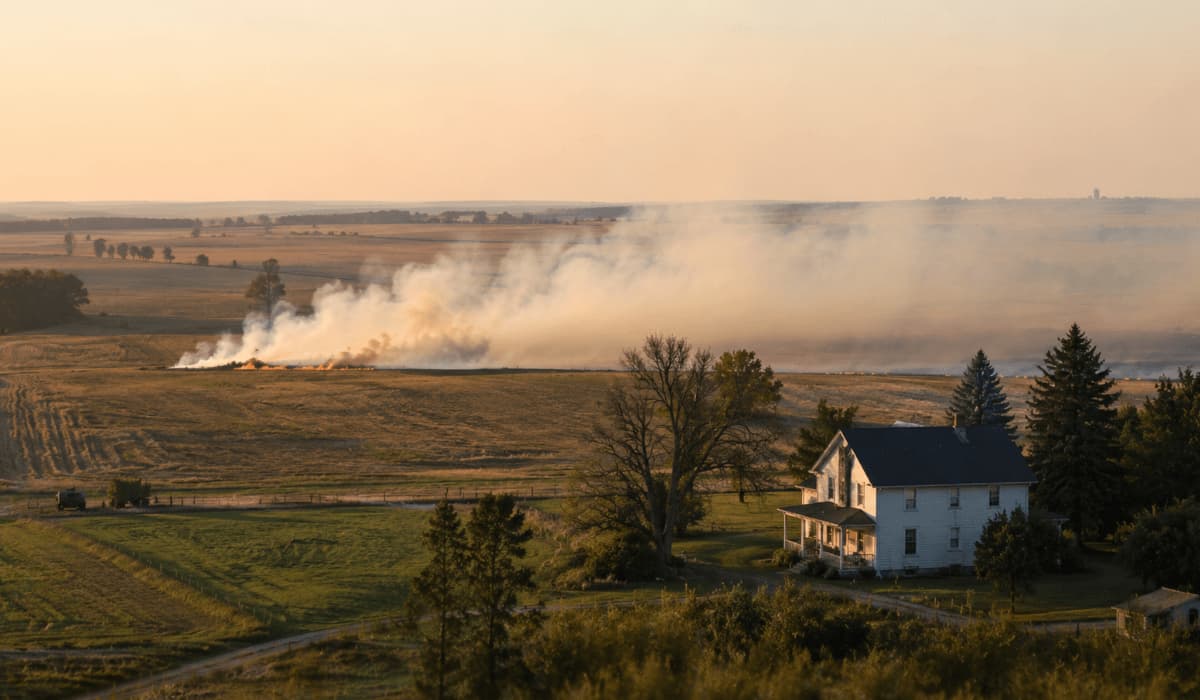
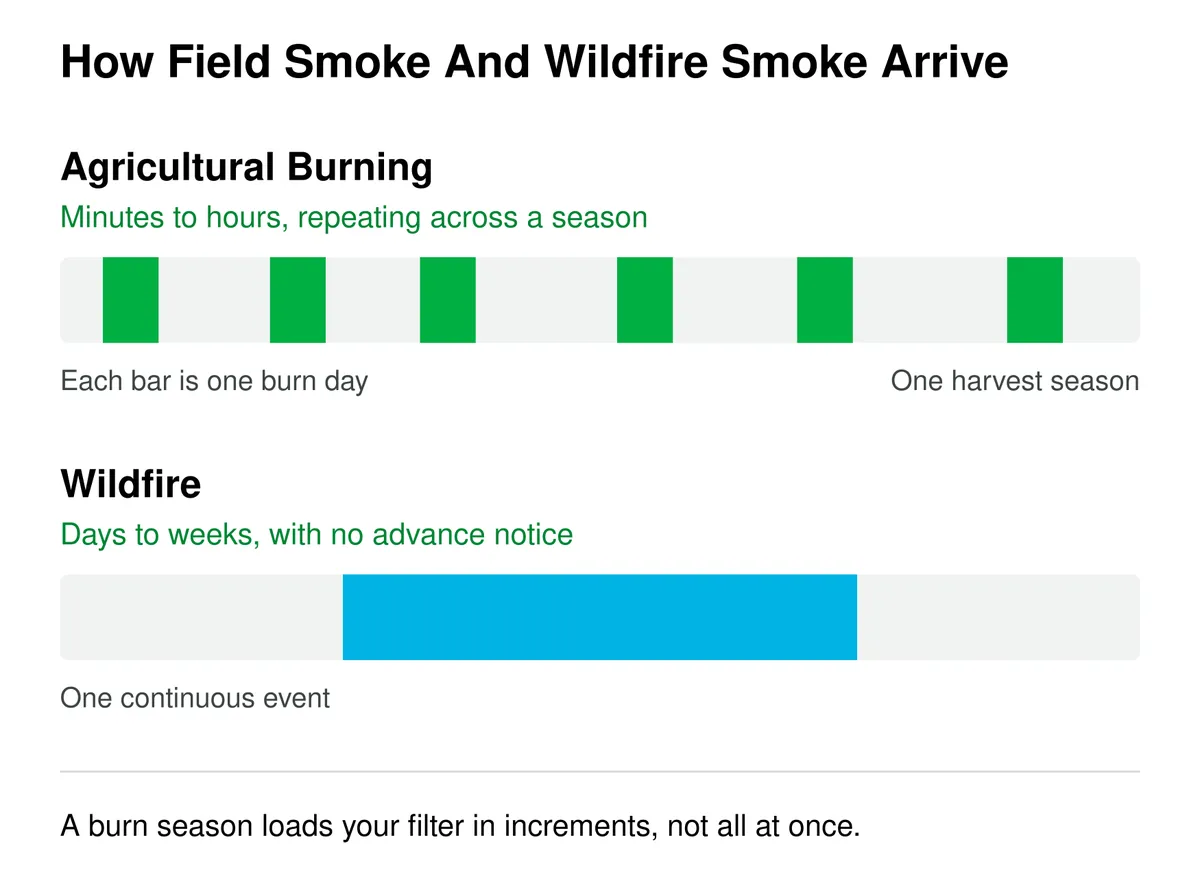
Yes. Agricultural burning releases fine particle pollution that can raise local PM2.5, PM10, and AQI readings within minutes. These burns are permitted and scheduled, so most air agencies publish a daily burn decision you can look up. Field smoke sits low to the ground, passes in minutes to hours, and repeats across a harvest season.
Three steps cut what you breathe indoors on a burn day:
Not sure which rating your system can handle? Answer a few quick questions and we'll match you to a filter.
Agricultural burning is the deliberate burning of crop residue on farmland, and it releases fine particle pollution that can raise local air quality readings within minutes. These burns are permitted and scheduled, so most air agencies publish a daily burn decision you can look up. Field smoke is brief, low to the ground, and repeats across a season. You cut what you breathe indoors by closing the house, running the fan continuously, and fitting a higher-efficiency filter.
Agricultural burning is regulated at the state, county, or tribal level, so the daily burn decision comes from a local air agency.
The main health risk in field smoke is PM2.5, particles 2.5 micrometers and smaller that travel deep into the lungs.
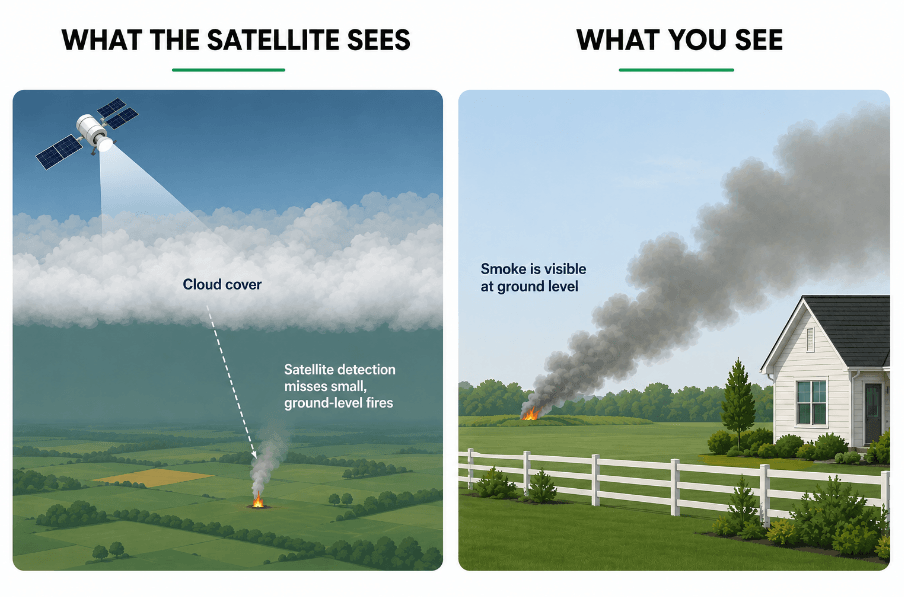
Satellite detection frequently misses agricultural burns because they are small, short-lived, sometimes overnight, and often under cloud cover, so a smoke map can look empty while you smell smoke.
Burn seasons follow harvest calendars, so residents near rice, sugarcane, wheat, grass seed, or rangeland can anticipate the weeks when smoke is most likely.
EPA advises a MERV 13 or higher filter during smoky periods if the system allows, running the fan continuously, and replacing filters more often than the manufacturer suggests.
Fire is often the fastest and cheapest way to clear what a harvest leaves behind. The California Air Resources Board describes agricultural burning as the intentional use of fire on fields, orchards, and rangelands to remove residue, dispose of prunings, control weeds, and prevent disease. The USDA Agricultural Air Quality Task Force documented sugarcane carrying roughly 30 percent of the plant as residue, with no profitable mechanical alternative at that scale.
None of this makes the smoke harmless. It does mean the burn next door is usually a licensed operation on a schedule.
Both carry the same primary risk, fine particle pollution, but behave differently in ways that change what you do.
The regulatory language splits in a way that confuses searchers. Prescribed fire, in federal usage, means a planned burn on wildland, forest, or rangeland. Agricultural burning means open burning of cropland residue. Rangeland burning straddles the two.
Many rural residents check a smoke map during a burn, see nothing, and conclude they imagined it. The map is blind to this kind of fire.
Researchers studying the 2022 to 2023 South Florida sugarcane season found satellite imagery of limited use here, because of cloud cover, overnight burning, and fires that are small and short-lived. NASA reports the same limitation, noting satellites detect only a portion of the sugarcane fires burning each year.
Ground monitors have a matching gap. One regulatory-grade PM2.5 monitor covered the sugarcane region south of Lake Okeechobee that season, so researchers deployed 29 low-cost sensors of their own.
Your own senses are legitimate data in farm country. Treat haze, ash on vehicles, and the smell of burning straw as reason to close up the house, whether or not a map agrees.
Burn seasons track harvest and pruning calendars, so the weeks that matter are predictable once you know what grows nearby.
Local burn windows vary and shift with weather. Confirm current dates with your state or county air agency before planning around them.
Two windows shifted recently. The Kansas Department of Health and Environment reports Kansas rangeland burns across March and April. California moved the other way, and the San Joaquin Valley Air Pollution Control District has phased out nearly all agricultural open burning, including surface harvested prunings as of January 2025.
Burn authority sits with state, county, and tribal agencies, so no national lookup exists. This sequence works in any state.
Search your state's agricultural burning program plus your county name. In California that leads to the California Air Resources Board and your air district. In Washington, the Department of Ecology or a local clean air agency.
Find the daily burn decision, sometimes called a permissive burn day determination. California publishes by 3:00 p.m. for the next day. Washington runs a decision line and county email notifications.
Subscribe to the alert. Several agencies email the daily decision to anyone who signs up, including residents who hold no permit.
Check the AirNow Fire and Smoke Map for nearby monitor and sensor readings, remembering small field fires may not appear.
A notification pathway may already exist. The USDA task force framework lists notifying sensitive populations before a fire among smoke management components.
A burn can be fully permitted and still harm people downwind. Those are separate questions, and the second has a process.
Write down the date, time, wind direction, and symptoms anyone had. Add a photo if the plume is visible from your property.
Report it to your air agency rather than the fire department, since the air agency holds the permit and the compliance record. Washington's Department of Ecology runs a dedicated complaints channel.
Ask in the same call whether your household can join the advance notification list, and whether a smoke management plan covers your area.
A pattern documented across a season carries more weight than a single call, and it is the record that supports adding notification where none exists.
Fine particles enter three ways: open windows and doors, mechanical ventilation such as exhaust fans or a fresh air intake, and infiltration around small gaps.
Close windows and doors as soon as you smell smoke.
Set a central HVAC system to recirculate, or close its outdoor intake damper.
Set the fan to On rather than Auto so air keeps moving through the filter.
Skip activities that add indoor particles: frying or broiling, burning candles, using a wood or gas stove without ventilation, and vacuuming without HEPA.
Set up one cleaner-air room with a portable air cleaner sized to it.
Air the house out when conditions improve, then close it before the next burn.
One caution applies across the rural West. Evaporative coolers, often called swamp coolers, pull outdoor air through a wet pad and draw smoke straight indoors, so step two does nothing for a house cooled this way. EPA advises covering the outside intakes with four-inch MERV 13 filters where you can safely reach them, and otherwise running the cooler sparingly.
AirNow gives the trigger points. An AQI of 101 to 150 is unhealthy for sensitive groups. At 151 and above it is unhealthy for everyone, and outdoor work and exercise should wait.
Risk is not distributed evenly. CDC identifies people with asthma, COPD, diabetes, chronic kidney disease, or heart disease, people who are pregnant, and children as facing higher risk. The American Lung Association advises talking with a physician ahead of the season if a household member is under 18 or over 65, works outdoors, or has a lung or heart condition.
A higher-efficiency filter reduces fine particles circulating through your ductwork. EPA recommends MERV 13, or as high as the fan and filter slot can accommodate, and notes filters may need replacing more often than the manufacturer suggests during heavy smoke.
Two limits deserve stating plainly, and they apply to Filterbuy filters exactly as they apply to every other brand. Filtration reduces particle levels, and no filter prevents illness. Pleated media captures particles rather than gases, so odor can persist even when a filter works properly.
Compatibility comes before efficiency. Higher-rated media adds airflow resistance, and older blower motors do not all tolerate it. Check your manual for its maximum rating, or read our guide to which MERV rating your system can handle.
For smoke, we compare ratings in best MERV rating for wildfire smoke, and weigh central against portable filtration in MERV 13 versus HEPA filtration for smoke.
Keep a spare on hand rather than ordering once smoke arrives. You can shop MERV 13 filters by size and set a delivery interval matching your local burn calendar.
That pattern is the practical difference between a burn calendar and a fire season. A wildfire loads a filter once and hard. A burn calendar loads it in increments, and the increments do not announce themselves.
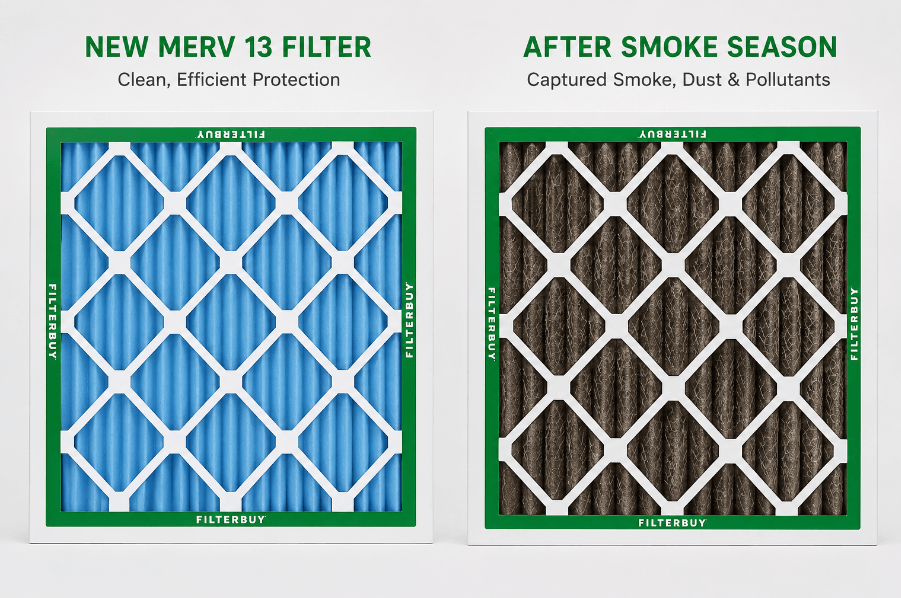
After manufacturing filters for over a decade and serving more than two million households, we hear a different problem from farm counties than from fire country. It is not one bad month. It is the same short event, over and over, through a season.
— David Heacock, Founder and CEO, Filterbuy
Each source below is a government agency or national health organization. Together they answer the four questions a rural household actually has: what is burning, when, who is at risk, and what to do indoors.
The U.S. Environmental Protection Agency explains the three routes smoke uses to get inside and which HVAC settings close them. Read EPA's indoor smoke guidance first if you read only one source on this list.
AirNow, operated by the U.S. Environmental Protection Agency, publishes the six-category index and the health meaning of each color. The AQI category definitions tell you what a reading of 140 means for your household.
The Centers for Disease Control and Prevention lists the conditions that raise smoke risk, including asthma, COPD, heart disease, and pregnancy. Use CDC's smoke risk factors to decide who should stay indoors on a burn day.
The American Lung Association sets out what to do before, during, and after a smoke event, and when to call a physician. Its guidance on protecting lung health during smoke events pairs with an asthma or COPD action plan.
The California Air Resources Board posts statewide agricultural burn decisions by 3:00 p.m. for the following day. California's agricultural burning program also lists every local air district and its contact.
The Washington State Department of Ecology maps which office, clean air agency, or conservation district issues permits in each county. Washington's agricultural burn permitting hub carries the daily decision line and a link for reporting illegal burning.
The Kansas Department of Health and Environment runs a smoke modeling tool and issues advisories through the spring burn window. The Flint Hills Smoke Management Plan lists the counties under April burn restrictions.
Acreage figures below come from the USDA task force acreage record, dated November 1999. Read as scale, not current counts.
Cropland harvested each year: 295 million acres. Burned: about 3 percent.
Sugarcane burned pre-harvest: about 96 percent of 890,000 acres.
Rice: about 20 percent of 3.1 million acres. Small grains: 7 to 8 million acres.
Over 90 percent of the particulate matter is under 10 micrometers.
Researchers measured these during the 2022 to 2023 season in the South Florida monitoring study.
Agricultural burns, wildfires, and prescribed fires together produced 55 percent of national primary PM2.5 in 2020.
The Everglades Agricultural Area ran one regulatory monitor that season. Researchers added 29 sensors.
NASA's Earth Observatory analysis reports these satellite findings.
Satellites detect only a portion of the sugarcane fires that burn each year.
Plumes appear south of Lake Okeechobee from October to April.
Agricultural burning. Intentional open burning of crop residue on farmland, regulated by state, county, or tribal air agencies.
Prescribed fire. A planned burn set by land managers on wildland, forest, or rangeland, under separate federal policy.
PM2.5 and PM10. Airborne particles 2.5 and 10 micrometers or smaller. PM2.5 is the fraction most associated with respiratory and cardiovascular harm.
AQI. The U.S. Air Quality Index, EPA's 0-to-500 scale for outdoor air quality, in six color-coded categories.
Permissive burn day. An air agency determination that conditions allow burning that day.
Smoke Management Program. A state, local, or tribal framework setting when burning may occur and how smoke impacts are reduced.
Air district. The county or regional agency that issues burn permits and daily burn decisions.
MERV. Minimum Efficiency Reporting Value, the scale rating how well a filter captures particles.
HEPA. High-efficiency particulate air filtration, used in portable air cleaners rather than central systems.
