
How Often To Replace Air Purifier Filters: Pre-Filter, HEPA & Carbon
August 17, 2026
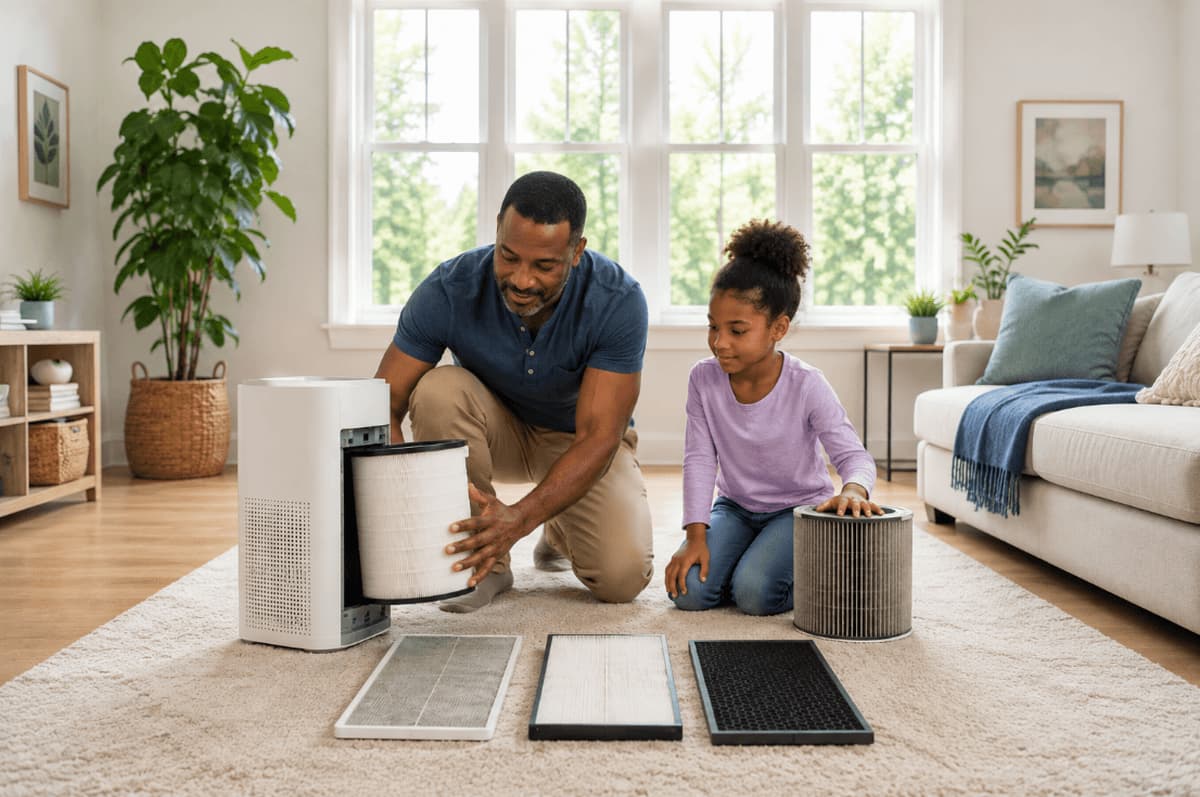
Most air purifiers run three filter layers, and each one wears out on its own schedule.
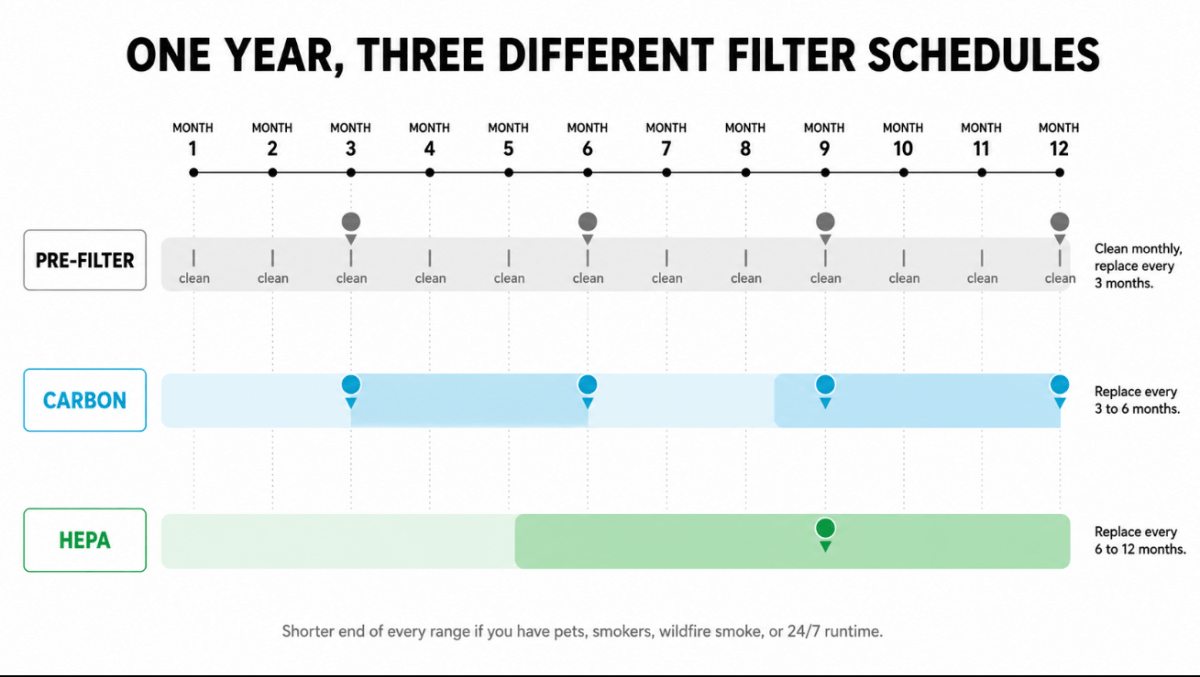
Pre-filters need to be cleaned every month and fully replaced every 3 months.
HEPA filters last 6–12 months depending on usage and air quality.
Carbon filters fall in between, typically needing replacement every 3–6 months. Miss any one of them, and the whole system underperforms.
Here's everything you need to know to stay on schedule, including the signs that tell you a filter is overdue before any indicator light goes off.
Key Takeaways
Regular maintenance is crucial for optimal air purifier performance. Ignoring filter schedules can lead to reduced efficiency and poor air quality.
Pre-filters should be cleaned monthly and replaced every 3 months.
HEPA filters typically need replacement every 6–12 months, depending on usage and environmental factors.
Carbon filters fall in between, requiring replacement every 3–6 months.
Missing a replacement schedule for even one filter affects the entire system's performance.
Look out for signs of overdue filters, such as reduced airflow, unusual odors, or dust buildup, even before the indicator light signals it.
Replacement Intervals At A Glance
| Filter Type | What It Captures | Typical Replacement Interval | What Speeds It Up |
|---|---|---|---|
| Pre-filter | Large particles: dust, hair, pet dander (learn more) | Clean monthly; replace ~every 3 months | Pets, dusty environments, high daily runtime |
| HEPA | Fine particles down to 0.3 microns at 99.97% efficiency (EPA standard) (learn more) | Every 6–12 months | Wildfire or smoke exposure, high-pollen seasons, running 24/7 |
|
Carbon (activated) |
Gases, odors, VOCs (learn more) | Every 3–6 months | Smokers in the home, cooking fumes, chemical off-gassing, high humidity |
Why These Three Filters Don't Wear Out At The Same Rate
The short answer: they fail in completely different ways.
A pre-filter sits at the front of the airflow path and takes the first hit from every large particle that enters the unit. That constant surface accumulation, hair, dust, dander, clogs it fast. Cleaning monthly buys time, but once the fibers are matted or the mesh is structurally compromised, it starts restricting airflow to the filters behind it rather than protecting them.
HEPA filters work by trapping particles within a dense fiber matrix. According to the EPA, a true HEPA filter captures 99.97% of particles at 0.3 microns—the size considered hardest to catch. Because HEPA relies on particle buildup within the fiber structure (not just on the surface), it degrades gradually.
The interval moves based on how polluted your air is: a unit running in a clean suburban home on a normal schedule can reasonably reach 12 months; the same unit running through wildfire season or in a home with multiple pets may need replacement closer to the 6-month mark.
Carbon filters saturate differently again. Activated carbon captures gases and odors through adsorption; pollutant molecules bond to the carbon's surface. Once those bonding sites are full, the filter stops absorbing and can actually begin releasing previously trapped compounds back into the air.
There's no visual cue for this, which is why the 3–6 month interval matters more with carbon than with any other filter type. Higher humidity, cigarette smoke, or strong cooking fumes fill those sites faster and push the interval toward the shorter end of the range.
6 Signs A Filter Is Due For Replacement Before The Schedule Says So
Replacement intervals are starting points, not hard deadlines. These signs mean a filter needs attention regardless of where you are in the cycle:
Familiar odors are coming back. If the smells you initially noticed, like pet odor, cooking, or mustiness, have returned after a period of being gone, the carbon filter has likely saturated.
The pre-filter is visibly gray or discolored. A heavily darkened pre-filter is no longer protecting the filters behind it and should be replaced, not just rinsed.
Airflow feels weaker, or the unit is running louder. A clogged filter forces the motor to work harder. Reduced output at the same fan setting, or a unit that's suddenly noisier, usually points to a filter issue.
Dust is resettling faster than usual. If surfaces you just cleaned are accumulating dust again quickly, the unit may not be cycling air effectively, often a sign that filter capacity is spent.
You notice increased allergy or asthma symptoms indoors. This isn't definitive on its own, but a pattern of worsening symptoms in a home with an air purifier is worth investigating with a filter check.
The filter change indicator is lit, but treat it as a prompt, not a verdict. Most indicators measure runtime hours, not actual filter condition. They're a useful reminder, but a filter in a high-pollution environment can be spent well before the light triggers.
Factors That Shift Your Replacement Schedule
The intervals above assume average conditions. These factors consistently push replacement dates earlier:
Pets: dander and hair load the pre-filter and HEPA significantly faster
Smokers in the home: accelerate carbon saturation and deposit fine particles on HEPA
Wildfire or smoke season: one heavy smoke event can consume weeks of normal filter capacity
High-pollen periods: outdoor air pulled in during spring and fall adds measurable particle load
Running the unit 24/7: continuous runtime compounds wear; interval ranges assume roughly 12 hours of daily use
Mismatched unit size: a purifier rated for 200 sq ft working a 400 sq ft room runs harder, and filters degrade faster
If two or more of these apply to your home, plan for the shorter end of every interval range.
Keep Filters On Schedule Without The Guesswork
Tracking three different filter timelines manually is easy to let slip. Filterbuy's filter-matching tool identifies the correct replacement filters for your specific unit, and the auto-delivery subscription means the right filter arrives before the old one is overdue, no last-minute orders, no stretching a spent filter another month.
Frequently Asked Questions
Does A HEPA Filter Really Need To Be Replaced Every 6 Months, Or Can It Last Longer?
It depends on usage conditions. The 6–12 month range is the standard recommendation for a unit running in a typical home. At the shorter end: homes with pets, smokers, or wildfire exposure. At the longer end: low-pollution environments with moderate daily runtime. Running a HEPA filter past 12 months in average conditions risks reduced particle capture efficiency and potential motor strain from restricted airflow.
Can You Wash And Reuse A HEPA Filter Instead Of Replacing It?
Most HEPA filters are not designed to be washed. Water damages the fine fiber matrix that makes HEPA effective, and vacuuming can dislodge captured particles or create gaps in the filter media. Some units include a "washable" pre-filter alongside a standard HEPA—that pre-filter can be rinsed, but the HEPA behind it still requires replacement on schedule. Check your unit’s manual before attempting to clean any filter layer.
How Do I Know Which Filter Type My Air Purifier Uses?
The unit's manual is the most reliable source. Most air purifiers also label their filter compartments directly. If you're unsure, Filterbuy's filter-matching tool can identify your unit's filter configuration by model.
What Happens If You Keep Running An Air Purifier With An Old Filter?
A saturated or clogged filter doesn't just stop working; it can actively work against you. A spent carbon filter may release previously trapped odors back into the room. A clogged HEPA or pre-filter restricts airflow, forcing the motor to work harder (shortening the unit's lifespan) and reducing the volume of air cleaned. In effect, a unit with expired filters is circulating air with little to no filtration benefit while wearing down the hardware.