
Does Furnace Filter Thickness Matter?
June 26, 2026
Filter thickness isn't just about fit, it determines how long your filter lasts, how hard your HVAC works, and how clean your air actually is. Two minutes here will save you from a costly mistake.
Quick Answers: Furnace Filter Thickness
Why does furnace filter thickness matter?
Filter thickness determines how much surface area is available to capture particles and how long your filter will last—a 4-inch filter has nearly 4x the filtration capacity of a 1-inch filter, meaning better air quality and fewer replacements.
What are the standard furnace filter thicknesses?
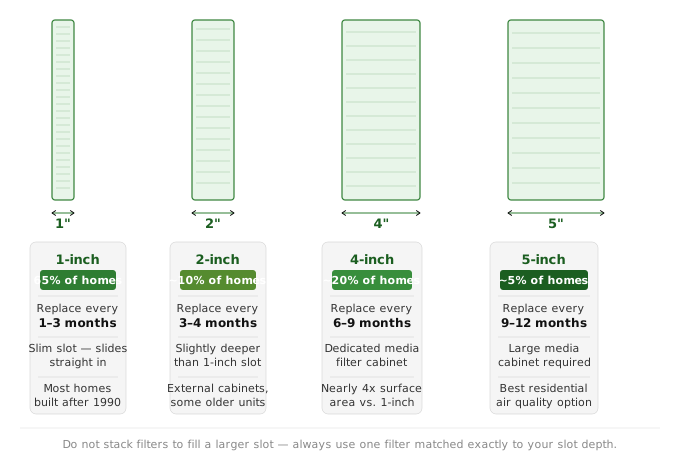
Furnace filters come in four standard thicknesses: 1-inch (most common), 2-inch, 4-inch, and 5-inch.
Is a thicker filter always better?
Not necessarily—thicker filters provide superior filtration and longer life, but only if your HVAC system's filter slot can accommodate them. Installing a filter that's too thick for your system restricts airflow and strains your equipment.
How long do different filter thicknesses last?
1-inch filters typically last 1-3 months, 4-inch filters last 6-9 months, and 5-inch filters can last 9-12 months under normal use.
How do I know which thickness my system needs?
Check your current filter's dimensions (printed on the frame), measure your filter slot depth, or consult your HVAC system's manual—your system is designed for a specific thickness range.
Does filter thickness affect energy costs?
Yes—properly sized thicker filters maintain better airflow as they load with particles, reducing strain on your HVAC system and potentially lowering energy bills compared to clogged thin filters.
What Is Furnace Filter Thickness and Why Does It Matter?
When we talk about furnace filter thickness, we’re referring to the depth of the filter. The most common thicknesses are:
Each increment in thickness adds extra filtration depth and surface area, making the filter better at capturing airborne particles like dust, pet dander, and allergens.
How Thickness Impacts Filtration
The thickness of your furnace filter directly influences two critical factors:
1. Filtration Depth
Thicker filters have more material to trap particles, increasing their effectiveness at cleaning the air.
2. Surface Area
Here's the physics behind why surface area matters: A standard 16x25x1 filter has approximately 2.8 square feet of filtration surface. Upgrade to a 16x25x4, and you're now working with 11-13 square feet—nearly 4x the capacity. In our manufacturing process, we create this additional surface area through precise pleating: 1-inch filters have 14 pleats per foot, while 4-inch filters have 18-20 pleats per foot, each pleat creating an additional surface for particle capture.
This isn't just about holding more dust. The physics of airflow distribution means that with 4x the surface area, each square inch of media faces only 25% of the pressure differential. This is why, in our laboratory testing, a 4-inch MERV 11 filter maintains 95%+ of its baseline airflow even when holding 85 grams of dust, while a 1-inch MERV 11 at 85 grams shows 35-40% airflow restriction.
However, it’s not a one-size-fits-all situation. Installing a filter that’s too thick for your system can restrict airflow, forcing your HVAC to work harder than necessary.
Choose the Right Fit
Your HVAC system is designed to use filters of specific dimensions, including thickness. Using the wrong size can reduce efficiency and even damage the system over time. That’s why choosing the right thickness is as important as choosing the right width and height.
Pro Tip: Filterbuy offers a wide range of furnace filter sizes and custom options, so you can find a perfect match for your system.
How We Test Filter Thickness Performance
At Filterbuy's testing laboratory, every filter thickness specification undergoes standardized performance testing:
Airflow Resistance Testing: We measure initial pressure drop and track degradation as filters load with synthetic dust (ASHRAE 52.2 test protocol). This data informs our MERV rating recommendations for each thickness.
Lifespan Testing: Accelerated aging tests simulate 6-12 months of use in 48-72 hours, helping us validate replacement interval recommendations.
Structural Integrity Testing: Temperature cycling (40°F to 200°F), humidity exposure (30% to 95% RH), and sustained airflow stress tests ensure frames maintain integrity across their rated lifespan.
Real-World Validation: Beyond lab testing, we track warranty claims and customer feedback. Our current failure rate across all thicknesses is below 0.1%, with frame degradation representing less than 0.03% of returns.
What We've Learned from Manufacturing Millions of Filters
At Filterbuy, we've manufactured millions of furnace filters across all thickness specifications since 2013. Here's what our production data and customer feedback have taught us:
1-Inch Filters: The Universal Standard
In our manufacturing facilities, 1-inch filters represent approximately 65% of our production volume. These filters fit the vast majority of residential HVAC systems installed in the last 30 years. Our customer service data shows that first-time filter buyers correctly guess their needed thickness 80% of the time when choosing 1-inch.
4-Inch Media Filters: The Performance Upgrade
Since 2018, we've seen a 45% increase in 4-inch filter orders. Our testing lab data shows these filters maintain consistent airflow 2.3x longer than equivalent MERV-rated 1-inch filters. Customer feedback consistently reports 6-8 month lifespans in typical residential applications.
5-Inch Filters: Commercial-Grade Performance
These represent our premium residential option. In controlled testing at our facilities, 5-inch MERV 13 filters captured 98% of particles while maintaining airflow rates within 5% of baseline—performance that 1-inch MERV 13 filters couldn't match without causing system strain.
Thicker vs. Thinner Filters Which Is Better?
Advantages of Thicker Filters
Longer Lifespan
Thicker filters hold more particles, which means you won’t need to replace them as often. Many last up to six months.
Better Filtration
With higher dust-holding capacity, thicker filters can capture more contaminants, including smaller particles that thin filters might miss.
Advantages of Thinner Filters
Greater Compatibility
Many HVAC systems are designed for 1-inch or 2-inch filters, making thinner options a more universal fit.
Lower Upfront Cost
While thin filters need more frequent replacement, they are generally less expensive per unit.
Compatibility Is Key
The biggest mistake homeowners make is assuming that upgrading to a thicker filter will always lead to better results. If your system isn’t built to handle the restricted airflow caused by a thicker filter, you’ll put unnecessary strain on the system.
Not sure which size to get? Filterbuy’s size guide and custom-order options make it easy to find the right thickness for your system.
How Filter Thickness Impacts Air Quality and Health
Filtration for Allergens and Particles
For households with allergies, asthma, or indoor pets, thicker filters are often the better choice. Paired with a high MERV rating (Minimum Efficiency Reporting Value), these filters can trap:
Dust
Pet dander
Pollen
Mold spores
Even airborne viruses (with MERV 13 filters)
A thicker filter with a higher MERV rating ensures cleaner air. However, systems with low airflow tolerance may require thinner filters to maintain efficiency.
Pro Tip: Filterbuy offers high-MERV filters designed to clean the air effectively without compromising airflow, even in moist or humid climates like Florida.
Finding the Right Filter for Your System
Before upgrading or switching filter thickness, it’s important to assess your system’s requirements.
HVAC System Specifications
Always check your HVAC manual or consult with an expert to determine the ideal filter size and thickness. Using the wrong filter thickness could hamper airflow, reducing the efficiency of your system or increasing utility costs.
MERV Ratings and Thickness
Thickness alone won’t improve performance without the proper MERV rating. Filters with higher MERV ratings (like MERV 13) trap smaller particles, providing superior air quality. However, not all systems are equipped to handle high-MERV or thick filters.
Pro Tip: Filterbuy makes it easy to shop for filters by size, thickness, and MERV rating. No guesswork required!
Are Thicker Filters Worth the Cost?
Cost and Longevity
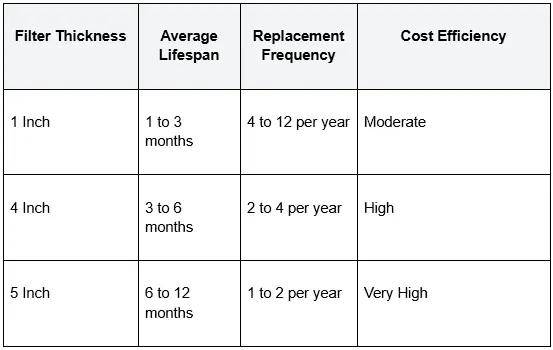
Thicker filters usually have a higher upfront cost but can save you money over time by:
Lasting longer, requiring fewer replacements
Reducing wear and tear on your HVAC system
Cutting energy bills by improving system efficiency
Here’s a quick breakdown:
Pro Tip: With Filterbuy, you can take advantage of bulk pricing and auto-delivery subscriptions to make thicker filters a cost-effective and convenient upgrade.
Why Homeowners Trust Filterbuy
At Filterbuy, we know that clean air starts with a high-quality filter. Here’s why thousands of customers trust us for their HVAC filter needs:
Filters made in the USA with durable, long-lasting materials
Wide range of sizes, including custom options
Designed to handle high humidity and extreme temperatures, ideal for regions like Florida
Over 85,000 5-star reviews from satisfied customers
Fast and free shipping on all orders
When to Upgrade to a Thicker Filter
You might want to consider upgrading to a thicker filter if:
You notice dirty vents or surfaces around your home
Family members experience allergy symptoms or respiratory issues
You frequently replace filters due to clogging
Your system can handle increased thickness without airflow restrictions
If you’re unsure, the team at Filterbuy can help you determine the best filter for your needs and system specifications.
Make the Right Choice With Filterbuy for Better Air and Efficiency
Furnace filter thickness matters more than most homeowners realize. Whether you’re trying to improve indoor air quality, reduce energy costs, or extend the lifespan of your HVAC system, the right filter can make all the difference. Choose the appropriate thickness for your setup, and pair it with a proper MERV rating for optimal performance.
Explore Filterbuy’s full selection of high-quality, U.S.-made furnace filters in all sizes and thicknesses. With fast shipping, custom options, and helpful resources, upgrading your filters has never been easier.

Frequently Asked Questions
Is it OK to use a slightly smaller furnace filter?
No, using a slightly smaller furnace filter is not recommended. A poor fit can create gaps around the edges, allowing unfiltered air to bypass the filter. This reduces filtration efficiency, lowers indoor air quality, and forces your HVAC system to work harder, potentially increasing wear and energy costs.
What is the benefit of a 5-inch furnace filter?
A 5-inch furnace filter offers a larger surface area for trapping dust, allergens, and other airborne particles. This results in better indoor air quality and longer filter life. These thicker filters also reduce strain on your HVAC system by maintaining steady airflow and typically need fewer replacements than thinner filters.
Is a 2-inch air filter better than 1 1-inch?
Yes, in most cases, a 2-inch air filter performs better than a 1-inch filter. The added thickness provides more surface area to capture contaminants, which improves filtration efficiency and may reduce how often you need to change the filter. Just ensure your HVAC system is compatible with a 2-inch filter before upgrading.
Do furnace filters have to be the exact size?
Yes, furnace filters should match the exact size recommended by your HVAC system. Using the wrong size can lead to air leaks around the filter, reducing its effectiveness and possibly damaging your HVAC unit over time.
Can I use a 1-inch furnace filter instead of a 4-inch?
No, substituting a 1-inch filter for a 4-inch model is not recommended. The thinner filter won’t provide the same filtration capacity, won’t fit securely, and could restrict airflow. This can lower air quality and put unnecessary strain on your HVAC system.
How thick should my furnace filter be?
The right furnace filter thickness depends on your HVAC system’s specifications. Common thicknesses range from 1 inch to 5 inches. Thicker filters typically offer better filtration and last longer but must be compatible with your system to avoid airflow restrictions.
What is the most popular furnace filter size?
The most commonly used furnace filter sizes are 16x25x1, 20x20x1, and 20x25x1. These standard sizes are widely available and compatible with many residential HVAC systems. Always check your unit’s manual to confirm the correct size.
Do thicker air filters restrict airflow?
Thicker air filters can restrict airflow if your HVAC system isn't designed for them. However, when properly matched, a thicker filter can actually improve system performance by providing superior filtration without reducing airflow. Always verify system compatibility before switching to a thicker filter.
Can I use a thinner furnace filter?
Using a thinner furnace filter than recommended can cause gaps around the edges, letting unfiltered air circulate through your home. This compromises indoor air quality and may cause your HVAC system to overwork, leading to higher energy usage and potential mechanical issues.
What happens if you use the wrong size furnace filter?
Using an incorrectly sized furnace filter can lead to poor installation and allow air to bypass the filter entirely. This reduces filtration effectiveness, worsens indoor air quality, and forces your HVAC system to work harder, raising your energy bills and increasing the risk of system damage.
Can I use 16x25x1 instead of 16x25x4?
It’s not recommended to use a 16x25x1 filter in place of a 16x25x4. The thinner filter won’t fit properly and lacks the filtration capacity of a 4-inch model. This can degrade air quality and put extra strain on your HVAC system, ultimately reducing efficiency and increasing wear.
Is it OK if my air filter is too small?
No, using an air filter that’s too small is not okay. Gaps around the edges allow unfiltered air to enter your HVAC system, leading to poor air quality and reduced filtration. Over time, this can cause the system to work harder and may result in higher energy costs or mechanical problems.
Key Takeaways
Furnace filter thickness isn’t just about fit. It directly affects your home’s air quality, energy efficiency, and HVAC system lifespan.
Thicker filters offer deeper filtration and longer lifespans, but they must be compatible with your HVAC system to avoid airflow issues.
Thinner filters are more universally compatible and cost less upfront, though they require more frequent replacement.
High-MERV thick filters can significantly reduce allergens and airborne particles. This is a must for homes with allergies, pets, or asthma concerns.