Shop by
July 25, 2026
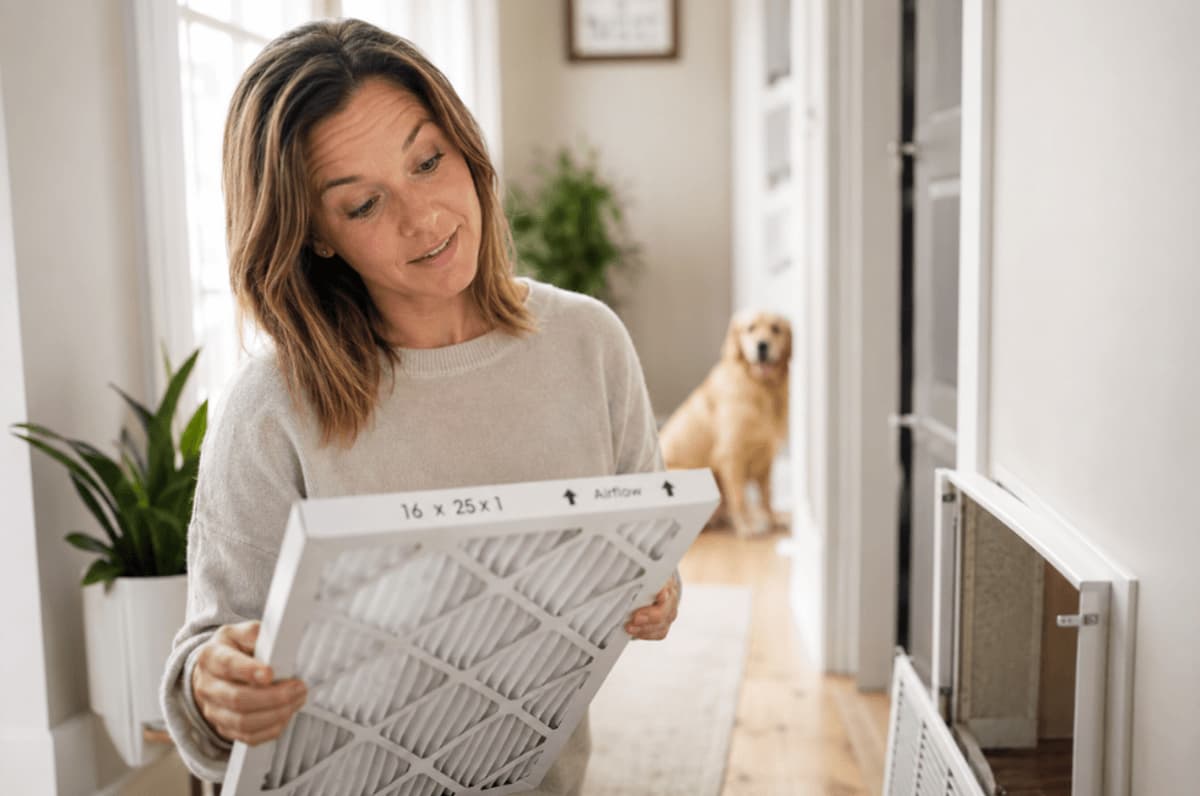
FPR is a filter efficiency scale that runs from 4 to 10, and it maps closely to the industry-standard MERV scale. FPR stands for Filter Performance Rating, a system The Home Depot created for the filters sold in its stores. Filterbuy rates its filters on MERV instead, so use the chart below to turn your current FPR number into the MERV rating you need.
FPR 4 ≈ MERV 5–6: large dust, lint, and pollen
FPR 5 ≈ MERV 7–8: dust mites and mold spores
FPR 6 ≈ MERV 8–9: pet dander and fine dust
FPR 7 ≈ MERV 10–11: finer particles and smog
FPR 8–9 ≈ MERV 11–12: fine airborne particles
FPR 10 ≈ MERV 13+: microscopic particles
Not sure which rating your home needs? The match quiz below will narrow it down for you.
Answer a few quick questions and we'll point you to your filter.
Already know your MERV rating?
Shop Air Filters By MERV Rating
FPR (Filter Performance Rating) is a filter efficiency scale that runs from 4 to 10. Higher numbers capture smaller, more harmful particles. FPR maps closely to the industry-standard MERV scale, the rating system Filterbuy uses, making it a useful reference point when choosing the right filter for your home.
Most people buying an air filter check two things: price and size. The rating system stamped on the box? Usually ignored. But that number (specifically the FPR rating) can help you understand how different filters compare, and how to find the right MERV-rated filter for your needs.
• FPR (Filter Performance Rating) is a scale from 4 to 10 that measures particle capture efficiency on filters sold at certain retailers.
• FPR maps closely to the industry-standard MERV rating system, which is the scale used by Filterbuy.
• Understanding FPR can help you cross-reference your current filter and find its MERV equivalent when shopping for a replacement.
• Filterbuy offers filters rated MERV 8–13, covering a wide range of household air quality needs, from basic dust control to fine allergen filtration.
• For most homes, MERV 8–11 (roughly FPR 6–9) strikes the right balance of efficiency and airflow.
FPR stands for Filter Performance Rating. It's a rating system developed by The Home Depot and applied to filters sold in their stores. It was created as a consumer-friendly alternative to MERV ratings, measuring how effectively a filter captures airborne particles.
The FPR scale runs from 4 to 10:
• FPR 4: Basic filtration, captures large particles like dust and lint
• FPR 5–6: Mid-range, captures smaller particles including mold spores and pet dander
• FPR 7–8: Higher efficiency, captures fine particles like smoke and bacteria
• FPR 9–10: Maximum efficiency, captures microscopic particles including viruses and fine allergens
The rating reflects particle capture efficiency: essentially, how well the filter removes airborne particles as air passes through. A higher FPR means finer filtration, but also more airflow resistance, which matters for your HVAC system (more on that below).
It's worth noting that FPR is retailer-specific. If you're shopping outside that ecosystem, you'll more commonly encounter MERV ratings, the universal standard used across the industry and the scale Filterbuy filters are rated on.
Indoor air quality is often worse than outdoor air. The EPA estimates that indoor air can be two to five times more polluted than outdoor air, largely due to trapped allergens, dust, and particles that recirculate through HVAC systems without adequate filtration.
Your air filter is the frontline defense against:
• Allergens: pollen, mold spores, and dust mites that trigger seasonal symptoms
• Pet dander: microscopic flakes shed by cats, dogs, and other animals
• Smoke particles: both tobacco smoke and wildfire smoke contain fine particulates linked to respiratory issues
• Bacteria and viruses: captured at higher filter efficiency levels
Choosing a filter purely on price often means settling for minimal filtration, which handles basic dust but leaves finer particles circulating freely.
For households with allergy sufferers, pets, or anyone with respiratory sensitivities, a mid- to high-efficiency filter can make a measurable difference, and that's where MERV 8–13 filters, like those offered by Filterbuy, come into play.
When selecting an air filter, understanding how different rating systems relate to one another helps you make an informed decision. FPR is useful as a reference point, but MERV is the more widely recognized standard and the one you'll want to use when shopping for filters.
MERV (Minimum Efficiency Reporting Value) is the industry-standard rating system established by ASHRAE, an international technical organization. It runs from 1 to 16 for residential and commercial use, and up to 20 for specialized environments. Filterbuy filters are rated on the MERV scale, covering MERV 8 through MERV 13.
FPR was designed to approximate MERV in a simplified format. If you're familiar with FPR from past filter purchases, this table helps you find the MERV equivalent:
| FPR Rating | Approximate MERV Equivalent | What It Captures |
|---|---|---|
| FPR 4 | MERV 5–6 | Large dust, lint, pollen |
| FPR 5 | MERV 7–8 | Dust mites, mold spores |
| FPR 6 | MERV 8–9 | Pet dander, fine dust |
| FPR 7 | MERV 10–11 | Smoke, smog, bacteria |
| FPR 8–9 | MERV 11–12 | Fine allergens, fine particles |
| FPR 10 | MERV 13+ | Microscopic particles, viruses |
Note: These conversions are approximate. Rating scales can vary slightly depending on the filter and testing methodology, so use them as a general guide when cross-referencing FPR and MERV equivalents.
As the table shows, Filterbuy's MERV 8–13 range covers the equivalent of roughly FPR 6–10, making it well-suited for the majority of household air quality needs.
MPR (Microparticle Performance Rating) is another retailer-specific scale you may encounter when shopping for filters. Here's how it maps to MERV and FPR:
• FPR 4 ≈ MERV 5–6: captures large dust, lint, and pollen
• FPR 5–6 ≈ MERV 7–9: captures dust mites, mold spores, and pet dander
• FPR 7–8 ≈ MERV 10–12: captures smoke, smog, fine allergens, and bacteria
• FPR 10 ≈ MERV 13+: captures microscopic particles and viruses
All three systems measure the same thing, filtration efficiency, using different scales and testing methodologies. When in doubt, use the MERV rating as your primary reference.
High-efficiency filters are designed to capture fine and ultrafine particles, including smoke, bacteria, and airborne allergens. Filterbuy's MERV 11 and MERV 13 filters fall into this category and are the best choice for:
• Households with allergy or asthma sufferers
• Homes with multiple pets
• Anyone living near wildfire-prone areas or high-pollution zones
One thing to keep in mind: higher-efficiency filters create more airflow resistance. Always check your HVAC system's recommended MERV range before upgrading to ensure your unit can handle it.
Standard filters cover the essentials: large dust particles, lint, pollen, mold spores, and some pet dander. Filterbuy's MERV 8 filter is a popular choice here and works well for:
• Homes without pets or significant allergy concerns
• Vacation properties or low-occupancy spaces
• HVAC systems with lower airflow capacity
For many households, a MERV 8 filter hits a practical sweet spot, noticeably better than bare-minimum filtration, without putting unnecessary strain on your HVAC system.
HEPA (High-Efficiency Particulate Air) filters operate outside the FPR and MERV scales entirely. Certified HEPA filters must capture 99.97% of particles at 0.3 microns, a standard that exceeds even MERV 13. They're common in air purifiers and medical environments, but most residential HVAC systems can't accommodate true HEPA filters due to their high airflow resistance.
If indoor air quality is a serious concern, pairing a high-efficiency HVAC filter (like a Filterbuy MERV 13) with a standalone HEPA air purifier is usually the more practical solution.
Rather than shopping by FPR, use it as a translation tool to identify the MERV rating that fits your needs. Start by auditing your household's specific situation:
• Allergies or asthma? Look for MERV 11 or MERV 13 (roughly FPR 8–10). You need a filter that captures mold spores, fine dust, and airborne allergens.
• Pets in the home? MERV 8–11 (roughly FPR 6–9) at minimum. Pet dander is small enough to slip through basic filters.
• Smokers or smoky air quality? MERV 13 (FPR 10 equivalent) targets the fine particles in smoke most effectively.
• No pets, no allergies, good local air quality? A MERV 8 filter (roughly FPR 6) is often perfectly adequate.
• Older HVAC system? Consult your system manual. Some older units can't sustain the airflow pressure needed for high-efficiency filters.
Different spaces have different demands:
• Bedrooms: MERV 11 or higher for better overnight air quality, especially for light sleepers or allergy sufferers.
• Homes with pets: MERV 8–11 across the board; focus on high-traffic areas where dander accumulates.
• Homes near construction or high-pollution zones: MERV 13 to catch fine particulates and outdoor pollutants.
• General living areas in low-concern households: MERV 8 provides solid protection without unnecessary strain on your HVAC.
Replace filters on schedule regardless of rating. Even the highest-efficiency filter loses effectiveness when clogged.
FPR is a useful reference point, but it's not a universal standard. If you've previously bought filters using FPR and are looking for a replacement, use the conversion table above to find the equivalent MERV rating, then shop from there.
Filterbuy's MERV 8–13 filter range covers the efficiency levels most households need, from everyday dust filtration to fine allergen and smoke particle capture. Understanding how FPR maps to MERV makes it easy to find the right filter without starting from scratch.
Ready to find the right filter for your home? Browse Filterbuy's MERV-rated air filters and filter by your specific needs.
FPR stands for Filter Performance Rating. It's a retailer-specific scale that measures filter efficiency, ranging from 4 to 10. Higher numbers indicate filters that capture smaller and more harmful airborne particles. FPR maps closely to the MERV scale, which is the universal industry standard and the rating system used by Filterbuy.
An FPR 5 filter is roughly equivalent to MERV 7–8. It captures mid-range particles like dust mites and mold spores and is a step up from basic filtration. Filterbuy's MERV 8 filter covers this range and is a solid everyday option for most households.
Not necessarily. Higher-efficiency filters capture finer particles but restrict airflow more. If your HVAC system isn't rated to handle high-efficiency filters, using one can strain the unit and reduce its lifespan. Always check your system's recommended MERV range before upgrading.
FPR and MERV both measure filtration efficiency, just on different scales. FPR 4 roughly equals MERV 5–6, while FPR 10 approximates MERV 13+. The comparison table in this post maps the full range so you can cross-reference easily.
Yes. Use the conversion table above to match your current FPR-rated filter to its MERV equivalent, then shop Filterbuy's filter range using that MERV rating.
No. HEPA filters operate on a separate certification standard and aren't rated on the FPR or MERV scale. True HEPA filters capture 99.97% of particles at 0.3 microns, which exceeds even MERV 13. Most residential HVAC systems require a high-efficiency MERV-rated filter paired with a standalone air purifier rather than a true HEPA filter.
