
Montreal, QC Live Wildfire Smoke Map
Get Alerts For Wildfires In Your Area
The moment a wildfire starts near you, you'll get an instant alert and simple tips to reduce your smoke exposure.
What's In The Smoke
30xSmaller than a human hair
Fine enough to reach deep into the lungs. A MERV 13 is built to capture it.
How Far It Travels


It Doesn't Stay Local
Smoke rides the wind far downwind — you can get smoky air with no fire nearby.
What To Do During A Smoke Event
Simple steps to reduce indoor exposure.
- Stay In, Close UpShut windows and doors to keep smoke out.
- Set Fan To "On"Keeps air cycling through your filter, not just when heating or cooling.
- Recirculate AirSwitch off fresh-air intake so you're not pulling smoke in.
- Run A MERV 13Built to capture the fine PM2.5 in smoke.
- Add A PurifierExtra filtration for the room you use most.
- Wear an N95 if OutsideFits snug to block fine particles — a cloth mask won't.


The Best Air Filter For Wildfire Smoke
During smoke events, the EPA recommends upgrading to a MERV 13 filter — or the highest-rated filter your system can handle — to help reduce the fine particles smoke brings indoors. MERV 13 is the level most home HVAC systems can run while still capturing PM2.5, the fine particulate that makes up the bulk of wildfire smoke.
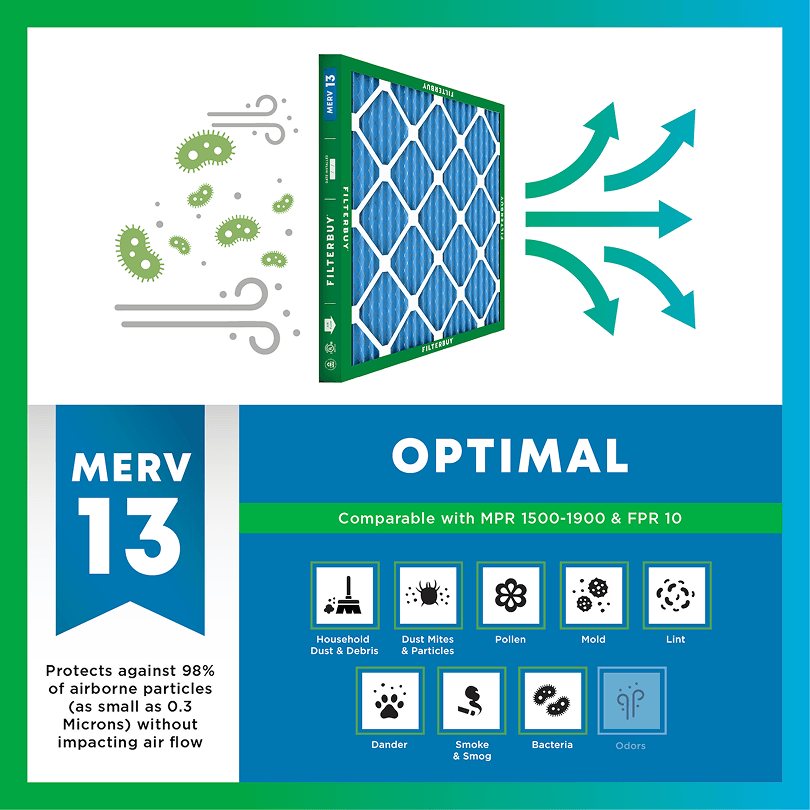
- Captures PM2.5 particles
- Blocks ash, soot, and smoke odor
- Keeps your indoor air safe—even when the outdoor air is dangerous
- Meets the EPA's recommended rating for filtering fine wildfire smoke particles.

Wildfire Smoke FAQs
Facts About Wildfires
Over 70,000 wildfires burn in the U.S. every year.
Wildfire smoke can travel 1,000+ miles, affecting states that aren't even near the blaze.
Exposure to wildfire smoke can worsen asthma, trigger heart issues, and lead to ER visits.
Indoor air can hold more fine particles during wildfire events unless it's properly filtered.
The EPA advises using MERV 13 filters or portable HEPA air cleaners during wildfire smoke events.
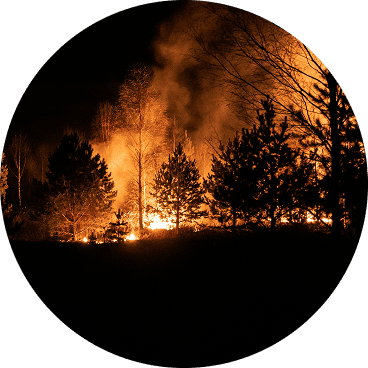
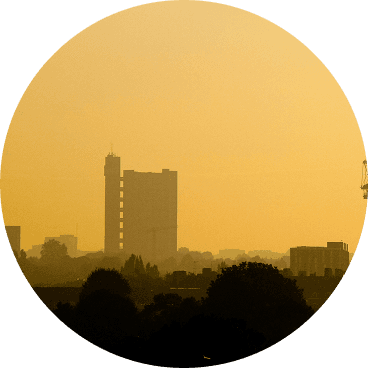
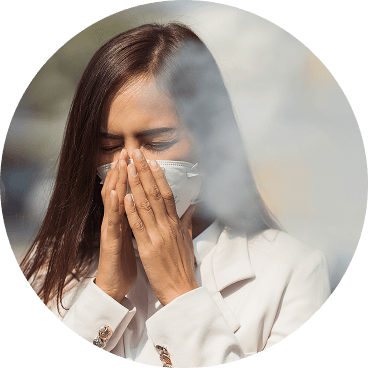
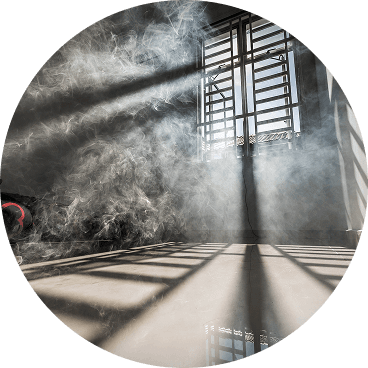
Don't Wait Until The Smoke's Inside.
Use the live wildfire smoke tracker and upgrade your air filters today to protect your lungs and your home.
Shop Filters For Smoke Protection
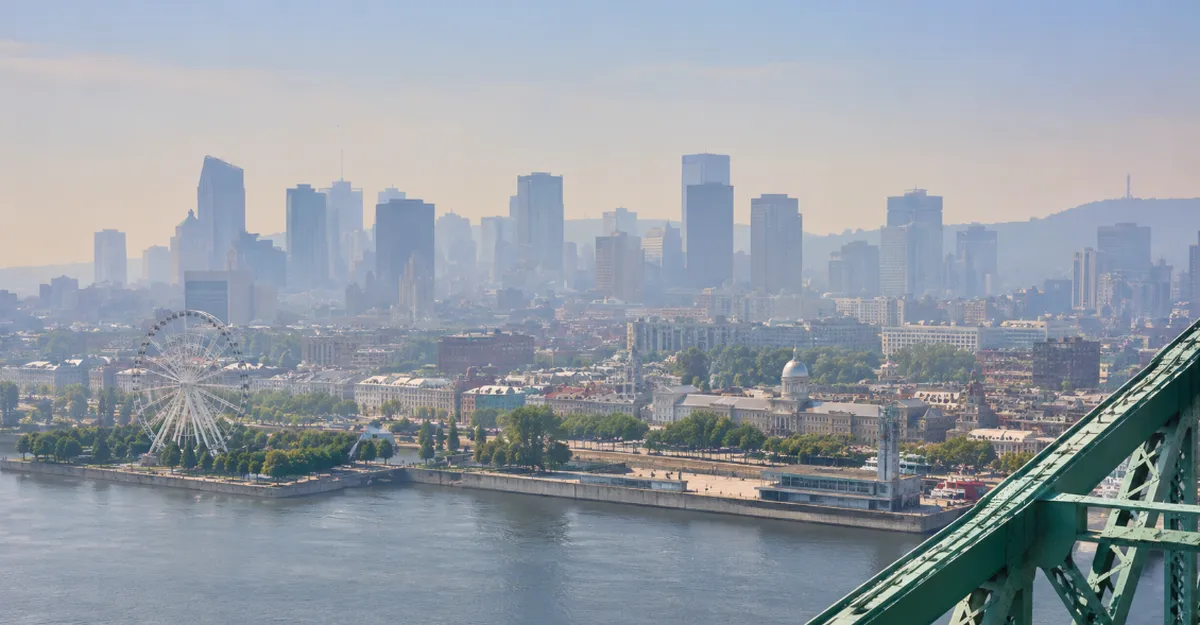
Live Montreal, QC Forest Wildfire & Smoke Map Today: Local Air Quality Tracking & Indoor Protection Solutions
TL;DR
Montreal rarely has wildfires burning nearby, but it regularly has wildfire smoke, usually from fires hundreds of kilometres away in Quebec’s northern boreal forest, Ontario, or the Prairies. To know what you are breathing today, check three things: SOPFEU’s map for active fires, Environment and Climate Change Canada’s FireWork smoke forecast for where the smoke is heading, and the Air Quality Health Index for Montreal to see what has actually been measured. When the AQHI climbs, close the house up, set the thermostat fan to On, put MERV 13 in the system, and run a portable HEPA air cleaner in the rooms you use most.
Key Takeaways
Montreal’s fire map and its smoke map rarely match. Smoke usually starts hundreds of kilometres away, so a clear fire map does not mean clear air.
The Air Quality Health Index runs from 1 to 10+. ECCC treats 7 to 10 as high risk, above 10 as very high.
At AQHI 7 or above, do four things. Close the house up, set the thermostat fan to On, put MERV 13 in the system, and run a portable HEPA air cleaner in the rooms you use most.
On 25 June 2023, Montreal recorded the worst air quality of any major city in the world, with an AQHI of 10+.
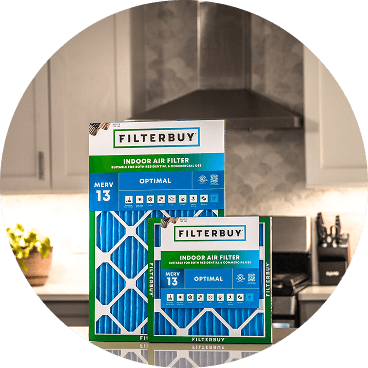
Health Canada recommends HVAC filters rated MERV 13 or higher to remove the fine particulate (PM2.5) in wildfire smoke. Filterbuy’s MERV 13 Optimal meets that rating.
Filters load far faster during smoke episodes. A filter that normally lasts three months can be spent in weeks.
Most Quebec homes have no ductwork. Almost two-thirds heat with electricity, so a portable air cleaner is the only filtration option.
Why Is There Smoke in Montreal With No Fires Nearby?
The smoke that reaches Montreal almost never comes from fires near the city. The island sits at the downwind end of a long corridor, and smoke from Quebec’s northern boreal forest, northern Ontario and the Prairies rides prevailing winds south and east into the St. Lawrence Valley. That is why the fire map can look empty on a day when the city’s air is among the worst in the country.
The 2023 season made that gap impossible to miss. On 25 June 2023, with fires burning across northern Quebec hundreds of kilometres from the island, Montreal recorded the worst air quality of any major city in the world. ECCC put the city’s AQHI at 10 or above, the very high risk band. Outdoor pools closed and a triathlon was called off.
That summer was extreme, but it was not an exception. Montreal ranked at or near the worst air in the world twice more in 2025, and that time the smoke arrived from Prairie fires two provinces away. SOPFEU’s current situation report still shows fire activity inside Quebec concentrated in the Northern Zone, far from the populated south. The fires burn up north. Montreal breathes the result.
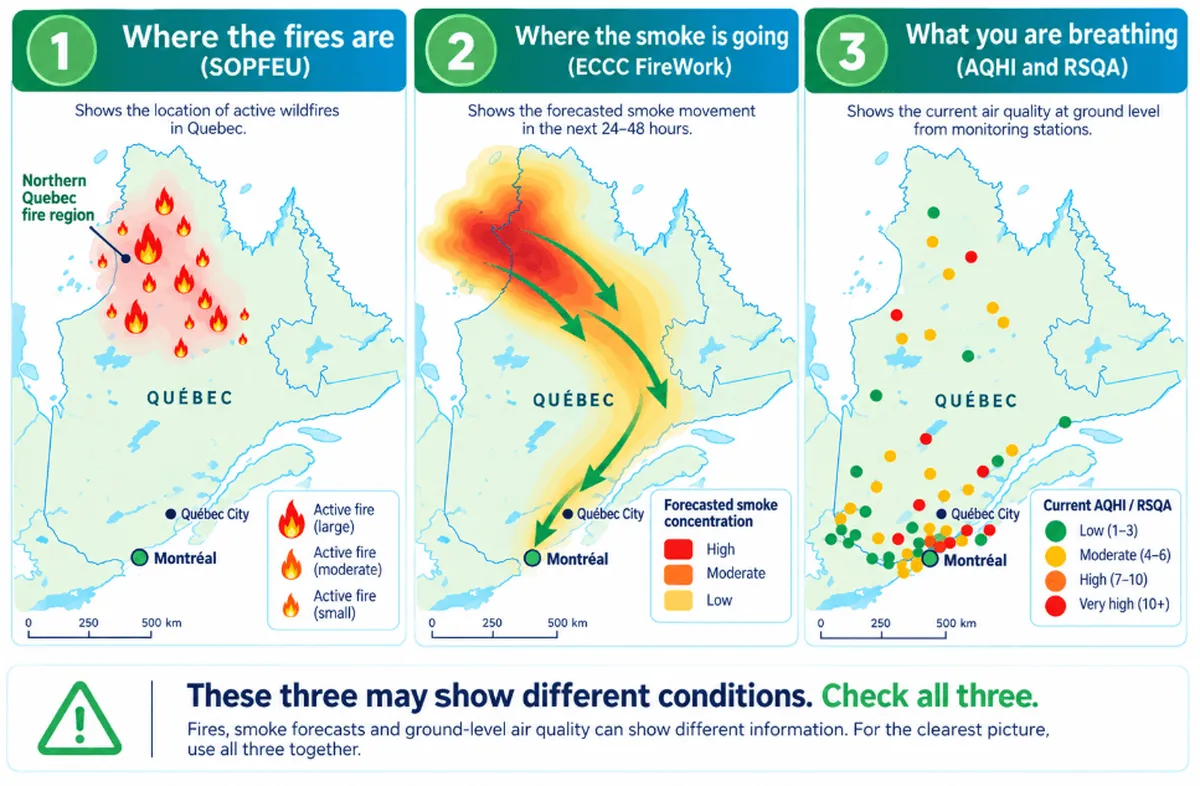
The Three Maps Every Montrealer Should Check
No single map answers the question you are actually asking, which is whether it is safe to go outside today. Fire location, forecast smoke and measured air quality are three different signals from three different agencies, and they routinely disagree.
Sources: SOPFEU, Environment and Climate Change Canada, Ville de Montréal.
Sources: SOPFEU fire map · ECCC FireWork · AQHI for Montreal · Ville de Montreal RSQA
How to use them together. SOPFEU tells you whether there is fuel for a smoke event. FireWork tells you whether it is heading your way. The AQHI tells you what is happening now. Plan with the forecast; decide with the index.
What the AQHI Numbers Actually Mean
The Air Quality Health Index is a 1 to 10+ scale from Environment and Climate Change Canada and Health Canada, where a higher number means greater health risk. It is not a pollution concentration. Instead it folds fine particulate matter, ground-level ozone and nitrogen dioxide into a single reading.
The Air Quality Health Index is published by Environment and Climate Change Canada and Health Canada.
ECCC issues air quality alerts for communities affected by smoke, and those alerts rather than a third-party app should be your reference point. If you are not sure whether you count as a sensitive group, check who is most at risk from air pollution.
The Second Number, and the Map That Leaves Montreal Out
Montreal is covered by two air quality numbers that run on different scales, and they are easy to confuse in the middle of a smoke event. The AQHI runs from 1 to 10+. Quebec’s Air Quality Index (IQA) is a different scale, on which 50 marks the upper acceptable limit for each pollutant and fine particles are measured against 35 micrograms per cubic metre averaged over three hours. An IQA of 45 therefore describes acceptable air, while an AQHI of 45 would be off the chart entirely.
Sources: ministère de l’Environnement du Québec; Ville de Montréal.
Two things are worth knowing before you need them. The provincial IQA map does not include Montreal’s stations, as the ministry itself states, so anyone on the island has to use the city’s map instead, and that map is published in French only. Between 1 May and 30 September the provincial map also carries a wildfire layer with a 72-hour particle forecast, though it stays switched off until you enable it.
What to Do Indoors When Smoke Reaches Montreal
Indoor filtration is the part of this you can actually control. Health Canada’s guidance for cleaner air spaces during wildfire smoke events is to run HVAC filtration rated MERV 13 or higher, the point at which a filter captures a meaningful share of the fine particles in smoke. What that means depends on your home.
If your home has ductwork (a furnace, a heat pump, or central air):
1. Put MERV 13 in the system. Most furnaces and HVAC systems accommodate MERV 13 without equipment problems, provided the filter is replaced often. Check the size printed on your current filter, the same as for any replacement.
2. Set the fan to run continuously rather than only when heating or cooling. Filtration only happens when air is moving.
3. Close the house up. Windows and doors shut, air conditioning on recirculate, and don’t add to the problem indoors: no candles, no frying, no vacuuming unless the vacuum is sealed.
4. Run a portable HEPA air cleaner in each occupied room, bedrooms first. This is a second layer, not an alternative: MERV 13 treats the whole house, while a portable unit treats one room harder than the central system can.
5. Keep spares on hand before smoke season, not during it.
If your home has no ductwork there is no furnace filter to upgrade, and in Quebec that describes most homes. Statistics Canada found that almost two-thirds of Quebec households heat with electricity, 58% with electric baseboards and another 7% with electric radiant heating. No blower, no ducts, no filter slot. In that case a portable air cleaner sized to the room is your filtration. Size it by smoke CADR, which should be at least two-thirds of the room’s floor area: a 300 square foot bedroom wants a smoke CADR of around 200. Run it continuously and close off the space you use most. Public health guidance calls this a cleaner air room. Skip anything that produces ozone, including ionizers and ozone generators, because ozone is itself a lung irritant. Those units need their own media replaced on schedule, and Filterbuy makes replacement filters for portable air purifiers as well as furnace sizes.
“Every wildfire smoke guide I read while writing this page told the reader to upgrade their furnace filter. Then I checked the Statistics Canada numbers and found almost two-thirds of Quebec households heat with electric baseboards. For a lot of the people reading this in Montreal, there is no furnace filter to upgrade. That one fact changed the shape of the page.”
Michelle Wan, Filterbuy
One honest caveat: cleaner-smelling air is not the same as cleaner air. Carbon media, including Filterbuy’s Odour Eliminator filters, are the line to look at if smoke odour is the complaint. Particles are the health concern, and a pleated filter captures particles rather than gases. Treat carbon as a comfort layer on top of MERV 13, never a substitute for it.
How Often Should You Change Your Filter in Smoke Season?
More often than you think. Smoke loads a filter far faster than ordinary household dust, and a loaded filter moves less air, which is the wrong direction to be heading in the middle of an episode. Researchers testing DIY filter units watched clean air delivery drop sharply once the filters were smoke-loaded, and pointed to frequent changes as the fix.
In practice that means changing filters well ahead of the normal 60 to 90 day schedule. Published guidance tells you to replace them more often during smoke without ever saying how often, so we built the table below to answer the question. This is Filterbuy’s guidance rather than a measurement:
Filterbuy guidance for Canadian homes during an active smoke period. Filters load faster in smoke than in ordinary household dust.
The test is what the filter looks like, not what the calendar says. Replace it when the media is dark brown or black, which during smoke can be well before the manufacturer’s normal interval. Weak airflow at the registers is the other tell, and there are more in our rundown of the symptoms of a clogged filter.
Which Filterbuy Filter Suits Smoke Season?
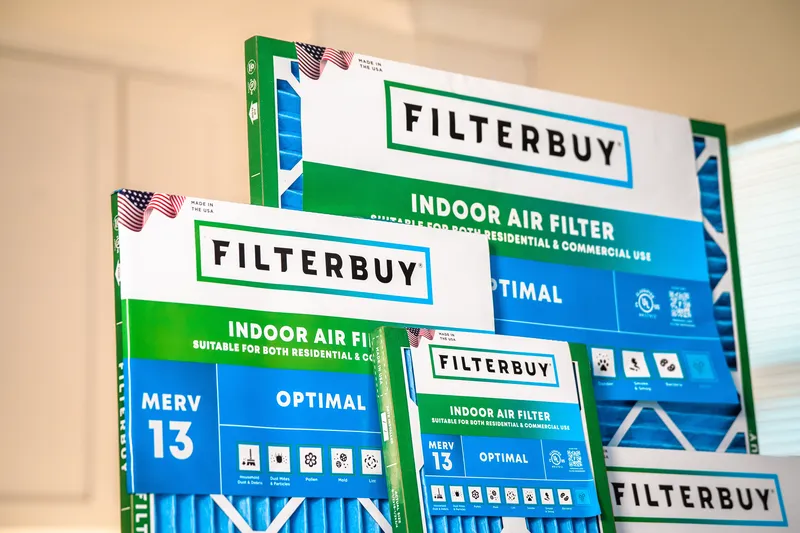
MERV 13. It is the tier we recommend for smoke, and the rating Health Canada points to during smoke events. Check the size printed on your current filter, the same fit check you would do for any replacement.
Free shipping to Canada on every order, no minimum purchase. Prices shown in CAD.
Every Filterbuy filter is quality-crafted in our own facilities across four U.S. states and shipped straight to your door in Canada, with free shipping and no minimum order. We stock over 600 sizes, and if yours is not among them we will build it as a custom size. Prices are shown in CAD. For a fuller comparison of the ratings, see our guide to the best MERV filter for wildfire smoke.
Shop MERV 13 in your size | Build a custom size | Subscribe and save: edit, skip, or cancel anytime
“The mistake I see during smoke season is people upgrading the filter and leaving the thermostat on Auto. On Auto the blower only runs while the system is heating or cooling, so the filter sits there doing nothing for most of the day. Put MERV 13 in, set the fan to On, and replace the filter as soon as it looks dark.”
David Clark, Licensed HVAC Technician
Supporting Statistics
Three findings from U.S. agencies, which happen to hold the best downwind measurements of Canadian smoke.
Frequently Asked Questions
Glossary
AQHI (Air Quality Health Index): A Canadian 1 to 10+ scale from ECCC and Health Canada expressing short-term health risk from current air quality.
ECCC (Environment and Climate Change Canada): The federal department that forecasts weather and air quality and issues Canada’s air quality alerts.
FireWork: ECCC’s model forecasting smoke movement and ground-level concentration across North America for 72 hours.
MERV (Minimum Efficiency Reporting Value): The scale rating how effectively a filter captures airborne particles. Filterbuy labels MERV 8 Standard, MERV 11 Superior, MERV 13 Optimal.
PM2.5: Fine particulate matter 2.5 micrometres or smaller, the main pollutant in wildfire smoke and the size MERV 13 targets.
RSQA (Réseau de surveillance de la qualité de l’air): Ville de Montreal’s air quality network, 11 permanent stations across the island.
SOPFEU (Société de protection des forêts contre le feu): Quebec’s forest fire agency, publisher of the provincial fire map and danger index.
Filterbuy: An air filter manufacturer producing pleated HVAC filters in over 600 standard sizes plus custom builds, sold factory-direct with free shipping to Canada and no minimum order.
Questions about filtration for your home? Reach us at (855) 345-8289 or info@filterbuy.com. Filterbuy Canada, 96 Carrier Dr, Toronto, ON M9W 5R1.
This page provides general information about air filtration and public air quality data. It is not medical advice. Follow Environment and Climate Change Canada and your local public health authority during a smoke event.