
British Columbia Live Wildfire Smoke Map
Get Alerts For Wildfires In Your Area
The moment a wildfire starts near you, you'll get an instant alert and simple tips to reduce your smoke exposure.
What's In The Smoke
30xSmaller than a human hair
Fine enough to reach deep into the lungs. A MERV 13 is built to capture it.
How Far It Travels


It Doesn't Stay Local
Smoke rides the wind far downwind — you can get smoky air with no fire nearby.
What To Do During A Smoke Event
Simple steps to reduce indoor exposure.
- Stay In, Close UpShut windows and doors to keep smoke out.
- Set Fan To "On"Keeps air cycling through your filter, not just when heating or cooling.
- Recirculate AirSwitch off fresh-air intake so you're not pulling smoke in.
- Run A MERV 13Built to capture the fine PM2.5 in smoke.
- Add A PurifierExtra filtration for the room you use most.
- Wear an N95 if OutsideFits snug to block fine particles — a cloth mask won't.


The Best Air Filter For Wildfire Smoke
During smoke events, the EPA recommends upgrading to a MERV 13 filter — or the highest-rated filter your system can handle — to help reduce the fine particles smoke brings indoors. MERV 13 is the level most home HVAC systems can run while still capturing PM2.5, the fine particulate that makes up the bulk of wildfire smoke.
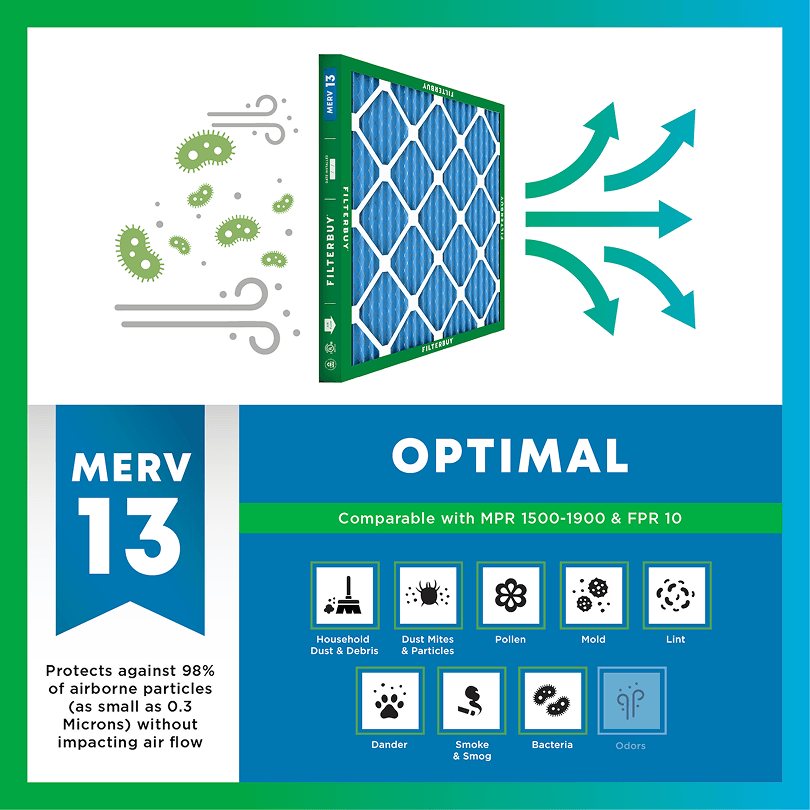
- Captures PM2.5 particles
- Blocks ash, soot, and smoke odor
- Keeps your indoor air safe—even when the outdoor air is dangerous
- Meets the EPA's recommended rating for filtering fine wildfire smoke particles.

Wildfire Smoke FAQs
Facts About Wildfires
Over 70,000 wildfires burn in the U.S. every year.
Wildfire smoke can travel 1,000+ miles, affecting states that aren't even near the blaze.
Exposure to wildfire smoke can worsen asthma, trigger heart issues, and lead to ER visits.
Indoor air can hold more fine particles during wildfire events unless it's properly filtered.
The EPA advises using MERV 13 filters or portable HEPA air cleaners during wildfire smoke events.
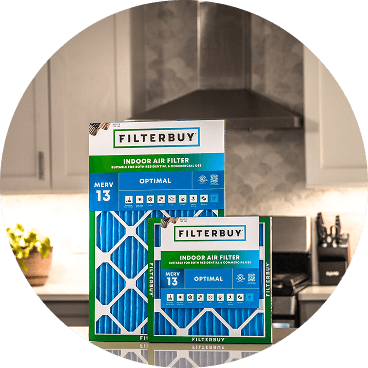
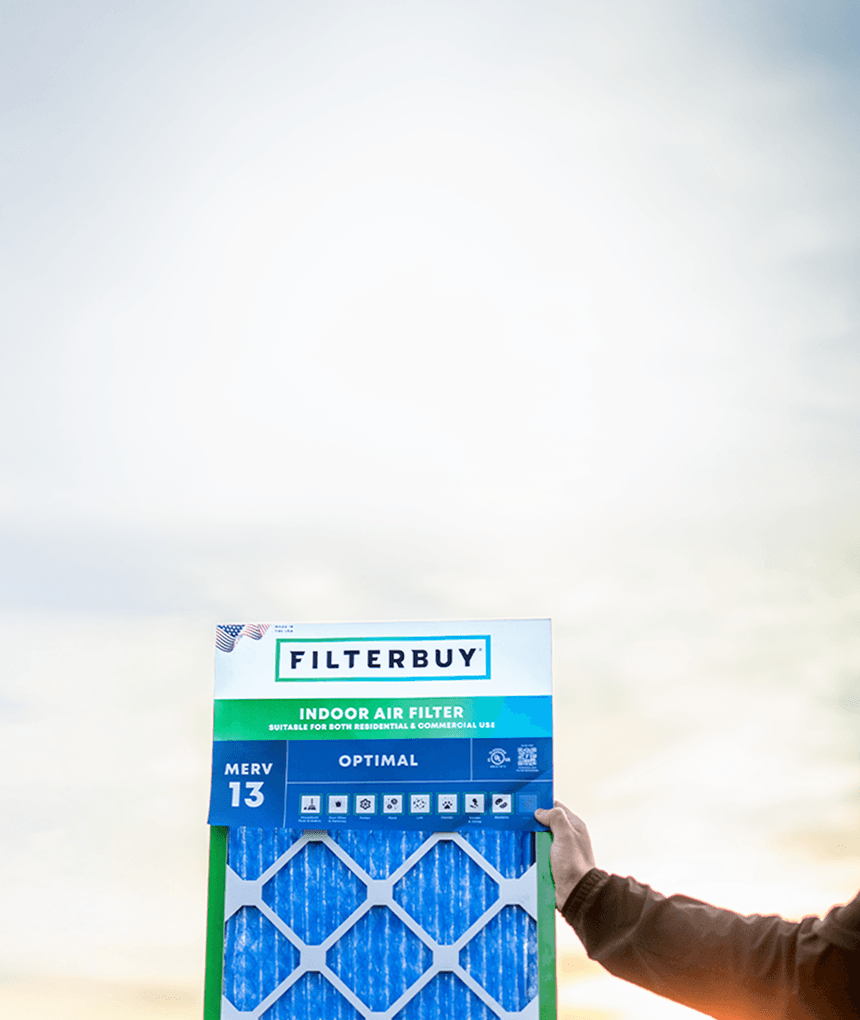
Don't Wait Until The Smoke's Inside.
Use the live wildfire smoke tracker and upgrade your air filters today to protect your lungs and your home.
Shop Filters For Smoke Protection
Live British Columbia Forest Wildfire & Smoke Map Today: Provincial Air Quality Tracking & Indoor Protection Solutions
TL;DR
The live map above shows where wildfires are burning in British Columbia today and where their smoke is drifting. To see how the smoke affects your family, check your local Air Quality Health Index (AQHI) and Air Quality Warnings, and turn to EmergencyInfoBC for evacuation orders. At home, put a MERV 13 filter in your HVAC, set the fan to "On," run a portable HEPA cleaner in each occupied room, and close the house up.
Key Takeaways
British Columbia has recorded 1,420 wildfires and 477,521 hectares burned since April 1 (BC Wildfire Service, as of September 22, 2026), below the 20-year average of about 530,000 hectares.
Smoky Skies Bulletins are now called Air Quality Warnings, issued by the province with health authorities.
Health Canada guidance recommends HVAC filters rated MERV 13 or higher to remove the fine particles (PM2.5) in wildfire smoke.
Filterbuy's order data shows filter demand spikes within hours of a fire starting, so buy your smoke filter before the smoke arrives.
How Do I Check the Wildfire and Smoke Map for British Columbia Today?
Filterbuy's live wildfire map above combines two sources. Current forest fires come from Natural Resources Canada's Canadian Wildland Fire Information System (CWFIS), and smoke plumes are outlined by satellite analysts through NOAA's Hazard Mapping System.
Which British Columbia Fire and Smoke Map Should I Use?
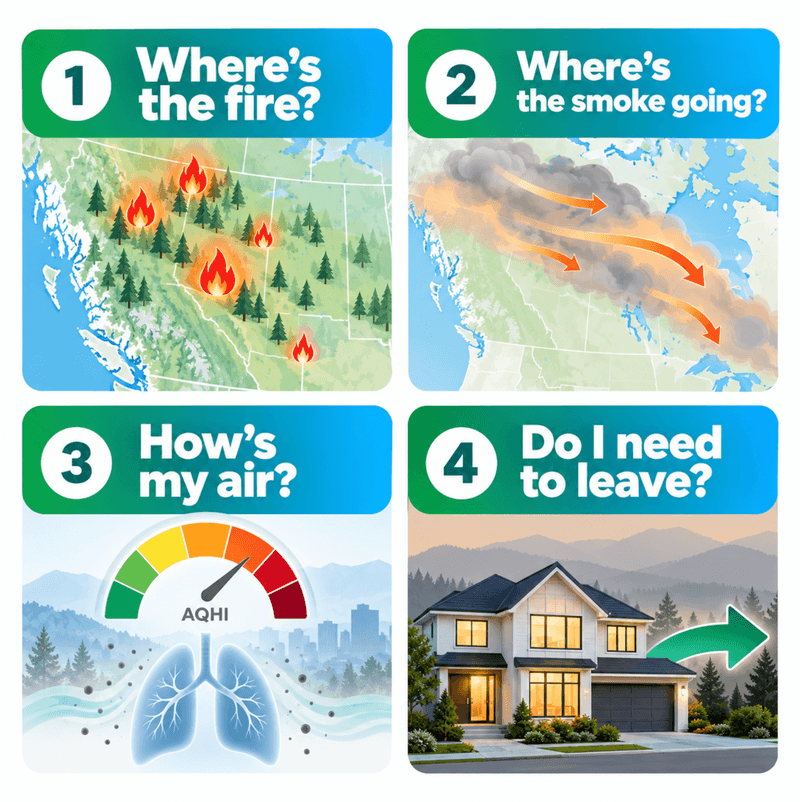
Use the BC Wildfire Service Dashboard as your current fire map, FireSmoke Canada or ECCC's FireWork for smoke forecasts, the AQHI for health risk, and EmergencyInfoBC for evacuations.
Metro Vancouver issues separate warnings for the Lower Fraser Valley.
The BC Wildfire Service Dashboard covers all six regional fire centres. FireSmoke Canada, run by the University of British Columbia, forecasts two days ahead; ECCC's FireWork forecast looks out 72 hours. Check risk in B.C. AQHI readings, active Air Quality Warnings, and, in the Lower Mainland, Metro Vancouver's warnings. Far from a monitor? Vancouver Coastal Health points to ECCC's low-cost sensor map. Evacuation orders are posted on EmergencyInfoBC.
Spot a fire? Report it at 1-800-663-5555 or *5555 by cell, or call 911 if lives are at risk.
What Does the 2026 British Columbia Wildfire Season Look Like?
From April 1 to September 22, 2026, B.C. recorded 1,420 wildfires and 477,521 hectares burned, per BC Wildfire Service figures reported by Kelowna Capital News. That's below average, yet August fires near Clinton, Vernon, and Summerland still forced evacuations.
Source: BC Wildfire Service, as of September 22, 2026.
BCWS expects a drier-than-normal fall, so smoke can return well into autumn.
What AQHI Level Is Unsafe During British Columbia Wildfire Smoke?
Canada's Air Quality Health Index (AQHI) rates short-term health risk from 1 to 10+, and 7 marks the start of the High range. Filterbuy treats 7 as the point to act: put a MERV 13 filter in your HVAC, set the thermostat fan to "On," run a portable HEPA air cleaner in each occupied room (bedrooms first), and close the house up. B.C. reports AQHI-Plus, a version adjusted to reflect smoke more accurately.
The ladder below adds what to do inside at each level.
Adapted from Health Canada and BCCDC guidance. The AQHI 7 action line and the room-by-room HEPA step are Filterbuy recommendations, not official thresholds.
People with asthma, heart disease, or diabetes, pregnant people, young children, and older adults face higher risk and should follow their health care provider's advice. For chest pain or trouble breathing, call HealthLink BC at 8-1-1, or 911 in an emergency. When heat and smoke arrive together, stay cool first.
Why Does My House Still Smell Like Smoke With the Windows Shut?
Smoke gets indoors along three paths, and your thermostat controls only two. Filterbuy's team uses this framework when customers ask why the house still smells like a campfire.
The filter path. Smoke already inside cycles through your system. Fan "On" plus a MERV 13 filter reduces it.
The intake path. An HRV, ERV, or fresh-air damper pulls outdoor air in. Pausing the intake closes this path.
The envelope path. Air leaks in around windows, doors, and attic hatches. Only weatherstripping reduces it.
That third path is why the EPA finds a closed-up home without an air cleaner still holds 55% to 60% of outdoor PM2.5. Don't trust your nose; smell adapts within minutes.
How Do I Reduce Wildfire Smoke in My Home in British Columbia?
Follow B.C. Air Quality Warnings and your local health authority first; these steps support that advice. Health Canada's cleaner-air guidance recommends a filter rated MERV 13 or higher to capture PM2.5, and the U.S. EPA notes that most furnaces and HVAC systems can use MERV 13 without equipment problems, provided the filter is replaced often.
Put MERV 13 in your HVAC. Install a MERV 13 air filter in your size, fitted snugly with no gaps around the frame. It's the whole-home layer.
Set the fan to "On." "Auto" filters only while heating or cooling, and a central system already recirculates indoor air. Pause any HRV or ERV, restarting it once the air clears.
Run a portable HEPA cleaner in each occupied room, bedrooms first. That's Filterbuy's recommendation, beyond the single clean room most agencies describe. The EPA suggests a smoke CADR of at least two-thirds of the room's square footage, so a 300 sq ft bedroom needs about 200. Skip ionizers and any cleaner that produces ozone, which the EPA advises against.
Close the house up. Shut windows, doors, and dampers, and don't add indoor pollution. The B.C. government advises skipping candles, vaping, and the wood stove; also hold off on frying and on vacuuming without a HEPA vacuum.
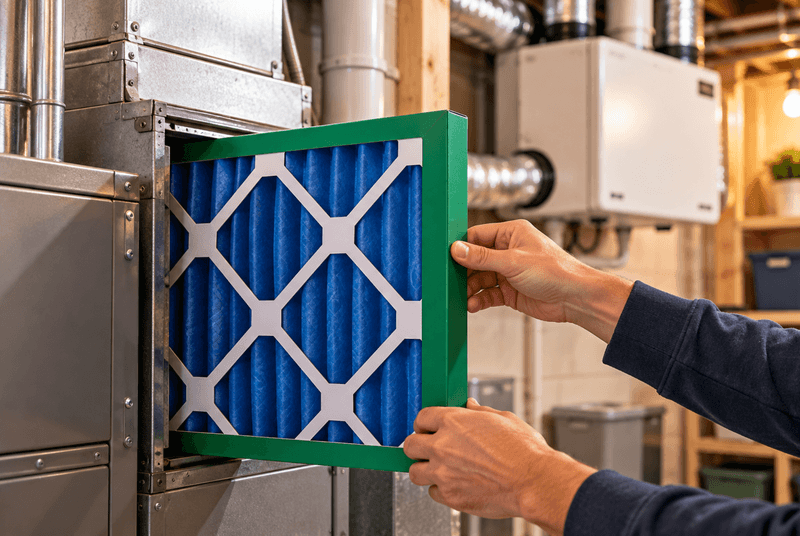
The two layers do different jobs: MERV 13 treats the whole house, and a HEPA unit treats one room harder. HEPA never goes in a furnace slot; our MERV 13 vs. HEPA guide explains why.
BCCDC's DIY air cleaner guide shows how to build a box-fan cleaner from a 2012-or-newer fan with a safety fuse and a 20x20x1 MERV 13 filter. It's a stopgap, not a replacement for a certified air cleaner. Never leave it running unattended.
What If My Home Has No Furnace, or I Live in a Condo?
Plenty of B.C. homes rely on baseboard heat, a ductless mini-split, or building ventilation instead of a central furnace. In those homes, portable HEPA air cleaners are the primary defense, not a supplement, so Filterbuy recommends one in each occupied room, starting with bedrooms.
Ductless mini-split: No MERV filter slot, so run fan mode, wash the screens, and add portable HEPA cleaners.
Baseboard or radiant heat: Portable HEPA cleaners do the work, with a DIY box-fan cleaner as a stopgap.
Condo or apartment: Your suite may draw fresh air from a central system. Ask your strata or building manager which filter it uses and whether outdoor air can be reduced during smoke.
When Should I Change My Furnace Filter During and After Smoke Season?
Check your filter during a smoke event and replace it when it looks dirty, meaning dark brown or black. The U.S. EPA notes that can be well before the manufacturer's normal interval. Still white after two days of heavy smoke? The fan likely isn't running or air is bypassing the frame. Keep spares on hand so a replacement is ready.
Every fire season, our order data shows orders jumping within hours of a fire starting, as shipping slows and popular sizes run low. As our smoke-season guidance puts it, "A MERV 13 sitting on a shelf in July beats a better filter that ships in September."
Afterward, swap loaded filters and damp-wipe surfaces; the BC Lung Foundation notes residue can linger for weeks. Pleated filters capture particles, but smoke odour is a gas. For odours, see our Odor Eliminator line.
Supporting Statistics
Canadian Wildfire Smoke Sent U.S. Asthma ER Visits 17% Above Normal
The U.S. Centers for Disease Control and Prevention found asthma emergency visits ran 17% above expected on 19 U.S. smoke days during the 2023 Canadian fire season.
A Continuously Running High-Efficiency Filter Roughly Halves Indoor PM2.5
According to the U.S. Environmental Protection Agency, a high-efficiency HVAC filter with the fan running continuously can cut indoor PM2.5 by about 50%, compared with roughly 24% for a typical low-efficiency filter. That's why Filterbuy pairs MERV 13 with setting the fan to "On."
55.1 Million Americans Had Very Unhealthy or Hazardous Particle Days
The American Lung Association's "State of the Air" 2026 found 55.1 million people in 126 counties lived through Very Unhealthy or Hazardous fine-particle days.
I don't want anyone to feel like they need an HVAC license just to pick the right filter. My job is to give you the straight answer, explain why it matters, and let you get back to your day.
Michelle Wan, Brand Manager and Air Quality Writer, Filterbuy
Get Ready Before the Next Smoke Event
Filterbuy has made filters in the USA since 2013, in 600+ sizes plus custom air filters. Keep a spare Filterbuy MERV 13 on the shelf, or use auto delivery; shipping to Canada varies. For more, see our live Canada wildfire and smoke map and the best MERV filter for wildfire smoke
Frequently Asked Questions
Where Can I See a Live Smoke Map for British Columbia?
Filterbuy's live map above shows current smoke plumes; FireSmoke Canada and FireWork forecast what's next.
Glossary
AQHI (Air Quality Health Index): Canada's 1-to-10+ scale for short-term health risk from air pollution.
AQHI-Plus: B.C.'s smoke-adjusted AQHI formula, used province-wide since 2021.
Air Quality Warning: B.C.'s smoke notification, formerly called the Smoky Skies Bulletin.
BC Wildfire Service (BCWS): B.C.'s provincial wildfire agency, organized into six fire centres.
BCCDC: The BC Centre for Disease Control.
CWFIS: Natural Resources Canada's national fire-location system.
EmergencyInfoBC: B.C.'s official source for evacuation orders and alerts.
Envelope: A home's outer shell and its gaps.
FireSmoke Canada: UBC's smoke forecasting portal.
FireWork: ECCC's 72-hour smoke forecast model.
HEPA filter: A filter capturing at least 99.97% of 0.3-micron particles, used in portable air cleaners, never in a furnace slot.
HRV / ERV: A heat- or energy-recovery ventilator that exchanges indoor and outdoor air.
MERV: A 1-to-16 filter efficiency rating; MERV 13 targets smoke-sized particles.
Mini-split: A ductless heat pump that heats and cools individual rooms.
PM2.5: Fine particles 2.5 micrometres or smaller, the main health concern in smoke.
Stage of control: A BCWS fire's status: Out of Control, Being Held, Under Control, or Out.
About the author and reviewer
Michelle Wan
is Brand Manager and Air Quality Writer at Filterbuy. She works directly with Filterbuy’s U.S. manufacturing teams in Alabama, Florida, Pennsylvania, and Utah, turning MERV ratings, filtration, and HVAC efficiency into plain-English advice for homeowners, and appears in Filterbuy’s educational videos. She holds a B.A. from the University of California, Santa Cruz. Learn more on her author page.
David Clark
is a Licensed HVAC Technician with Filterbuy HVAC Solutions. He reviews Filterbuy’s technical air quality content for accuracy on airflow, static pressure, and real-world system compatibility.