
West Kelowna, BC Live Wildfire Smoke Map
Get Alerts For Wildfires In Your Area
The moment a wildfire starts near you, you'll get an instant alert and simple tips to reduce your smoke exposure.
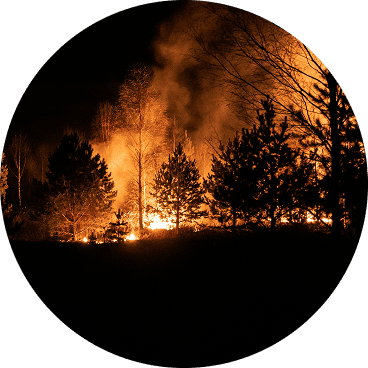
What's In The Smoke
30xSmaller than a human hair
Fine enough to reach deep into the lungs. A MERV 13 is built to capture it.
How Far It Travels


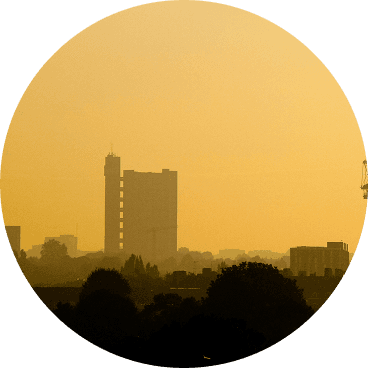
It Doesn't Stay Local
Smoke rides the wind far downwind — you can get smoky air with no fire nearby.
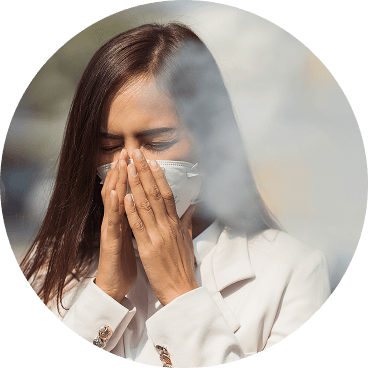
What To Do During A Smoke Event
Simple steps to reduce indoor exposure.
- Stay In, Close UpShut windows and doors to keep smoke out.
- Set Fan To "On"Keeps air cycling through your filter, not just when heating or cooling.
- Recirculate AirSwitch off fresh-air intake so you're not pulling smoke in.
- Run A MERV 13Built to capture the fine PM2.5 in smoke.
- Add A PurifierExtra filtration for the room you use most.
- Wear an N95 if OutsideFits snug to block fine particles — a cloth mask won't.


The Best Air Filter For Wildfire Smoke
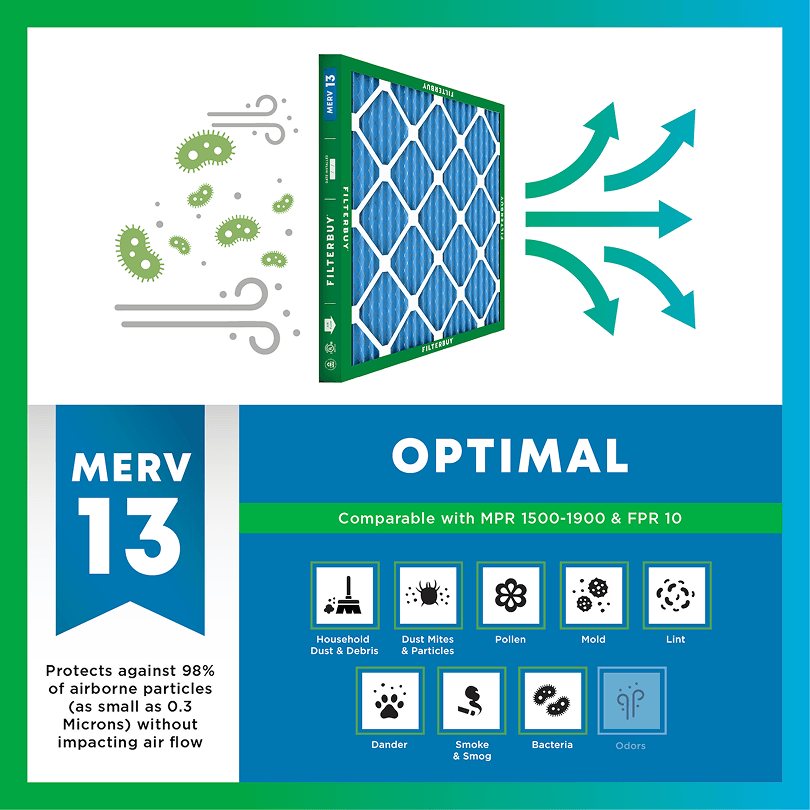
During smoke events, the EPA recommends upgrading to a MERV 13 filter — or the highest-rated filter your system can handle — to help reduce the fine particles smoke brings indoors. MERV 13 is the level most home HVAC systems can run while still capturing PM2.5, the fine particulate that makes up the bulk of wildfire smoke.
- Captures PM2.5 particles
- Blocks ash, soot, and smoke odor
- Keeps your indoor air safe—even when the outdoor air is dangerous
- Meets the EPA's recommended rating for filtering fine wildfire smoke particles.

Wildfire Smoke FAQs
Facts About Wildfires
Over 70,000 wildfires burn in the U.S. every year.
Wildfire smoke can travel 1,000+ miles, affecting states that aren't even near the blaze.
Exposure to wildfire smoke can worsen asthma, trigger heart issues, and lead to ER visits.
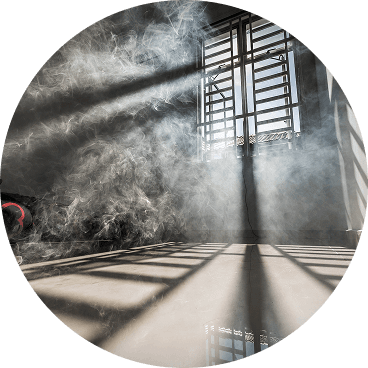
Indoor air can hold more fine particles during wildfire events unless it's properly filtered.
The EPA advises using MERV 13 filters or portable HEPA air cleaners during wildfire smoke events.
Don't Wait Until The Smoke's Inside.
Use the live wildfire smoke tracker and upgrade your air filters today to protect your lungs and your home.
Shop Filters For Smoke Protection
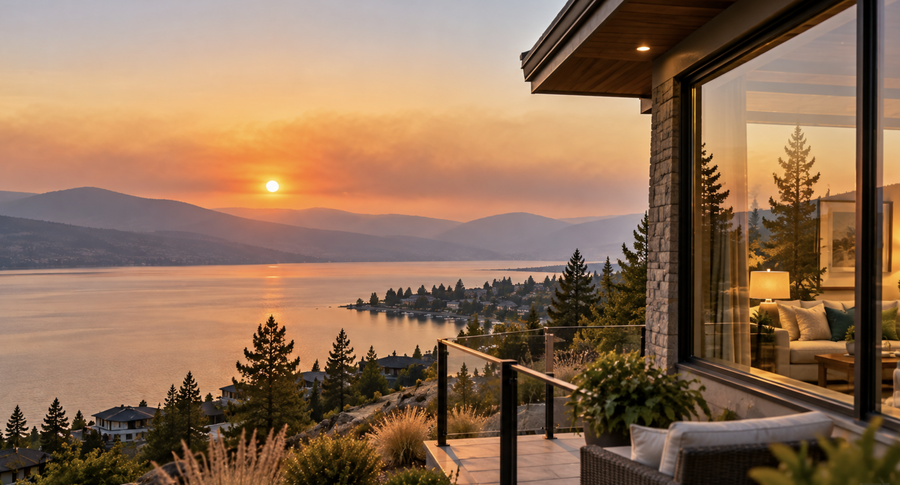
Live Kelowna, BC Forest Wildfire & Smoke Map Today: Local Air Quality Tracking & Indoor Protection Solutions
TL;DR
The live map below shows forest fire detections and smoke plumes around Kelowna, British Columbia, right now. Confirm fire and evacuation status with the BC Wildfire Service and Central Okanagan Emergency Operations. Inside, keep the windows shut and run your furnace fan on "On" with a MERV 13 filter.
Key Takeaways
Kelowna's smoke usually peaks from July to September; Filterbuy's calendar shows when to change filters.
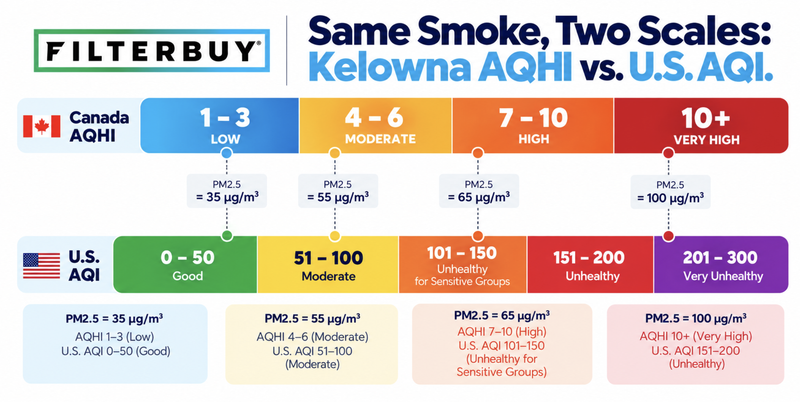
Canada's AQHI can rate smoke "Moderate" while the U.S. AQI calls the same air "Unhealthy."
Filterbuy's action line is a U.S. AQI of 100 (about AQHI 4); the steps are below.
Why we built this page: Filterbuy has made HVAC filters in the United States since 2013, and this page pairs Kelowna's official sources with what we've learned.
Where Can I See a Live Wildfire and Smoke Map for Kelowna, BC Today?
The Filterbuy map above shows active wildfires, new fires, prescribed fires, and smoke plumes around Kelowna. Fire data comes from Natural Resources Canada and smoke plumes from NOAA satellites. The map doesn't show air quality or evacuation zones, so use these official sources too.
Open them here: BC Wildfire Service wildfire map, Central Okanagan Emergency Operations evacuation map, BC Air Quality Health Index forecast, BlueSky Canada smoke forecast, and EmergencyInfoBC. If an evacuation order is issued for your area, leave immediately. To report a wildfire, call *5555 from a cell phone or 1-800-663-5555.
Is the Smoke Over Kelowna From a Wildfire or a Prescribed Burn?
Filterbuy sorts Kelowna smoke into four sources, and only one of them means a forest fire is burning close by. Knowing the source tells you whether to get ready to leave or just reduce smoke indoors.
This fall, Kelowna also has prescribed burns planned for Knox Mountain Park, Gallagher's Canyon at Jean Road, and Quail Ridge Linear Park for late September or October 2026, weather permitting.
What Did Kelowna's 2026 Wildfire Season Look Like?
This summer brought evacuation-level wildfires near Kelowna and weeks of regional smoke. The Quilpituk Creek wildfire put 2,648 properties under evacuation order at its peak, and B.C.'s air quality warning log shows smoke warnings almost daily from mid-July to August 30.
How Do I Read Kelowna's AQHI Compared With the U.S. AQI?
The same smoke can read "Moderate" on Canada's AQHI and "Unhealthy" on the U.S. AQI. During smoke events, Canada calculates the AQHI from PM2.5 alone, meaning fine smoke particles 2.5 microns or smaller. BCCDC's AQHI-Plus divides the one-hour PM2.5 reading by ten and rounds up, while the U.S. AQI uses the EPA's 2024 PM2.5 breakpoints. Filterbuy lined up both:
Method: AQHI-Plus = one-hour PM2.5 divided by 10, rounded up; U.S. AQI uses the EPA's 2024 PM2.5 breakpoints. Values are approximate because agencies use different averaging periods.
Filterbuy's action line is a U.S. AQI of 100, about an AQHI-Plus of 4. That's still the top of the Moderate range; it's where we tell customers to act. Put MERV 13 in the furnace, set the fan to On, run a portable HEPA air cleaner in each occupied room (bedrooms first), and close up the house. See the live air quality map for Canada.
What If Kelowna's Air Quality Reading Is Missing?
Check the nearest Okanagan stations, then look out the window. On September 30, Filterbuy found North and South Okanagan on B.C.'s AQHI forecast list but no Central Okanagan entry. When readings drop out, use BCCDC's visibility index: face away from the sun and match the farthest landmark you can see to the distances below.
Sources: BCCDC visibility index. Use only when humidity is under 70% and never at night, dawn, or dusk; values are very approximate.
Tip: Before smoke season, pick out a few landmarks at known distances from home, such as a ridge across Okanagan Lake.
How Do I Reduce Wildfire Smoke Inside My Kelowna Home?
Start with official guidance, then add filtration in two layers. Check B.C.'s AQHI and air quality warnings or the AirNow Fire and Smoke Map first, and follow local stay-indoors or evacuation advice. Once the U.S. AQI reaches 100, take these steps.
Put a MERV 13 filter in the furnace. It's the whole-home layer, since the central system moves far more air than a portable unit. The EPA recommends MERV 13 or higher during smoky periods and notes most furnaces can accommodate it without equipment problems if it's replaced often. Just match the size to your slot.
Set the thermostat fan to "On." Auto only filters while the system heats or cools, while On filters continuously. Filterbuy's guide to setting your HVAC to recirculate during wildfire smoke walks through each setting.
Run a portable HEPA air cleaner in each occupied room, bedrooms first. That's Filterbuy's recommendation, going further than EPA's single cleaner air room. EPA's sizing rule is a smoke CADR of at least two-thirds of the room's square footage, so a 300 sq ft bedroom needs roughly 200. EPA advises CARB-certified cleaners, which produce little or no ozone, so skip ionizers and ozone generators.
Close up the house. Keep windows and doors shut until the AQHI drops, and skip candles, frying, smoking, and vacuuming without a HEPA vacuum. Switch any HRV, ERV, or fresh-air intake to recirculation or off, per the manufacturer.
No central HVAC? In apartments, homes with window units, and older homes without ductwork, portable HEPA air cleaners are your primary defense.
A pleated filter captures particles but not the gases in smoke, so filtration reduces smoke indoors without removing all of it.
Most homeowners have no idea whether they even have a fresh-air intake until they go looking for one. If you cannot identify it, that is the moment to call a technician rather than start covering things up.
David Clark, Licensed HVAC Technician and CEO of Filterbuy HVAC Solutions
When Should Kelowna Homeowners Change Filters During Smoke Season?
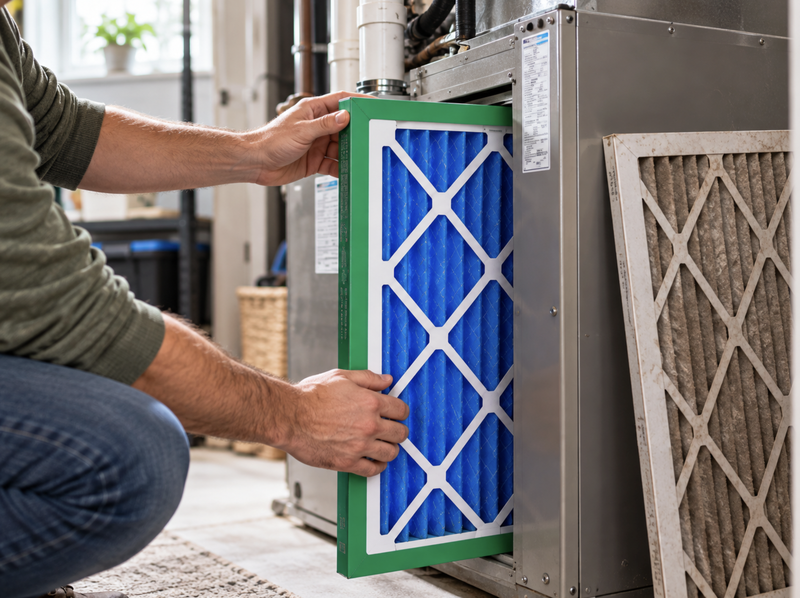
During smoke, check your filter often and replace it when it looks dirty, dark brown or black, which can be well before its normal interval. That's EPA's inspection guidance. Filterbuy matched it to the City's burn windows and the wildfire peak in this calendar.
Sources: City of Kelowna prescribed burn seasons; B.C. smoke warning log; EPA filter inspection guidance.
Keep spares on hand: Stock at least one spare MERV 13 for each filter slot before July, as Health Canada's preparation guidance also advises.
When to air out: Wait until the AQHI is back to Low (1 to 3), which B.C. describes as ideal air quality for outdoor activities.
What MERV Rating Do I Need for Wildfire Smoke in Kelowna?
MERV 13 is the tier Filterbuy recommends for wildfire smoke. EPA recommends MERV 13 or higher in a central HVAC system during smoky periods, and Health Canada's cleaner air space guidance agrees. True HEPA belongs in a portable air cleaner, never a furnace slot; our MERV 13 vs. HEPA for wildfire smoke comparison explains the two layers. Shop Filterbuy MERV 13 filters in your size, including custom sizes.
Supporting Statistics
Research from three U.S. government agencies backs these steps.
1. A Better Filter and a Running Fan May Cut Indoor PM2.5 by Half
Source: U.S. EPA, Strategies to Reduce Exposure Indoors
In a closed-up home with no air cleaner, indoor PM2.5 averages 55% to 60% of outdoor levels during smoke events.
A high-efficiency filter with the fan running continuously may cut indoor PM2.5 by roughly 50%.
2. Canadian Smoke Pushed Asthma ER Visits 17% Above Expected
Source: CDC, Asthma-Associated Emergency Department Visits During the Canadian Wildfire Smoke Episodes (MMWR, 2023)
CDC tracked 4,317 U.S. emergency departments during the 2023 smoke.
On 19 smoke days, defined as a U.S. AQI of 101 or higher, asthma-related emergency visits ran 17% higher than expected.
What it means: Visits rose above a U.S. AQI of 100. Health Canada's groups most at risk should follow official guidance and talk to a health care provider.
3. Canada's 2023 Fires Burned Over Seven Times the Average Area
Source: NASA Earth Observatory, Tracking Canada's Extreme 2023 Fire Season
Canada's 2023 wildfires burned roughly 18.4 million hectares.
An average year burns roughly 2.5 million hectares.
Frequently Asked Questions
Is There a Wildfire Burning Near Kelowna Right Now?
As of September 30, 2026, Central Okanagan Emergency Operations has lifted all remaining evacuation alerts for the Quilpituk Creek and Bald Range wildfires, and B.C. lists no active Okanagan smoke warning. Check the live map for updates.
Why Is It Smoky in Kelowna Today If No Fire Is Nearby?
Smoke drifts in from fires elsewhere in B.C. or Washington State and settles in the Okanagan Valley on calm nights. Fall and spring prescribed burns add some too.
Will a MERV 13 Filter Work in My Furnace?
Most can. The EPA notes that most furnaces and HVAC systems accommodate MERV 13 without equipment problems when the filter is replaced often. Check that the size fits the filter slot, and ask an HVAC technician if you're unsure.
Glossary
Air Quality Health Index (AQHI): Canada's 1 to 10+ air pollution health-risk scale.
PM2.5: Airborne particles 2.5 microns or smaller, the main particle pollution in smoke.
MERV: Minimum Efficiency Reporting Value, a filter capture rating.
HEPA: High-efficiency particulate air filter, used in portable air cleaners and never in a furnace slot.
Get Ready Before Next Fire Season
In Filterbuy's experience, a MERV 13 on the shelf in July beats one that ships in September. Set up Filterbuy auto-delivery to keep spares coming, and bookmark the live wildfire and smoke map for Canada.