Shop by

Winter seals your home tight and puts your furnace filter to the ultimate test. The same air recirculates for months — carrying dust, allergens, and pet dander your system kicked up from ductwork that sat idle all summer. Meanwhile, your heating strips moisture from every breath.
Most guides tell you to "just buy a higher MERV rating." After manufacturing over 600 filter sizes and hearing directly from millions of customers dealing with winter air complaints, we can tell you it's not that simple. A filter that catches 95% of allergens does nothing for your comfort if it restricts airflow to a furnace already working overtime in January.
We've tested the tradeoffs firsthand in our manufacturing process — filtration efficiency versus air resistance, pleat density versus dust-holding capacity — and built this guide around what actually works in real homes during real winters. Below, we break down the best furnace filter for your specific winter problem, whether that's allergies, dust buildup, dry air, or the combination of all three that most households actually face.
A MERV 13 pleated furnace filter — it captures 90%+ of the allergens causing winter symptoms while maintaining airflow your residential system can handle.
Why MERV 13 specifically:
Why winter demands more from your filter:
From our manufacturing experience: After producing millions of filters and analyzing real customer feedback across every climate zone, MERV 13 consistently outperforms every other option for winter allergy households. The key is installing a fresh filter before your first furnace cycle of the season and replacing every 30–60 days for 1-inch filters or 60–90 days for 2-inch filters — winter filters load faster than any other season.
If your system can't support MERV 13, a MERV 11 captures 85%+ of the same allergens and is safe for virtually all residential furnaces.
The short version of everything above — based on our manufacturing data, production testing, and direct feedback from millions of customers.
Winter air is different. Sealed homes, constant furnace cycling, and zero fresh-air exchange create conditions that no other season matches.
The right MERV rating depends on your problem.
Higher isn't always better. A MERV 16 in a system designed for MERV 8–13 starves your furnace of air, creates bypass gaps, and can make air quality worse, not better.
Timing beats rating. A clean MERV 11 installed before your first furnace cycle outperforms a clogged MERV 13 installed three weeks late.
Winter filters load faster. Replace more frequently than the package recommends. Check monthly. If you can't see light through it, swap it.
One filter, biggest impact. Humidifiers, purifiers, and duct cleaning all help—but a properly matched, replaced-on-schedule furnace filter is the single highest-impact change for your family's winter air quality.
Winter seals your home tight and puts your furnace filter to the ultimate test. The same air recirculates for months — carrying dust, allergens, and pet dander your system kicked up from ductwork that sat idle all summer. Meanwhile, your heating strips moisture from every breath.
Most guides tell you to “just buy a higher MERV rating.” After manufacturing over 600 filter sizes and hearing directly from millions of customers dealing with winter air complaints, we can tell you it’s not that simple. A filter that catches 95% of allergens does nothing for your comfort if it restricts airflow to a furnace already working overtime in January.
We’ve tested the tradeoffs firsthand in our manufacturing process — filtration efficiency versus air resistance, pleat density versus dust-holding capacity — and built this guide around what actually works in real homes during real winters. Below, we break down the best furnace filter for your specific winter problem, whether that’s allergies, dust buildup, dry air, or the combination of all three that most households actually face.
Your home becomes a closed-loop system in winter. With windows shut and weatherstripping doing its job, there’s almost zero fresh air exchange — which means every pollutant your household generates stays trapped indoors and passes through your HVAC system over and over.
Three things happen simultaneously that make winter air uniquely challenging:
Pro Tip: From our experience working with customers across every climate zone, the biggest winter air quality mistake is waiting until symptoms appear to change your filter. By then, your system has been recirculating trapped particulates for weeks. Start winter with a fresh filter and check it monthly — winter filters load faster than most people expect.
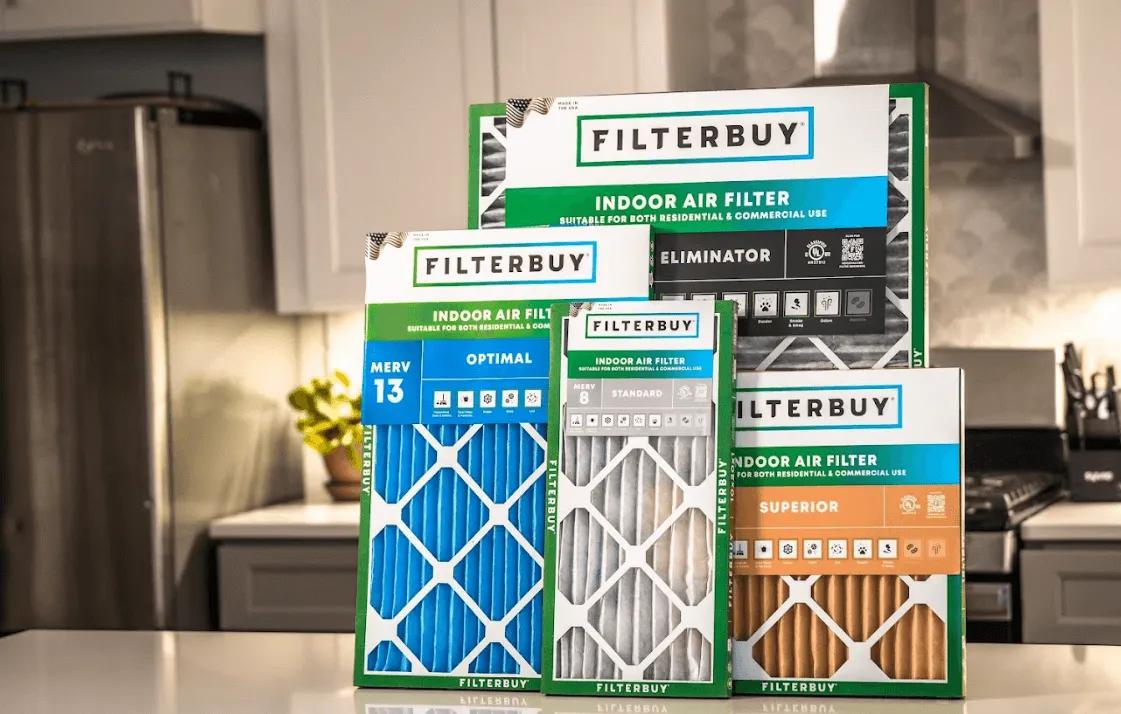
Choosing a winter furnace filter comes down to balancing three factors: particle capture efficiency, airflow resistance, and dust-holding capacity. Getting one right while ignoring the others leads to the complaints we hear most often — either “my allergies are still terrible” or “my energy bill spiked, and my house still isn’t comfortable.”
Key specs that matter most in winter:
Winter allergy sufferers need a filter that captures the fine particles responsible for symptoms: pollen tracked indoors on clothing, pet dander concentrated by closed-house conditions, dust mite debris, and mold spores that thrive in duct condensation.
Our recommendation: MERV 11 to MERV 13 pleated filters.
What we’ve learned from customer feedback: The biggest mistake allergy sufferers make in winter is buying the highest MERV rating available and assuming they’re covered. A MERV 16 filter in a residential furnace designed for MERV 8–13 doesn’t filter better — it just starves your system of air, causes it to bypass the filter through gaps, and can actually make air quality worse. Match the filter to what your system can handle, and you’ll get dramatically better results.
If your winter problem is visible dust settling on every surface hours after you clean, you need a filter optimized for larger particle capture and high dust-holding capacity — not necessarily the highest MERV rating.
Our recommendation: MERV 8 to MERV 11 pleated filters with high pleat counts.
Household dust is primarily composed of larger particles — skin cells, fabric fibers, hair, and tracked-in dirt — in the 3.0–10.0 micron range. A well-constructed MERV 8 pleated filter captures 70–85% of these particles, while a MERV 11 pushes that above 90%. The key factor for dust control isn’t just capture rate, though. It’s how long the filter maintains performance before loading up.
Manufacturing insight: Through our production testing, we’ve found that a MERV 8 filter with dense, evenly-spaced pleats and quality media will outperform a cheap MERV 11 with fewer pleats within three weeks of use. The higher-rated filter clogs faster, restricts airflow sooner, and starts letting dust bypass around the filter frame. For dust control specifically, consistent performance over the filter’s entire lifespan matters more than peak efficiency on day one.
Here’s something important to understand: no furnace filter adds moisture to your air. Filters remove particles — they don’t humidify. But your filter choice directly affects how well a whole-house humidifier works if you have one, and how efficiently your heating system operates, which influences how dry your indoor air gets.
How your filter affects dry air conditions:
Our recommendation: For homes struggling with dry winter air, prioritize a filter that maintains strong, consistent airflow throughout its lifespan. A MERV 8 or MERV 11 filter with high dust-holding capacity keeps your system running efficiently, shorter cycles, and allows any humidification system to work at full capacity. Replace the filter on schedule or sooner — a filter that’s only 60% loaded can already be restricting enough airflow to worsen dryness.
Here’s how the most common filter options stack up for winter-specific concerns, based on our manufacturing expertise and direct customer feedback:
| Filter Type | MERV | Allergies | Dust | Dry Air | Best For |
|---|---|---|---|---|---|
| Basic Pleated | 8 | ★★☆ | ★★★ | ★★★ | Dust control, system protection |
| Mid-Grade Pleated | 11 | ★★★ | ★★★ | ★★☆ | Balanced allergy + dust relief |
| High-Performance Pleated | 13 | ★★★ | ★★★ | ★★☆ | Severe allergies, pets, smoke |
| Fiberglass Flat Panel | 1–4 | ★☆☆ | ★☆☆ | ★★★ | Minimal filtration, max airflow |
| HEPA-Style | 14–16 | ★★★ | ★★★ | ★☆☆ | Medical needs (verify system compatibility) |
Our take: For the majority of homes dealing with winter air quality issues, a MERV 11 or MERV 13 pleated filter delivers the best combination of particle capture, airflow, and longevity. The MERV 13 is our most-recommended winter filter across all customer segments — it handles allergies, dust, and maintains the airflow your system needs to run efficiently through the coldest months.
Winter filter replacement should be more frequent than the schedule printed on the packaging. Those intervals assume average conditions — not months of continuous furnace operation with zero fresh air exchange.
Winter replacement guidelines based on our customer data:
Replace sooner if: You have multiple pets, someone in the household has respiratory conditions, you’ve done any renovations or deep cleaning recently, or your area experienced wildfires or high outdoor pollution events before winter sets in.
The right furnace filter is the foundation of winter air quality, but a few complementary steps can make a significant difference:
Winter air quality doesn’t have to be a tradeoff between allergies, dust, and comfort. The right filter — matched to your system’s capacity and your household’s specific challenges — is the single highest-impact change you can make. At Filterbuy, we manufacture every filter with this exact balance in mind, because protecting your family’s air shouldn’t require guesswork.
"After manufacturing millions of filters and analyzing real customer feedback across every climate zone, we've found that the filter most people need in winter isn't the one with the highest MERV rating — it's the one that maintains consistent airflow and particle capture from day one through the last day of heating season."
Don't take your winter air quality for granted — the more you understand about how indoor air works, the better equipped you are to protect your family. We've pulled together the most trusted resources from government agencies, industry standards organizations, and leading health nonprofits. These are the same references our engineering and product teams rely on when we're developing filters and advising customers on what actually works.
This is where we recommend every homeowner start. The EPA breaks down how furnace filters and portable air cleaners work, explains MERV ratings without the jargon, and offers selection tips specific to residential HVAC systems. If you've ever wondered whether upgrading your filter actually makes a measurable difference, this guide has your answer.
https://www.epa.gov/indoor-air-quality-iaq/guide-air-cleaners-home
For the homeowner who wants to go deeper — and after a decade of manufacturing filters, we always appreciate that curiosity — this comprehensive EPA report covers real performance data on furnace filters, how filter efficiency interacts with your HVAC system's operation, and evidence-based guidance on removing fine particulates (PM2.5) linked to respiratory problems. It's technical, but it's the kind of knowledge that separates confident decisions from guesswork.
Here's something most people don't think about until symptoms hit: winter creates a completely different air quality environment inside your home. Sealed windows, constant heating, near-zero ventilation — the EPA explains exactly how these conditions concentrate pollutants and what you can do about it. We see the impact of these conditions firsthand every heating season through the filters our customers send back, and this resource validates what we've observed on the manufacturing side.
https://www.epa.gov/emergencies-iaq/winter-weather-and-indoor-air-quality
This is the industry standard behind every MERV rating you see on a filter — including ours. ASHRAE Standard 52.2 defines exactly how filters are tested for particle capture across the 0.3–10 micron range that covers the allergens, dust mite debris, mold spores, and pet dander, making your winter air miserable. Understanding this standard helps you evaluate performance claims from any manufacturer and know what you're really getting.
https://www.ashrae.org/technical-resources/ashrae-standards-and-guidelines
The Asthma and Allergy Foundation of America is one of the most credible voices on allergen control, and its winter-specific guidance is essential reading for allergy sufferers. They identify the top indoor triggers — dust mites, pet dander, and mold — and provide practical strategies, including humidity management and filtration recommendations. Pro Tip: Their guidance on keeping indoor humidity below 45% aligns exactly with what we've seen reduce filter loading rates and improve long-term performance in customers' homes.
https://community.aafa.org/blog/managing-your-indoor-allergies-during-the-winter
The American Lung Association puts a number on what we've been telling customers for years: indoor air can be two to five times more polluted than outdoor air, and winter makes it worse. Their guide covers how sealed homes concentrate particulates, VOCs, and combustion byproducts, plus actionable strategies for humidity balance and source control. If you're protecting family members with asthma or respiratory sensitivities, this resource is a must-read.
https://www.lung.org/blog/indoor-air-quality-winter
We built this guide from our manufacturing data and direct feedback from millions of filter orders because the most common question we hear is also the most important one: "Which MERV rating do I actually need?" We compare MERV 8, 11, and 13 performance for specific household situations — allergies, pets, respiratory conditions — and explain how to match filter efficiency to your system's airflow capacity so you get real results, not just a higher number on the packaging.
https://filterbuy.com/resources/air-filter-basics/all-about-merv-ratings/
You're already ahead of most homeowners just by researching this. Each resource above serves a specific role — from understanding the science behind MERV ratings to identifying your winter allergy triggers to choosing the filter that actually matches your system. The more informed you are, the better you can protect what matters most.
Over a decade of manufacturing and millions of customer interactions have given us a clear picture of how winter air quality affects real homes. The research confirms what our production data shows firsthand.
1. Indoor air is 2–5x more polluted than outdoor air — and we spend 90% of our time breathing it.
The EPA's Total Exposure Assessment Methodology studies found this holds true regardless of location — rural or industrial.
What we see on our end:
Source: U.S. Environmental Protection Agency — Report on the Environment: Indoor Air Quality
https://www.epa.gov/report-environment/indoor-air-quality
2. Roughly 81 million Americans suffer from seasonal allergic rhinitis — about 1 in 4 adults and 1 in 5 children.
In a typical household of four, at least one person is statistically affected by airborne allergy triggers.
What our customer data tells us:
Source: Asthma and Allergy Foundation of America — Allergy Facts
https://aafa.org/allergies/allergy-facts/
3. MERV 7–13 filters perform nearly as well as true HEPA filters for most indoor airborne particles — without requiring system modifications.
This EPA finding is the one we wish every homeowner understood before overspending on filtration.
What our manufacturing and pressure-drop testing confirms:
The takeaway: The best filter for your home is one your system can use effectively — not the one with the highest number on the label.
Source: U.S. Environmental Protection Agency — Guide to Air Cleaners in the Home
https://www.epa.gov/indoor-air-quality-iaq/guide-air-cleaners-home
Winter air quality doesn't have to be a tradeoff between allergies, dust, and comfort. After manufacturing millions of filters and hearing directly from customers in every climate zone, here's what it comes down to:
The filter matters less than the match.
A MERV 13 in the wrong system performs worse than a MERV 8 in the right one. Your goal is matching filtration efficiency to what your furnace can actually handle — not chasing the highest number on the shelf.
Three things to get right this winter:
The single highest-impact change you can make for your family's winter air quality is a properly matched furnace filter, replaced on schedule. Everything else — humidifiers, duct cleaning, portable purifiers — supplements what the right filter already handles.
At Filterbuy, we manufacture every filter with this exact balance in mind. Protecting your family's air shouldn't require guesswork.
You've done the research. Here's how to act on it — ranked by impact based on what we've seen work across millions of households.
1. Check your current filter right now.
2. Match your MERV rating to your situation.
3. Confirm your system can handle it.
4. Set a winter replacement schedule.
5. Stock up before you need it.
The biggest winter air quality gap we see isn't the wrong MERV rating — it's homeowners running a loaded filter weeks past replacement because they don't have a spare on hand. A multi-pack at the start of heating season eliminates that problem.
Find your filter at Filterbuy.com. Over 600 sizes in MERV 8, 11, and 13 — all American-made and shipped to your door. Need a non-standard size? Our team builds custom filters to your exact dimensions, so zero fit gaps are letting unfiltered air bypass into your home.

A: MERV 13 is our most-recommended winter allergy filter — based on manufacturing testing, not marketing.
What we advise against: Jumping to MERV 16 without checking system specs. We've seen in returned filters that oversized MERV ratings create visible bypass channels around the frame — pushing unfiltered air straight into your home.
A: Winter allergies are driven by indoor triggers your sealed home traps and recirculates — not outdoor pollen.
The culprits:
What our customer data shows:
A: More often than the packaging says — and we say that as the manufacturer printing those intervals.
Winter replacement schedule for allergy households:
The light test: Hold your filter up to a light source monthly. If light doesn't pass through, replace it regardless of the install date. Our customer feedback consistently shows allergy symptoms return once filters pass this threshold — the filter hasn't failed, it's simply full.
A: In a hospital, yes. In your home furnace, almost certainly not.
What the research confirms:
What our pressure-drop testing shows:
Our approach: We engineered our MERV 13 filters at the exact threshold where residential capture efficiency peaks before system compatibility declines.
A: No filter adds moisture — but the wrong filter actively makes dryness worse, which aggravates allergy symptoms.
The mechanism we've identified through system testing:
Our recommendation:
Stop guessing and start protecting — shop Filterbuy's full line of American-made MERV 8, 11, and 13 pleated furnace filters in over 600 sizes, built to deliver the exact balance of particle capture and airflow your home needs this winter. Find your size, pick your MERV rating, and we'll ship it directly to your door — because cleaner winter air starts with the right filter, installed before your next furnace cycle.