Shop by
The Air Quality Index (AQI) measures how polluted the air is and how it may affect your health.
0–50 (Good): Air quality is satisfactory.
51–100 (Moderate): Acceptable, but some pollutants may pose minor concerns.
101–150 (Unhealthy for Sensitive Groups)
151–200 (Unhealthy)
201–300 (Very Unhealthy)
301+ (Hazardous)
Still okay for most, but if you have asthma or allergies, take it easy and avoid long outdoor workouts.
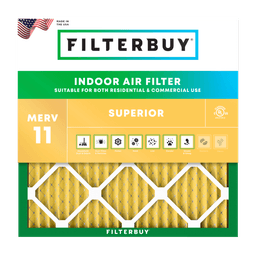
Shop MERV 11 filters→
Author: Michelle Wan | Reviewed by: David Clark, Licensed HVAC Technician | Published: August 1, 2026
Richmond Hill's air quality is officially reported on Canada's Air Quality Health Index (AQHI), a 1 to 10+ health-risk scale, while most phone apps show a US-style AQI from 0 to 500. Richmond Hill has no provincial monitoring station of its own, so the local number is drawn from stations in Newmarket and north Toronto. Check the live map below, then match the number to the indoor steps on this page.
Canada reports air quality on the AQHI, not the AQI. The Air Quality Health Index runs from 1 to 10+, where 1 to 3 is low risk and anything above 10 is very high risk.
Richmond Hill has no provincial monitoring station of its own. Ontario's network of 38 AQHI stations includes Newmarket, about 18 km north, and Toronto North, about 12 km south, but none within the town.
Wildfire smoke is now the biggest air quality variable. In mid-July 2026, smoke from northwestern Ontario pushed AQHI readings across the GTA to 10 and above.
Health Canada recommends MERV 13 or higher during smoke events. Its cleaner-air-spaces guidance points to higher-efficiency filters, which capture more of the fine particulate smoke carries indoors.
Indoor air is where you have control. You cannot change the outdoor reading, but you can change what your furnace circulates.
Richmond Hill’s current air quality is shown in the live map above as an AQHI value from 1 to 10+. A reading of 1 to 3 means low risk and normal outdoor activity is fine. At 4 to 6, people with heart or breathing conditions should ease off strenuous activity outdoors. A reading of 7 to 10 is high risk, and above 10 is very high risk.
Those health messages come from Environment and Climate Change Canada and are published hourly by Air Quality Ontario. Both update through the day, so a morning number is not a promise about the afternoon.
When Filterbuy went looking for Richmond Hill’s monitoring station, we could not find one. Ontario’s provincial network has 38 AQHI monitoring stations, and none is in Richmond Hill. Working from the published coordinates, the two closest are Newmarket, about 18 km north at Eagle Street West, and Toronto North, about 12 km south on Dufferin Street. Markham, Vaughan, and Aurora have no station either.
York Region Public Health has reached the same conclusion. Its own Outdoor Air Quality page invites residents to check the current air quality, and the link goes to Newmarket. The local health unit sends people 18 km up the road because there is nothing closer.
This matters more than it sounds. A Richmond Hill number in an app is almost always one of three things: a reading borrowed from the nearest provincial station, a modelled value interpolated between stations, or a low-cost consumer sensor on someone’s house. None is a regulatory-grade measurement taken in Richmond Hill.
Filterbuy’s view, and the reason we built this page: hunting for a more precise outdoor number is mostly wasted effort, because a more precise number does not exist. The better question is not what the air is doing outside. It is what your furnace is doing with it inside.
"What surprised me was that there is no Richmond Hill number to find. Even York Region's own health unit sends residents to Newmarket, so the figure on your phone is an estimate borrowed from 18 kilometres away." — Michelle Wan
Most people search for AQI because that is the term US apps and news coverage use. Canada uses the AQHI, and the two are built on different logic.
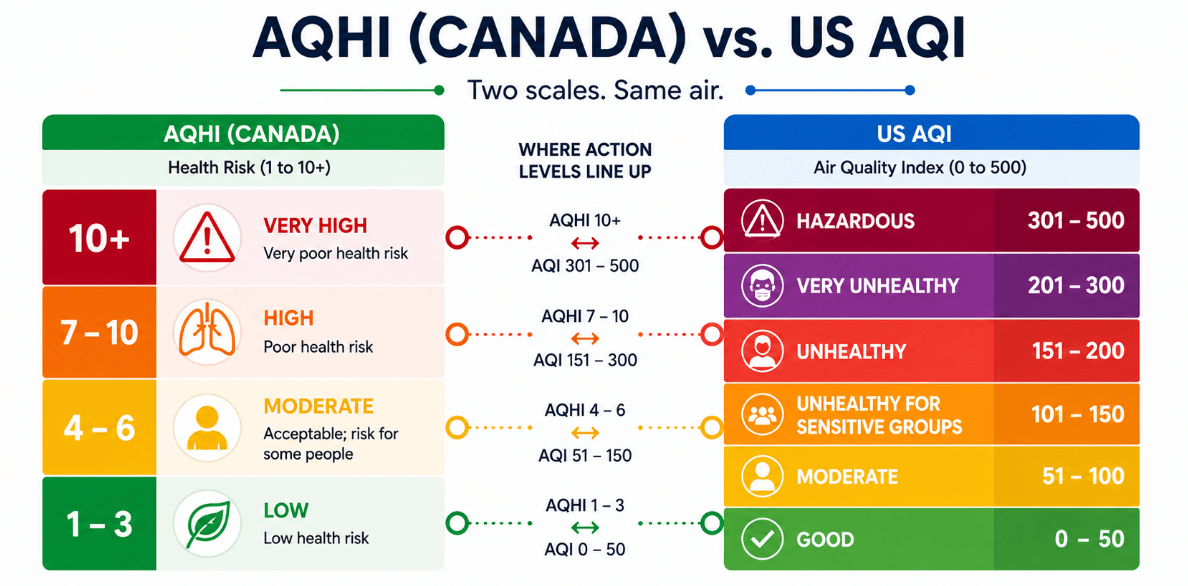
The US AQI asks: how dirty is the air? It converts the single worst pollutant into a number from 0 to 500. The AQHI asks a different question: how much is today’s air likely to affect my health? It combines ozone, nitrogen dioxide, and fine particulate into one risk score from 1 to 10+.
Because they are built differently, the two scales cannot be converted into one another. Environment and Climate Change Canada says outright that the two indices should not be compared. The action thresholds do line up loosely, though, which is enough for practical decisions:
The two scales are not convertible; this aligns action thresholds only. Source: Environment and Climate Change Canada.
If the two numbers on your screen disagree, neither app is broken. They are simply answering different questions.
With no station in Richmond Hill, triangulation gets you closer than any single number. Three habits Filterbuy suggests.
1. Read both stations, not one.
Richmond Hill sits between Newmarket and Toronto North. When the two agree, the regional estimate is trustworthy. When they diverge, local conditions are driving the air and any single Richmond Hill figure is a guess. The gap between them is your confidence signal.
2. In fast-moving smoke, look at raw PM2.5, not just the AQHI.
The AQHI blends ozone, nitrogen dioxide, and fine particulate using three-hour averages. During a wildfire plume, PM2.5 climbs while the other two often do not, so the blended figure can trail what you are breathing right now. Air Quality Ontario publishes the hourly PM2.5 reading for each station. On a smoky day, that number moves first.
3. Believe your eyes and nose.
Environment and Climate Change Canada notes that a bluish-white haze, or the smell of smoke, means concentrations are higher than usual. If the index reads moderate but your street smells like a campfire, act on the smoke rather than the number.
Summer (June to September) is now dominated by wildfire smoke. In mid-July 2026, smoke from fires in northwestern Ontario pushed AQHI values across the GTA to 10 and above for several days. You can follow active fires and plume movement on our live Ontario wildfire and smoke map. Summer also brings ground-level ozone, which forms on hot, stagnant days.
Spring (April to June) brings tree and grass pollen. Pollen does not register on the AQHI at all, which is a real limitation of the index. You can have a low reading and a miserable allergy day.
Autumn and winter (October to April) shift the picture indoors. Local furnaces run six to eight months a year, windows stay shut, and whatever is in the house keeps recirculating: dust, pet dander, cooking odours, and mould spores.
Year-round, the Highway 404 and 407 corridors add traffic-related nitrogen dioxide and fine particulate, heaviest close to the roads.
Your indoor air is the part you control. Here is a practical lookup, built from Environment and Climate Change Canada’s AQHI health messages and Health Canada’s guidance for cleaner air spaces during wildfire smoke events.
Outdoor guidance follows Environment and Climate Change Canada AQHI health messages; indoor guidance follows Health Canada cleaner-air-spaces recommendations. Not medical advice.
If anyone in your household has a heart or lung condition, follow your doctor’s advice about managing it during poor air quality.
Your furnace filter is the only whole-home air cleaner most houses already have. During a smoke event, it does the work.
Health Canada’s cleaner-air-spaces guidance recommends filters rated MERV 13 or higher during wildfire smoke events, because higher-efficiency media captures more of the fine particulate smoke carries. One condition: your system must handle the added resistance. Most furnaces installed in the last decade can. If yours is older, or airflow feels weak after upgrading, have a licensed HVAC technician check the static pressure.
The filter is rarely the problem, the system is. I check static pressure before recommending a MERV 13, because on an older furnace with an undersized return you can lose more in airflow than you gain in filtration.
— David Clark, Licensed HVAC Technician
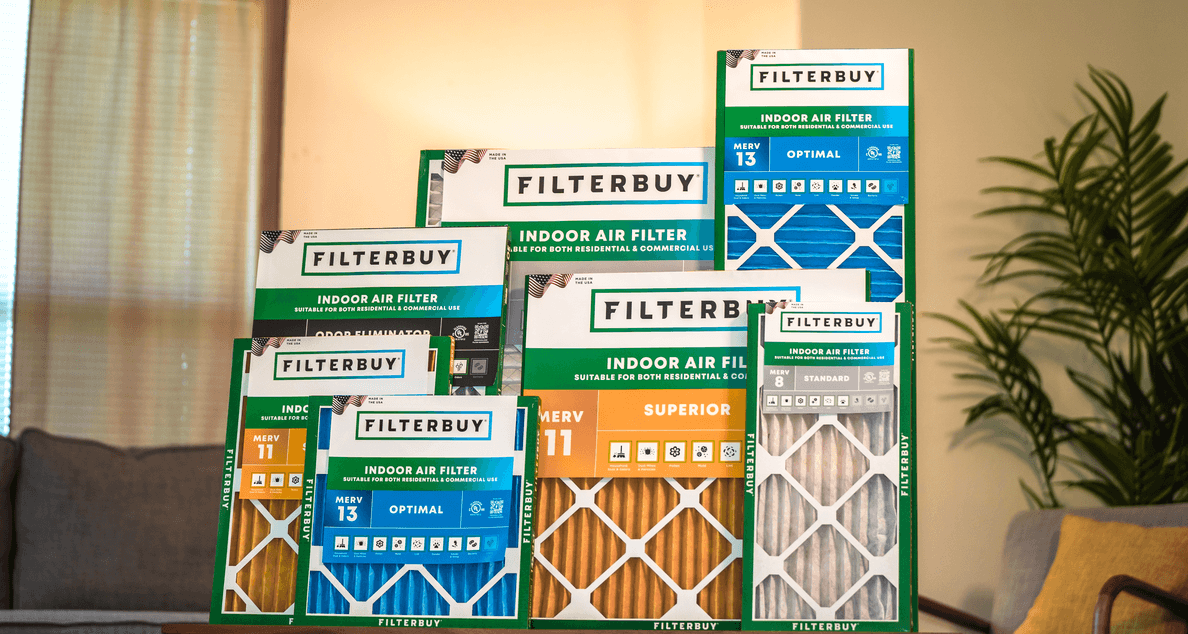
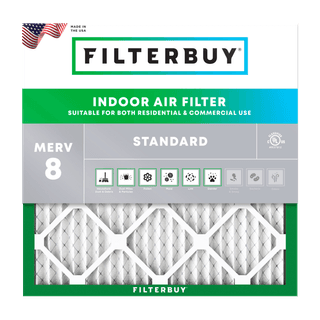
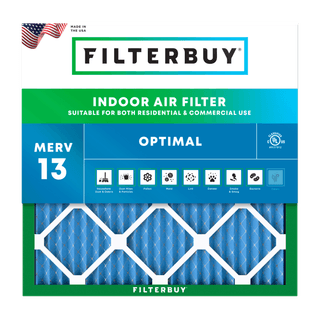
Filterbuy’s colour-coded MERV rating system is designed to make that choice quick:
Capture rates are of airborne particles, per Filterbuy product specifications. Health Canada recommends MERV 13 or higher during wildfire smoke events, provided your system can handle the airflow resistance.
During smoke season, replace filters more often than the package suggests: inspect every two weeks, and change when the media looks dark. Because local furnaces run most of the year, a filter subscription timed to heating season saves the mid-January scramble.
Every Filterbuy filter is quality-crafted in our own facilities and ships free to Canada, with no minimum purchase. Not a standard size? We make over 600, including custom sizes.
Where to go next, in order.
Ontario AQHI: current readings and two-day forecast. The official federal reading. Richmond Hill is not listed, so Newmarket and Toronto North bracket it.
Air Quality Ontario live station map. Hourly AQHI and pollutant readings from all 38 provincial stations.
Free air quality alert sign-up. Email notice when a warning is issued.
York Region Public Health: Outdoor Air Quality. Local guidance and the colour-coded warning tiers.
Wildfire smoke, air quality and your health. Government of Canada on symptoms and at-risk groups.
FireWork smoke forecast maps. Canada's operational smoke model, for tracking incoming plumes.
Health Canada cleaner air spaces guidance. Filtration, recirculation, and indoor PM2.5 targets.
1. Most exposure happens indoors.
People spend about 90% of their time indoors.
Indoor levels of some pollutants run 2 to 5 times higher than outdoor levels.
Source: US EPA, Report on the Environment: Indoor Air Quality
2. Wildfire smoke now dominates fine particulate.
Wildland fires produced 52% of total PM2.5 emitted in the US.
Figure from EPA's 2020 National Emissions Inventory.
Source: US EPA, Wildland Fire Research: Reducing Exposures
3. The filter and the fan setting both matter.
High-efficiency filter, fan running continuously: about 50% less indoor PM2.5.
Low-efficiency filter, fan running continuously: about 24% less.
Source: US EPA, Strategies to Reduce Exposure Indoors, citing Fisk and Chan (2017).
Check the live map at the top of this page. An AQHI of 1 to 3 is good. At 4 to 6, sensitive groups should take it easy. At 7 or above, everyone should reduce strenuous outdoor activity.
Environment and Climate Change Canada indicates fine particulate normally sits below 30 micrograms per cubic metre, and readings above roughly 60 can trigger a warning. The July 2026 event went well beyond that.
Apps typically display a US-style AQI on a 0 to 500 scale, while Canadian government sources report the AQHI on a 1 to 10+ scale. The two are not convertible.
Every 60 to 90 days is a reasonable baseline for a furnace running six to eight months a year. During smoke season, inspect every two weeks and replace if the media looks dark.
A pleated particulate filter captures smoke particles but not the gases that carry the odour. Carbon-infused filtration, such as an Odour Eliminator filter, is what addresses the smell.
| Term | Definition |
|---|---|
| AQHI (Air Quality Health Index) | Canada's official air quality scale, developed by Environment and Climate Change Canada and Health Canada. It runs from 1 to 10+ and expresses health risk rather than pollutant concentration. |
| AQI (Air Quality Index) | The United States scale, ranging from 0 to 500. It reports the single worst pollutant. Most consumer weather apps display it. |
| PM2.5 (Fine particulate matter) | Airborne particles measuring 2.5 micrometres or smaller, fine enough to reach deep into the lungs. It is the main pollutant in wildfire smoke. |
| Ground-level ozone (O3) | A pollutant formed when sunlight reacts with vehicle and industrial emissions. It peaks on hot, sunny, stagnant summer days. |
| Nitrogen dioxide (NO2) | A traffic- and combustion-related pollutant and one of the three AQHI inputs. Levels are highest near busy roads. |
| MERV (Minimum Efficiency Reporting Value) | The North American rating scale for filter efficiency. A higher number means more small airborne particles are captured. |
| Standard, Superior, Optimal | Filterbuy's plain-language names for its MERV 8, MERV 11 and MERV 13 filters. Colour-coded media makes each rating easy to identify at a glance. |
| Air Quality Ontario | The provincial monitoring service operated by Ontario's Ministry of the Environment, Conservation and Parks, publishing hourly AQHI readings from 38 monitoring stations. |
Written by Michelle Wan and reviewed for technical accuracy by David Clark, Licensed HVAC Technician. Last updated 31 July 2026.
How Filterbuy checked: We read Ontario’s full AQHI station list, confirmed no station operates in Richmond Hill, and measured the distance to the two nearest stations using their published coordinates. Air quality data comes from Air Quality Ontario and Environment and Climate Change Canada. Filtration guidance follows Health Canada.
Questions about which filter fits your system? Call (855) 345-8289 or email info@filterbuy.com. Filterbuy Canada, 96 Carrier Dr, Toronto, ON M9W 5R1.