Shop by
July 17, 2026

Author: Michelle Wan, Brand Manager & Air Quality Writer | Reviewer: David Clark, Licensed HVAC Technician | Published / Updated: July 17, 2026
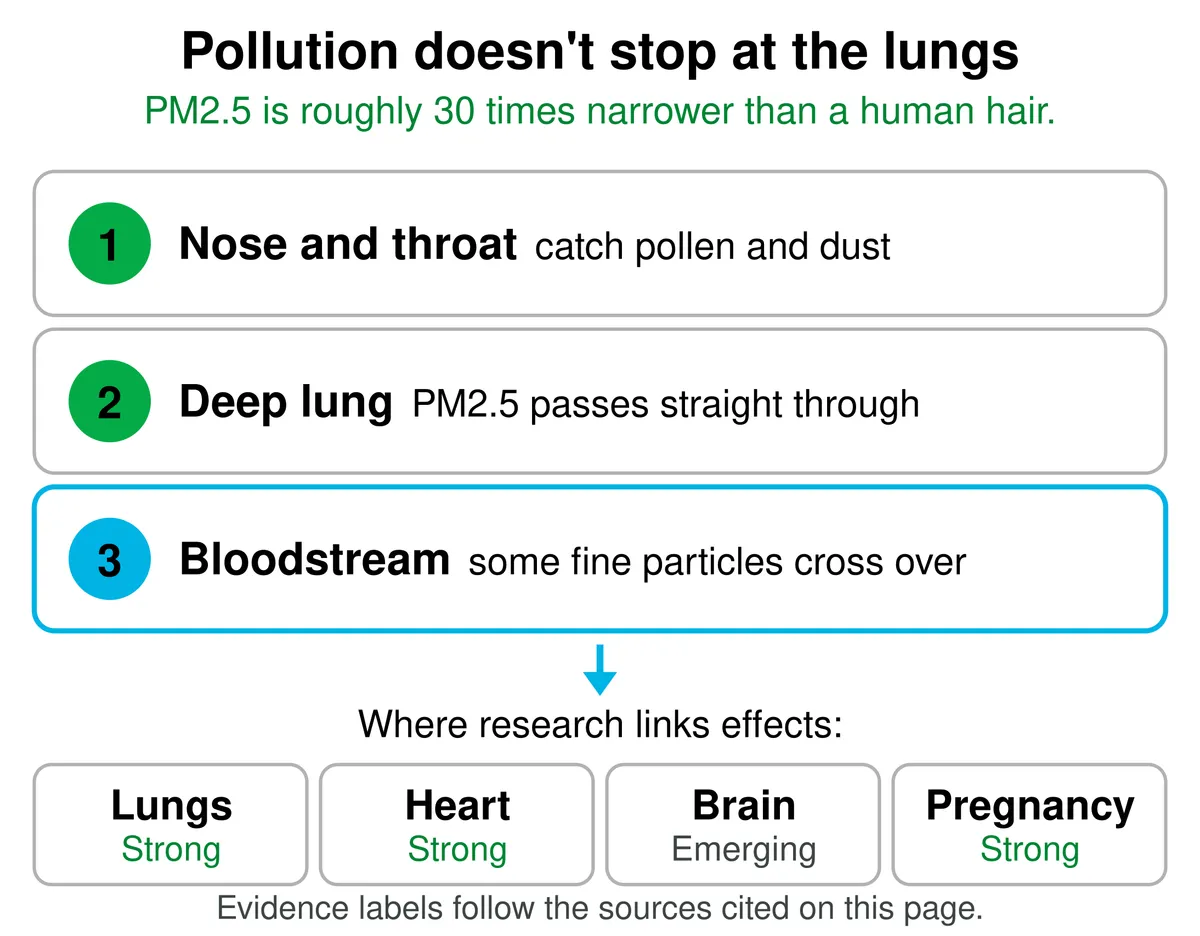
Air pollution doesn't stop at your lungs. The finest particles, PM2.5, pass through the lungs into the bloodstream, where research links them to effects on the heart, brain, and pregnancy.
The evidence is strongest for the heart and lungs, and still emerging for the brain.
Every study below measured outdoor air. Americans spend about 90% of their time indoors, and the EPA notes some indoor pollutant levels run 2 to 5 times higher than outdoors, so the air in your home is most of your actual dose.
MERV ratings describe what a filter captures. Answer 3 quick questions and we'll match you to a rating and size.
Prefer to browse? Shop air filters by size at Filterbuy — 600+ sizes, made in the USA.
The finest pollution particles pass through your lungs into your bloodstream, where research links them to effects on your heart, brain, and pregnancy outcomes, not just your lungs. The Health Effects Institute's State of Global Air 2024 report ranks air pollution as the second leading risk factor for death worldwide, with 90% of that burden from noncommunicable diseases like heart disease, stroke, and COPD.
Every study below measured outdoor air. You live indoors, and that gap matters more than almost anything else here.
Fine particles enter your bloodstream, which is why air pollution research covers the heart, brain, and pregnancy, not only the lungs. Evidence is strongest for the heart and lungs and still emerging for the brain. Studies measure outdoor air, but Americans spend about 90% of their time indoors, so the air in your home decides most of your actual dose.
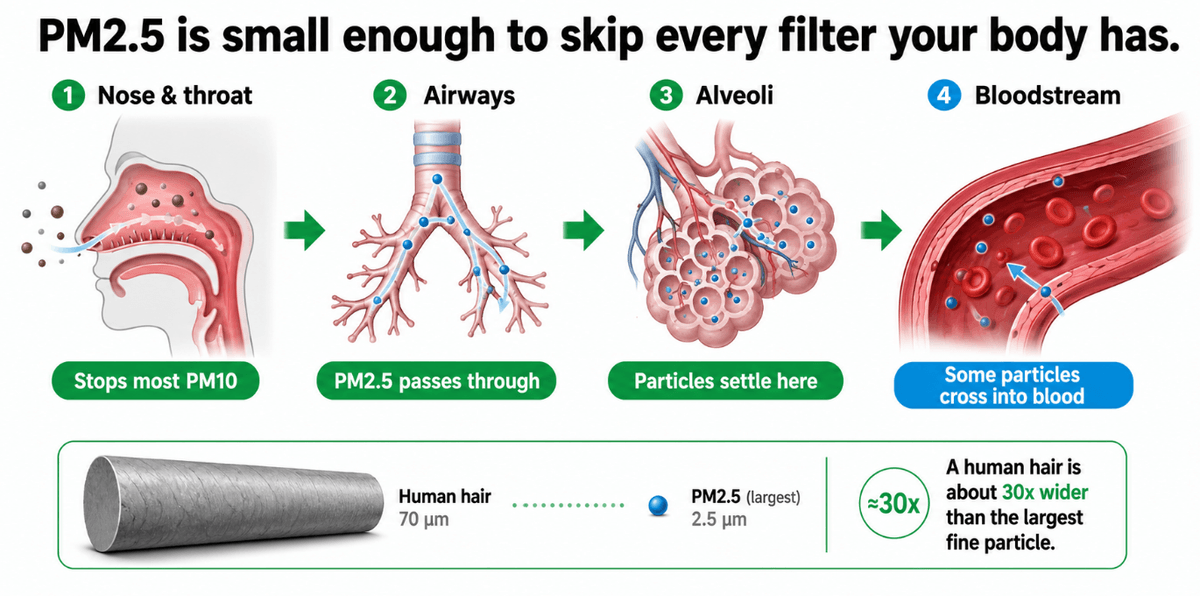
PM2.5 measures about 1/30th the width of a human hair. Your nose cannot filter it, and some crosses into your blood.
The American Heart Association links air pollution to heart attack, stroke, and atherosclerosis, the best-established finding here.
44% of Americans live in a failing-air county, and indoor pollutant levels often run 2 to 5 times higher than outdoors.
I pull AQI readings for U.S. cities every morning, and every study on this page was measured outside, on a monitor, in open air. Your body meets the air in your room, not the air outside. You cannot change a regional forecast, but you can change what happens to that air once it comes through your door.
Michelle Wan, Brand Manager and Air Quality Writer, Filterbuy
Your nose and throat catch pollen and dust, but not PM2.5, fine particulate matter roughly 30 times narrower than a human hair, per the EPA. Particles under 10 micrometers travel deep into the lungs, and some cross into the bloodstream, reaching anywhere blood goes.
Evidence labels reflect how consistently the sources cited on this page describe each link. Researchers describe the dementia evidence as weaker than the evidence for the lungs and heart.
Lungs: On high-ozone days, the EPA describes airway inflammation it compares to sunburn on skin, and long-term exposure worsens asthma. USC's Children's Health Study followed about 5,500 children across twelve Southern California communities for over a decade and found higher pollution exposure linked to lower lung function at age 18. As Los Angeles air improved, children's lung growth improved with it.
Heart: The best-established link on this page. The American Heart Association links air pollution to heart attack, stroke, arrhythmias, and heart failure in vulnerable people, and long-term exposure raises the risk of death further. Pollution likely aids atherosclerosis, the plaque buildup behind heart disease, once particles reach the blood and inflame vessel linings.
Brain: In July 2024, the Lancet Commission on Dementia Prevention added air pollution to its list of 14 modifiable dementia risk factors, alongside hearing loss and hypertension. It estimates 45% of future dementia could be prevented if all 14 factors were eliminated, a figure for all 14 together, not air pollution alone. NIEHS-funded researchers call the evidence building rather than settled. Treat it as a lever, not a cure.
Pregnancy: NIEHS describes air pollution and birth outcomes as a linked global concern. A study of more than 5 million births found wildfire particulate exposure during pregnancy raised the chance of preterm birth, which matters as smoke now reaches states far from any fire.
Sources: U.S. EPA, American Heart Association, Health Effects Institute. See the full source list at the end of this article.
PM2.5 is the most researched and systemic. Ground-level ozone forms when sunlight cooks emissions, peaking on hot afternoons.
The same pollutant does different things depending on how long it has you.
Sources: U.S. EPA, American Heart Association, and the USC Children's Health Study, all linked in full above. The same pollutant can appear on more than one clock.
A 160 driven by ozone is usually a bad afternoon. The same number driven by wildfire smoke can mean a bad fortnight, since particles come inside and stay. The cheapest strategy is the lifetime clock, because you set it once.
If someone in your home falls into a group below, Filterbuy's guide to the AQI with asthma or COPD goes deeper.
44% of Americans live where the air gets a failing grade. The American Lung Association’s "State of the Air" 2026 report found 152.3 million people, including 33.5 million children, live in failing counties.
Emissions fell 79% since 1970, while GDP grew 338%. EPA's national summary found the six pollutants down 79% since 1970, even as GDP, vehicle miles, and population all rose. About 109 million people still lived above the national standard in 2024.
Asthma affects 8.6% of U.S. adults and 6.5% of children. CDC data shows 1.4 million emergency department visits and 3,722 deaths from asthma in 2024.
Americans spend roughly 90% of their time indoors, where the EPA notes some pollutant concentrations run 2 to 5 times higher than outdoors. The dose that matters most is the air in your room right now, outdoor air that got in plus what your household adds through cooking and dust. Tighter, energy-efficient construction has raised indoor concentrations in recent decades without matching ventilation. Filterbuy explores this in does outdoor AQI affect indoor air quality.
You cannot fix regional air quality, but you can change your dose.
Know your air today. Check Filterbuy's live AQI map before planning outdoor activity.
Time outdoor activity. On high-ozone days, move exertion to the morning.
Close windows on bad-air days. Switch your HVAC to recirculate. See Filterbuy's guide to air conditioner filters for wildfire smoke.
Cut what you add indoors. Vent the range hood outside, skip air fresheners, and ventilate when painting.
Run the right MERV rating. The AHA states filtration systems can improve air quality in homes, schools, and workplaces. See Filterbuy's full guide to MERV ratings.
These ratings describe what each filter captures. Filterbuy air filters are not medical devices and are not intended to diagnose, treat, cure, or prevent any disease. Compare MERV 8, 11, and 13 side by side to choose.
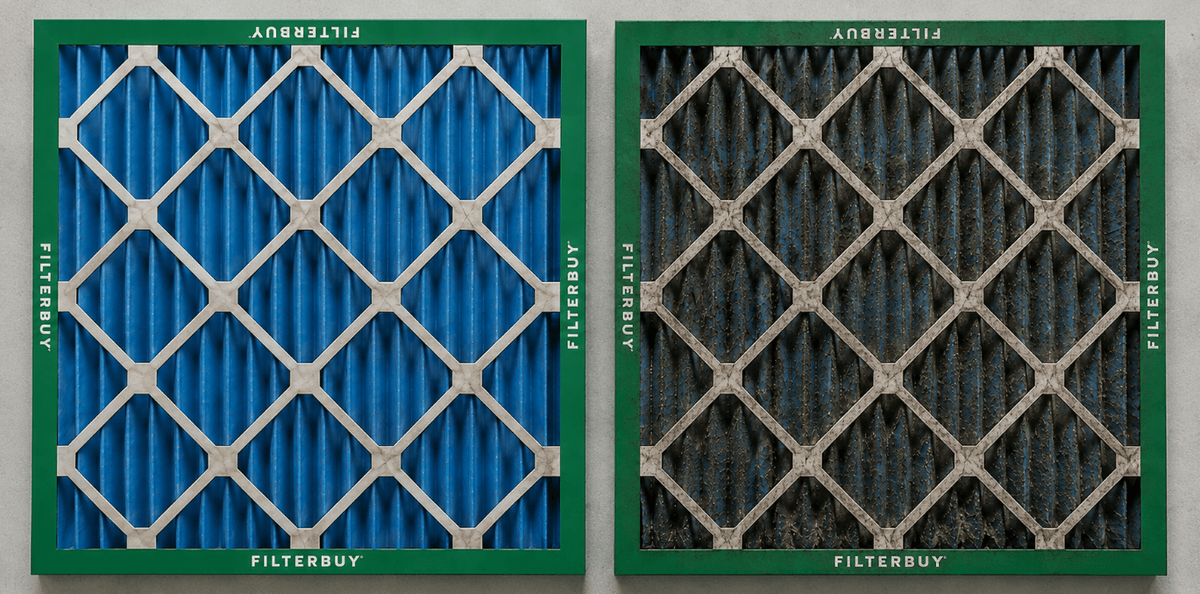
After manufacturing filters in the USA for over a decade and serving more than two million households, Filterbuy sees the indoor half of this problem from an angle research cannot easily reach.
Filter orders rise after major smoke events, and a filter that normally lasts a season can load with soot in weeks of heavy smoke. That soot came from the air your household was breathing, not a monitor down the highway. A dirty filter is not evidence it failed. It is a record of what everyone inside has actually been breathing.
Every number in this article was measured outside. We have spent a decade looking at the other half of it: what that air does once it is in someone's living room. You cannot control the first half. The second half is the part you actually own.
— David Heacock, Founder and CEO, Filterbuy
Shop MERV 13 air filters and find your size. 600+ sizes, made in the USA, shipped factory-direct. Filterbuy auto-delivery sends the right size on a schedule, so the lifetime clock runs without you thinking about it.
Written by Michelle Wan, Brand Manager and Air Quality Writer at Filterbuy. Filtration and HVAC review by David Clark, Licensed HVAC Technician. Health claims are sourced from the citations above.
This article is for general information. It is not medical advice and is not a substitute for care from a qualified healthcare professional. Filterbuy air filters are not medical devices and are not intended to diagnose, treat, cure, or prevent any disease.
AQI: EPA's 0-to-500 scale for outdoor air pollution and its health effects.
MERV rating: A 1-to-16 scale for what size particles a filter captures, not a health rating.
