Shop by
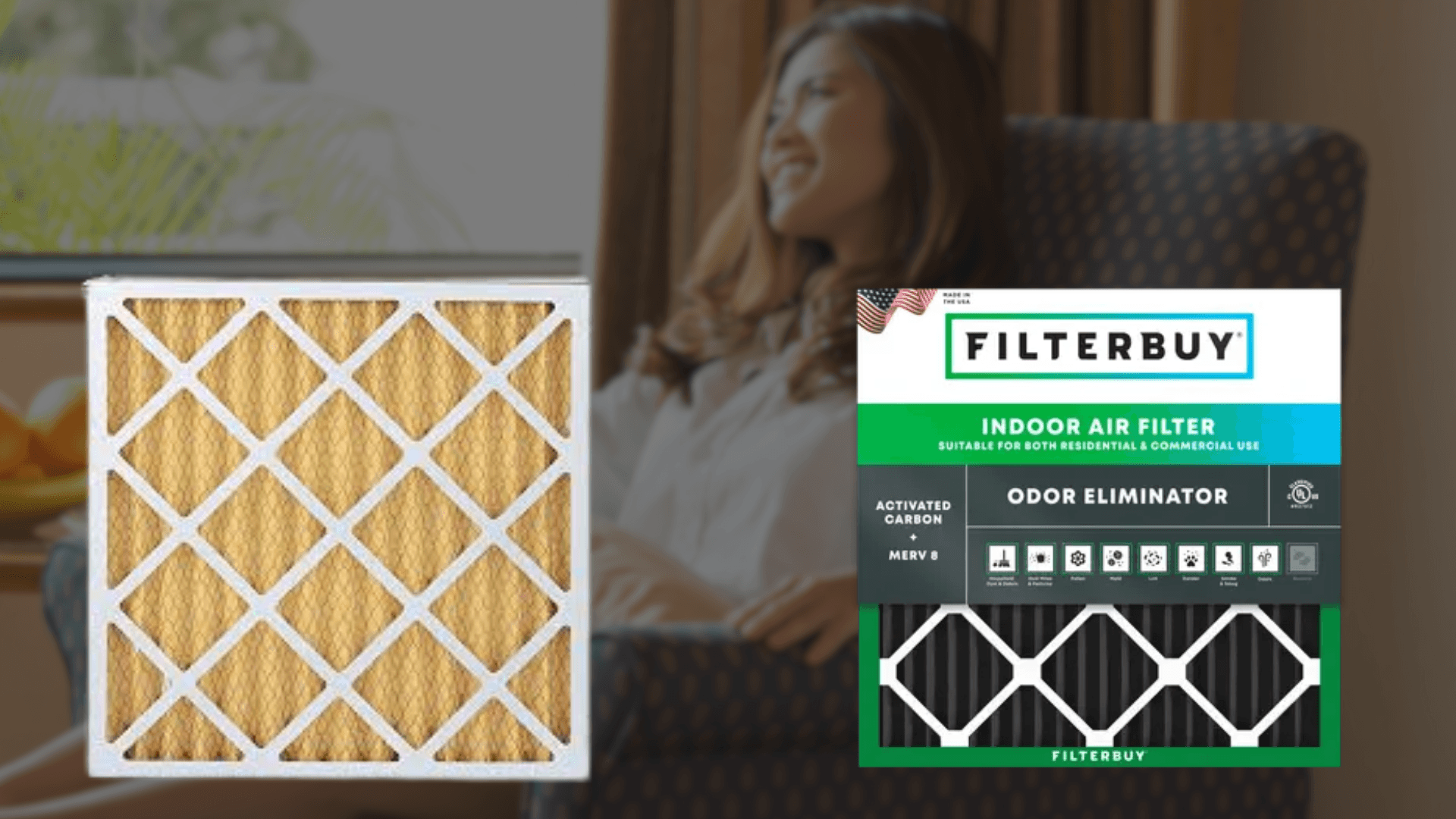
The air inside your home carries more than just oxygen. It also contains dust, pollen, pet dander, odors, and chemical fumes. Air filters help clean that air — but not all filters do the same job.
Traditional pleated and HEPA filters are designed to capture solid particles floating through your home. Carbon filters, on the other hand, specialize in absorbing odors and gases. Both improve indoor air quality, but they solve different parts of the problem. Understanding how each filter works makes it easier to choose the right one for your needs.
The core difference: Traditional pleated air filters capture airborne particles, while carbon air filters absorb gases, odors, and volatile organic compounds (VOCs).
Traditional Pleated Filters use electrostatically charged synthetic media to trap:
Carbon Air Filters contain activated carbon that chemically absorbs:
Which should you choose? After manufacturing filters for over a decade, we've found most homes benefit from traditional pleated filters (MERV 8-13) for everyday particle filtration. Carbon filters serve homes with specific odor concerns—pet owners, smokers, or households near highways or industrial areas. Carbon filters don't replace particle filtration; they complement it by addressing what standard filters can't capture: the invisible gases affecting your indoor air quality.
Pro Tip: Carbon filters have a shorter effective lifespan than traditional filters because the activated carbon becomes saturated. Replace every 1-2 months for optimal odor control versus the standard 90-day cycle for pleated filters.
Carbon (or charcoal) filters are especially effective at removing odors and gases from indoor air. The activated carbon material naturally attracts and traps gaseous pollutants, including volatile organic compounds (VOCs).
These filters are helpful if your home has lingering smells from:
Researchers at MIT note that activated carbon is still one of the most effective ways to remove VOCs from indoor air. The EPA also recommends carbon filters when gas and vapor removal is a priority.
Traditional air filters — including standard furnace filters and HEPA filters — are built to capture particles. They trap dust, pollen, mold spores, pet hair, and other solid debris as air passes through your HVAC system.
According to the EPA, HEPA filters can capture nearly all airborne particles, including very fine dust and allergens. A typical MERV 8 pleated filter effectively captures larger particles commonly found in homes, helping reduce visible dust buildup and allergy triggers.
What these filters don’t do well is remove odors or chemical fumes. They’re designed for particles, not gases.
A carbon filter is a smart choice if odors are your main indoor air concern. These filters are especially useful in homes dealing with:
Because gases and odors pass right through standard particle filters, the EPA recommends carbon filtration when smells or fumes are the problem you’re trying to solve.
On their own, carbon filters are meant for gases — not particles. However, many carbon filters are designed with pleated filter media, allowing them to capture dust as well.
For example, Filterbuy’s carbon air filters are rated MERV 8. That means they:
That said, higher-MERV or HEPA filters are still better at removing very fine particles. If your top concern is allergens or microscopic dust, a higher-MERV filter may be the better choice.
Indoor air quality experts agree: the right filter depends on the problem you’re trying to solve.
Filterbuy’s MERV 8 carbon filters offer a balanced option for homeowners who want help with both odors and everyday dust in a single filter.
Just like your traditional air filters, Filterbuy carbon filters should be replaced every 60-90 days. Learn more on how carbon air filters help your indoor air quality at home.
.png?fit=max&auto=format)
Filterbuy makes it easy to find the right air filter for your home and your air quality needs. Most homeowners would prefer Fiterbuy having the best carbon air filters combine odor control with reliable particle capture — all in a filter designed to fit your HVAC system properly.
Additional benefits include:
With Filterbuy, maintaining clean indoor air is simple, reliable, and tailored to your home.

It targets smells and chemical vapors—such as smoke, cooking fumes, and VOCs—rather than dust.
Carbon pads built into a MERV-8 pleated frame capture some larger dust particles, but they are less efficient than high-MERV or HEPA options.
HEPA traps 99.97 % of tiny particles (0.3 µm), while carbon focuses on gases and odors.
Pick carbon if odors or chemical fumes bother you more than dust—especially in homes with smoke, pets, or fresh paint.
A properly sized, thick pleated carbon filter maintains airflow close to normal; the surface area—not the carbon itself—sets the resistance.
Check monthly and plan to swap every 60–90 days; heavy odors or high usage can shorten this interval.
Yes. Pairing filters allows one to handle particles while the other tackles odors, providing broader protection within the same system.
Filterbuy’s carbon line is MERV 8, a level that balances odor control with moderate particle capture without overloading most blowers.
Higher MERV filters trap finer dust but must be compatible with your blower; excessive resistance can reduce overall system performance.
They’re as safe as standard pleated filters when sized and sealed correctly; the CDC advises using the highest efficiency your system can handle.