Magasiner par
Que signifient les indices MERV ? Si le fait d’essayer de comprendre ces indices et de déterminer lequel vous convient vous donne le tournis, vous n’êtes pas seul. Mais ne vous inquiétez pas : nous sommes là pour vous aider. Voici ce que vous devez savoir sur les indices MERV.
First, what is a MERV rating and what does it stand for? A MERV rating, or Minimum Efficiency Reporting Value, calculates the effectiveness of an air filter in capturing particles. Understanding MERV ratings is essential for determining how air filters can filter out harmful particles and enhance the air quality in your home.
The Valeur minimale de rendement (MERV)Le système a été développé par l’American Society of Heating, Refrigerating, and Air‑Conditioning Engineers (ASHRAE) en 1987, et visait à normaliser les mesures de performance des filtres à air. Cette normalisation permet aux consommateurs et aux professionnels de prendre des décisions éclairées.
Every air filter has a rating that measures how efficiently it captures particles of specific sizes that pass through it as your furnace operates. MERV ratings range from 1 (least efficient) to 16 (extremely efficient).
Particles are measured in microns and range from carpet and textile fibers (greater than 10 microns) to microscopic bacteria (less than 0.3 microns).
Different MERV filter types address varying levels of air quality needs. Here's a breakdown of what MERV ratings assess:
Evaluating filter performance involves considering the specific air quality requirements of your environment. It’s important to note that higher MERV ratings generally mean better filtration but may also impact airflow and energy efficiency. Understanding these criteria helps in choosing the appropriate MERV filter type to ensure optimal air quality in your space.
MERV stands for Valeur minimale de rendement (MERV), a standard that rates how well an air filter captures particles of varying sizes. The higher the MERV rating, the finer the filtration.
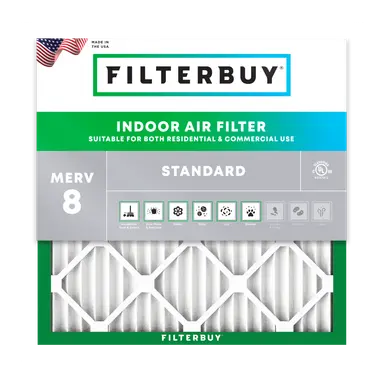
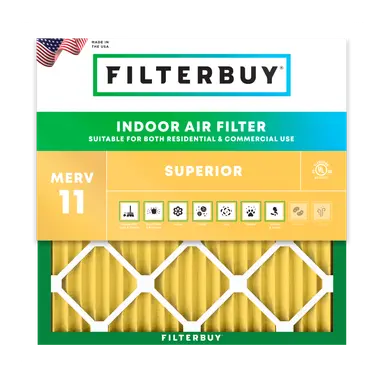
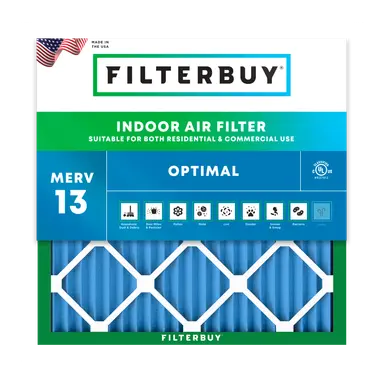
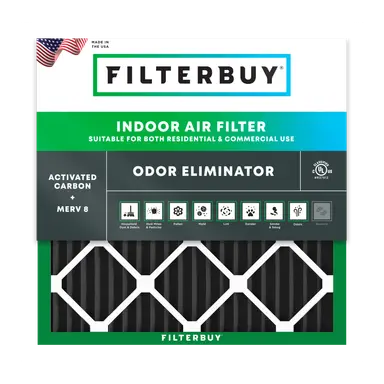
At Filterbuy, we focus on pleated, electrostatic filters in MERV 8, 11, 13, and a specialized Odor Eliminator option. Here’s how to choose the right one for your needs:
Idéal pour: Standard residential and commercial use
Captures:90 % des particules en suspension (3,0–10,0 microns)
Cibles:Poussière, peluches, débris, moisissure, pollen, squames d’animaux et acariens
Comparable to:MPR 600, FPR 5
Idéal pour:Ménages en bonne santé souhaitant une propreté de l’air générale à un prix abordable
✔ Great for general dust and allergen control
✘ Ne filtre pas la fumée, le smog, les bactéries ou les odeurs

Best for: Homes with pets or mild allergy concerns
Captures: 95% of airborne particles (1.0–10.0 microns)
Cibles: Everything MERV 8 does, plus better capture of finer particles like smoke and smog
Comparable to: MPR 100–1200, FPR 7
Ideal for: Families with pets, mild respiratory issues, or seasonal allergies
✔ Better protection from airborne allergens
✔ Helps reduce smoke and smog particles
✘ Not designed to filter bacteria or odors

Best for: Homes with asthma, severe allergies, ou des personnes ayant une sensibilité immunitaire
Captures: 98% of airborne particles (0.3–10.0 microns)
Cibles: Fine allergens, bacteria, and even some viruses
Comparable to:MPR 1500–1900, FPR 10
Idéal pour: Households requiring the cleanest air possible
✔ Hospital-grade filtration for cleaner air
✔ Captures bacteria and virus-sized particles
✘ Not specialized for odors or VOCs

Idéal pour:Ménages avec animaux, odeurs de cuisine, fumée ou odeurs chimiques
Captures: 90% of airborne particles + odors and volatile organic compounds (VOCs)Cibles: Dust, dander, odors, and gases
Comparable to: MERV 8 in particle capture, with added odor filtration
Ideal for:Clients qui veulent une filtration basique avec une défense additionnelle contre les odeurs
✔ Helps remove smells from pets, smoke, or cooking
✔ Captures common household particles
✘ Not as effective as MERV 11 or 13 for fine allergens or bacteria
Si vous êtes un foyer en bonne santé cherchant simplement à réduire la poussière, MERV 8 is a great start. If you suffer from allergies or have pets, go for MERV 11. For maximum protection, especially if you have asthma or respiratory issues, MERV 13 is your best bet. And if odors are your main concern, the Odor Eliminator is specifically designed for that.
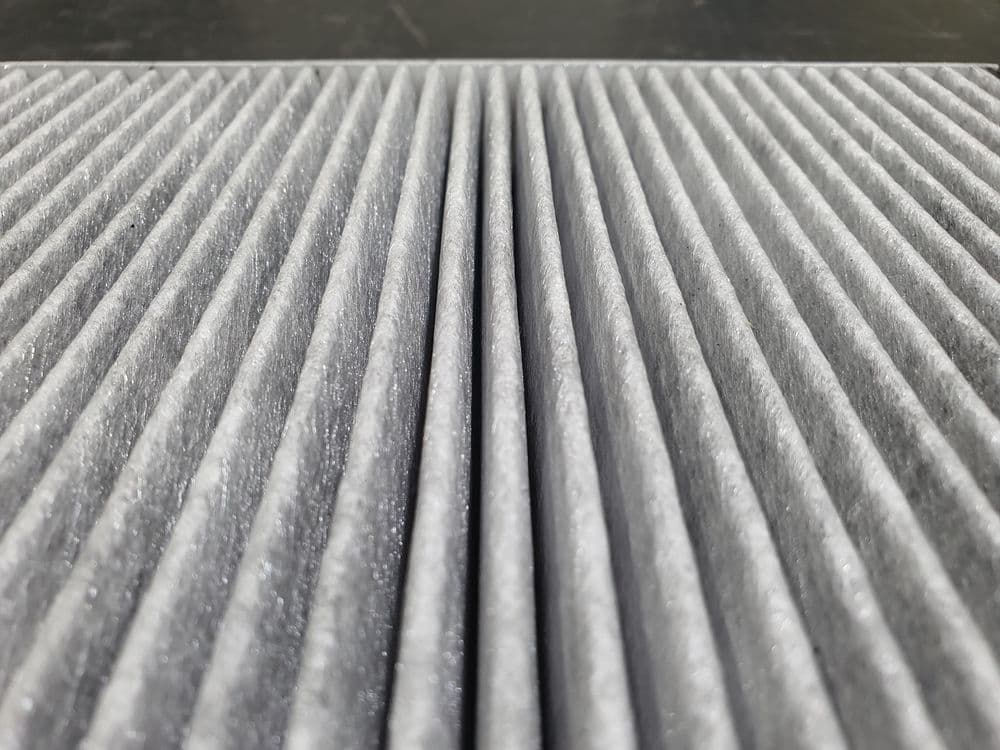
Filterbuy MERV filters are made of pleated high-quality electrostatic media. What does this mean and why is it important for air filters?
Pleated air filtersIls peuvent capturer la poussière, les allergènes et d’autres particules en suspension mieux que les filtres standard en fibre de verre. La structure plissée augmente la surface du média filtrant, permettant une efficacité supérieure. Cette conception emprisonne plus de contaminants sans restreindre excessivement le flux d’air.
Using a pleated filter typically results in better performance compared to a standard flat, fiberglass filter.
The pleats offer additional space for particles to gather, helping maintain cleaner air in homes or offices.
The expanded surface area also means the filter can endure longer before replacement, making it a cost-effective choice for sustaining high indoor air quality.

Pleated filters have a more intricate design than standard flat versions. While designed to capture more airborne particles, pleated can slow down airflow depending on your system. This is why it’s important to understand your system’s requirements and choose the right filter accordingly. Check your HVAC system manufacturer’s guide.
Determining how frequently you should replace MERV 8 filters depends on several factors. Usage patterns, air quality, and environmental conditions all impact the ideal replacement schedule.
If you reside in an area abundant with dust or pollen, changing the filters more often than the usual 1 to 3 months might be necessary. Additionally, if you have pets or allergies, you may also need to change your filters more frequently.
Regularly inspecting the filter's state and adjusting your replacement routine accordingly is crucial to determine the right schedule for your home and needs.
Understanding MERV ratings is essential for maintaining dust-free indoor air. Filters with ratings between 8 and 13 effectively capture a wide range of particles. For instance, a MERV 11 filter can trap up to 95% of dust, significantly enhancing air quality and reducing HVAC inefficiency.
Ratings between 8 and 13 typically work well, effectively capturing dust, pollen, and allergens without overburdening your system. If you have pets or family members with allergies, higher ratings might be beneficial. However, ensure your HVAC system can handle the increased filtration. Consider factors like your system's capacity and household requirements to guide your decision.
Upgrading your home's air filter to a MERV 13 might seem appealing, but it comes with potential complications. High-efficiency types can significantly improve qualité de l’air intérieur by trapping smaller particles. However, they can also strain HVAC systems not designed to handle such resistance. It's vital to recognize that while higher ratings provide superior protection, not all HVAC systems can accommodate them. Always verify your system's specifications to ensure compatibility and maintain efficiency.
Considering air quality, a rating above 13 is essential for capturing minuscule particles like dust, pollen, and bacteria. Such filters are often employed where air purity holds significant importance, such as hospitals and commercial buildings.
Differences between 8 and 11 are mainly in efficiency and particle-capturing capability. Those with a 8 rating achieve about 70-85% efficiency for particles sized between 3.0 to 10.0 microns. In contrast, rated-11 filters boast higher efficiency, capturing up to 85-95% of particles in that range and even smaller ones down to 1.0 micron. Consequently, these excel at removing dust, pollen, and other pollutants, ensuring cleaner air. However, this increased efficiency can impose a greater demand on your HVAC system due to higher resistance.
Ils excellent à capturer les allergènes et les polluants, ce qui les rend idéaux dans des lieux comme les hôpitaux. Toutefois, ils peuvent augmenter les coûts énergétiques et être incompatibles avec votre système CVC actuel. Cette incompatibilité pourrait entraîner des remplacements fréquents et des dépenses imprévues. Les filtres cotés 14 sont souvent utilisés dans des milieux exigeant un contrôle strict de la qualité de l’air. Comprendre ces indices vous permet de choisir la variante adéquate selon vos besoins, assurant une performance optimale et un air propre.
They excel at trapping allergens like pet dander and pollen, significantly improving la qualité de l’air intérieur. However, denser filter media might reduce airflow, potentially straining the HVAC system. Balancing filtration needs with airflow requirements is crucial to avoid unnecessary strain on the system. Higher ratings mean better filtration but can also affect airflow. MERV 11 filters efficiently capture particles like pet dander, pollen, and dust mites. Improving indoor air quality, their higher efficiency can restrict airflow more than lower-rated types.
Usage patterns, air quality, and environmental conditions all impact the ideal replacement schedule. If you reside in an area abundant with dust or pollen, changing them more often than the usual 1 to 3 months might be necessary. Areas with high pollen or pollution levels will clog them more quickly.
When choosing between 11 and 16 filters, consider factors like air quality requirements, cost, and upkeep. Rated-11 filters enhance indoor air without being expensive, striking a good balance between efficiency and longevity. Conversely, MERV 16 filters offer superior purification, trapping smaller particles such as bacteria and allergens, though they are costlier and require more frequent changes. Selection depends on specific needs. The 11 offers extended life and basic air quality improvement, while the 16 provides superior purification but necessitates more frequent replacements.
Pleated air filtersaméliorent la qualité de l’air intérieur en capturant la poussière, les allergènes et autres particules en suspension.
Filters with ratings between 8 and 13 effectively capture a wide range of particles. For instance, an 11 filter can trap up to 95% of dust, significantly enhancing air quality and reducing HVAC inefficiency. They are rated on a scale from 1 to 20; the higher the number, the more particles captured. For residential use, ratings between 8 and 13 are ideal, balancing efficiency and airflow. For those with ratings like a 16 are typically used in hospitals and cleanrooms. Understanding this system ensures your home's air quality meets your standards.
Opting for the highest rated filters can place additional strain on HVAC systems, potentially increasing energy use and wear. Restricted airflow forces the HVAC system to work harder to move air through it. This extra effort results in higher energy consumption, leading to factures d’énergie plus élevées. Furthermore, the additional strain accelerates wear and tear on components, possibly reducing equipment lifespan. While high rated filters improve air quality, they might unintentionally cause HVAC systems to operate less efficiently, illustrating the trade-off between air purity and system performance.