Shop by
The Air Quality Index (AQI) measures how polluted the air is and how it may affect your health.
0–50 (Good): Air quality is satisfactory.
51–100 (Moderate): Acceptable, but some pollutants may pose minor concerns.
101–150 (Unhealthy for Sensitive Groups)
151–200 (Unhealthy)
201–300 (Very Unhealthy)
301+ (Hazardous)
Still okay for most, but if you have asthma or allergies, take it easy and avoid long outdoor workouts.
Shop MERV 11 filters→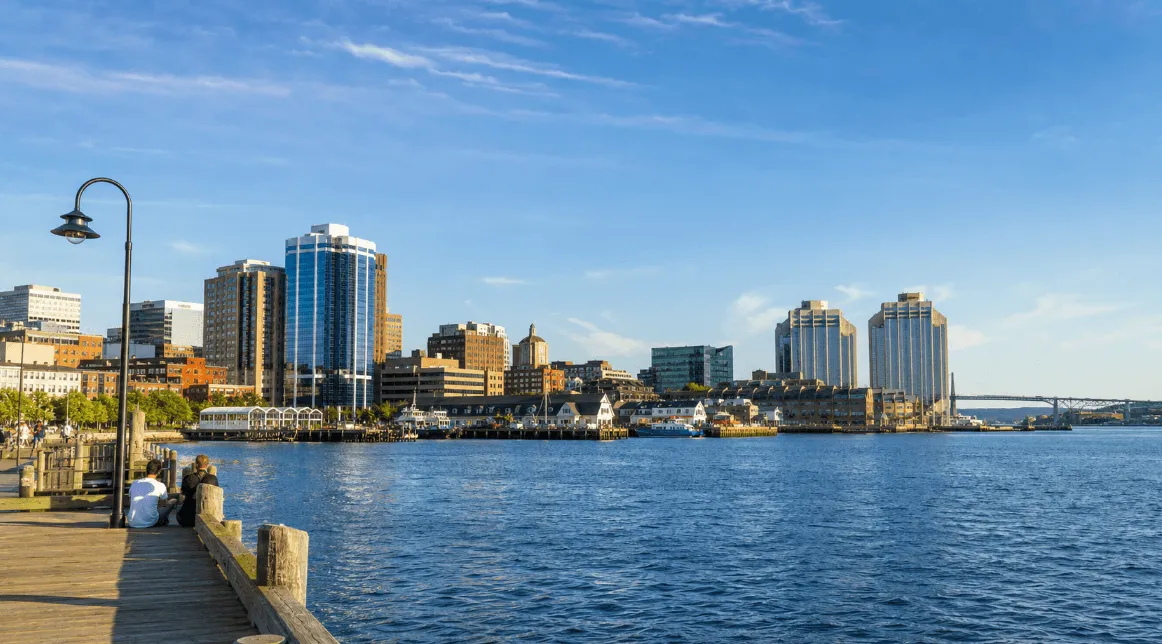
By Michelle Wan · Reviewed by David Clark, Licensed HVAC Technician · Published July 16, 2026 · Updated July 16, 2026
Halifax's air quality is tracked through Canada's Air Quality Health Index (AQHI), a 1-to-10+ scale run jointly by Environment and Climate Change Canada and Nova Scotia Environment and Climate Change, not the 0-to-500 AQI scale used in the United States. Halifax typically sits in the Low Risk range (1-3) most days of the year, since Nova Scotia and the rest of Atlantic Canada generally have some of the cleanest air in the country. The main exceptions are summer wildfire smoke events, which have pushed Halifax into High or Very High risk for short stretches in recent years, and the long winter heating season, when furnaces run hardest and indoor air quality becomes just as important as outdoor conditions. Use the live map below for the current reading, and keep a fresh, properly rated air filter, such as one of Filterbuy Canada's Standard, Superior, or Optimal filters, in your HVAC system so the air inside your home stays clean regardless of what's happening outside.
Halifax's official air quality reading is the AQHI (Air Quality Health Index), a Canadian 1-to-10+ scale, not the U.S. EPA's 0-to-500 AQI, so numbers from U.S.-based apps may not match Canadian government sources.
The AQHI combines three pollutants, ground-level ozone, fine particulate matter (PM2.5), and nitrogen dioxide, into a single number that reflects combined health risk, updated hourly.
Nova Scotia's most commonly recorded AQHI reading is 2, placing the province in the Low Risk category (1-3) on most days of the year.
Halifax's biggest air quality risk isn't everyday pollution. It's wildfire smoke, which pushed the city to High risk levels during the May 2023 Tantallon-area fires and again during smoke events in summer 2025.
Halifax's long heating season (roughly October through April) means furnace filters work harder and longer here than in most of the country, making regular filter changes especially important for indoor air quality.
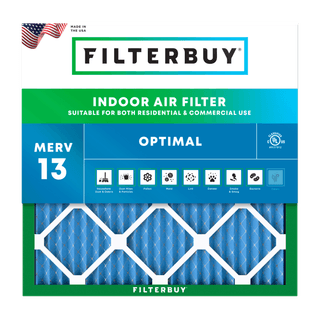
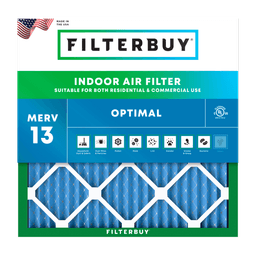
A properly sized, higher-MERV air filter in your home's HVAC system, like Filterbuy Canada's Optimal (MERV 13) line, is one of the few controls you have over the air you breathe indoors when outdoor AQHI levels climb.
If you've searched for the air quality in Halifax today, you may have landed on a mix of different scales, apps, and numbers that don't quite agree with each other. That's normal: Canada and the United States use two different systems entirely, and most third-party weather apps default to the American one. Before checking the live map below, it helps to know which number you're actually looking at.
This page explains how Halifax's air quality is measured, where the readings come from, what tends to drive changes across the seasons, and what you can do at home when outdoor conditions turn Moderate, High, or Very High. For the live reading itself, see the map widget just below.
A note on how I built this page: I pulled every figure here directly from Environment Canada's own AQHI feed and Nova Scotia Environment's program pages, rather than from a weather app or a secondhand summary, because those are the two sources that actually calculate Halifax's number. That's also why you won't find a specific AQHI reading printed anywhere on this page. Environment Canada's own footnote on its Halifax data explicitly asks that real-time readings not be republished as static facts, since a live number is often correct for minutes, not days. A page that prints "today's AQHI is 3" is usually already wrong by the time you read it. Check the live map below instead. - Michelle Wan
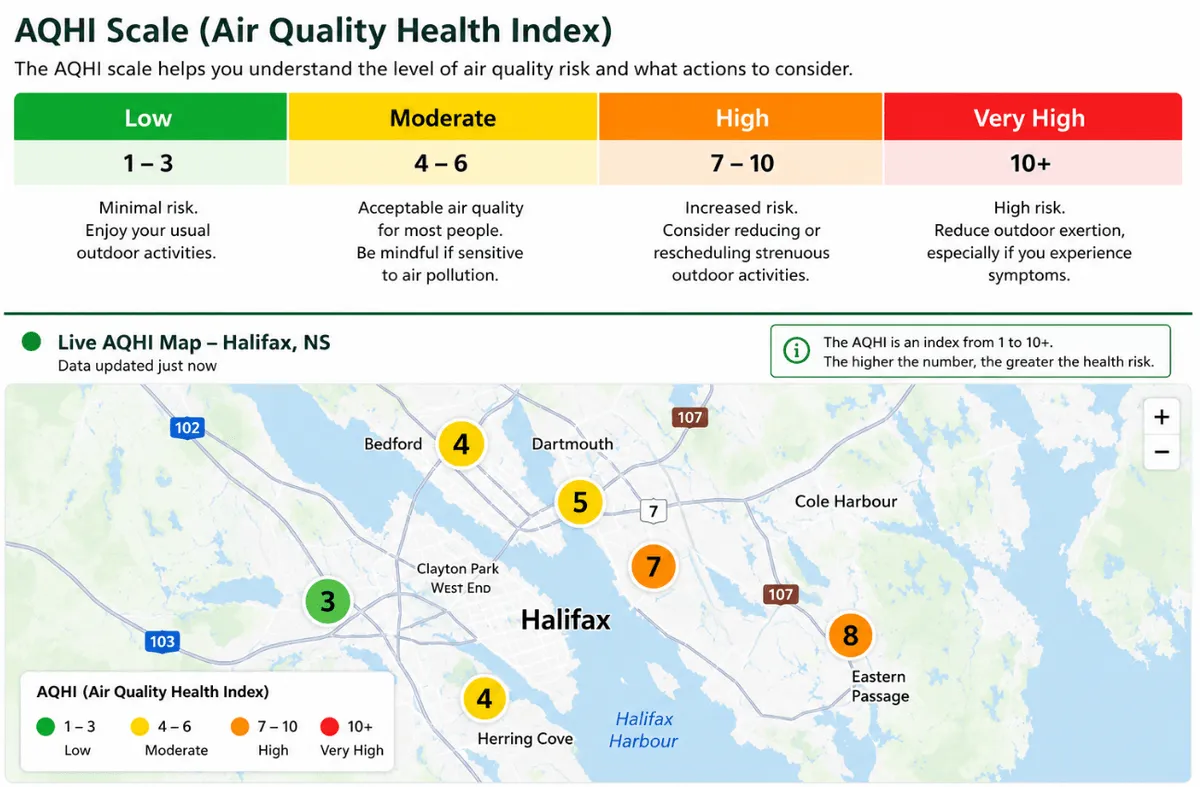
Canada and the United States both track outdoor air pollution, but they communicate it differently. Environment and Climate Change Canada uses the Air Quality Health Index (AQHI), while the U.S. Environmental Protection Agency uses the Air Quality Index (AQI). They aren't interchangeable, and converting one to the other isn't as simple as a straight formula, because they're built around different pollutant weightings and health messaging.
Sources: Environment and Climate Change Canada; U.S. Environmental Protection Agency.
Because most weather apps sold in North America default to the U.S. AQI, they may show a different number for Halifax than Canadian government sources report. When precision matters (for outdoor plans, exercise, or a health condition), the AQHI from Environment Canada or Nova Scotia Environment is the more locally accurate reading for Halifax residents.
The AQHI is a joint federal-provincial program. In Nova Scotia, it's administered through a partnership between Environment and Climate Change Canada, Health Canada, Nova Scotia Environment and Climate Change, and the Nova Scotia Department of Health and Wellness, working alongside the Lung Association of Nova Scotia and Clean Nova Scotia. The AQHI is currently reported for six Nova Scotia communities: Halifax, Sydney, Kentville, Greenwood, Pictou, and Port Hawkesbury, according to Nova Scotia Environment's own FAQ.
Halifax's reading actually blends data from three separate monitoring points feeding the same index: Halifax, Halifax Downtown, and Halifax - Lake Major. Per Nova Scotia Environment's ambient air quality program, the downtown gaseous-pollutant monitor itself moved from the Vogue Building on Barrington Street to the Johnston Building on Granville Street in January 2018, and is now referred to as Halifax Johnston Gases in the province's raw data feeds, even though the AQHI page for that location keeps the "Halifax Downtown" name.
Because the data arrives continuously from field instruments, Environment Canada notes that current-conditions readings haven't gone through the same detailed quality control as historical data, and it discourages using live current-conditions numbers for republishing or long-term recordkeeping. That's a useful bit of context if you ever see a Halifax AQHI reading that looks like an outlier: a brief spike or dip can reflect a local sensor reading before it's been reviewed, not necessarily a lasting citywide condition.
Source: Environment and Climate Change Canada, Air Quality Health Index categories.
Nova Scotia Environment reports that the most frequently recorded AQHI level across the province is 2, comfortably inside the Low Risk band, and that Atlantic Canada's AQHI levels tend to stay in that range most of the time. It's a helpful baseline to keep in mind: on a typical Tuesday in Halifax, you should expect Low Risk conditions, with Moderate or higher readings being the exception rather than the rule.
Halifax's air quality follows a recognizable seasonal rhythm shaped by the city's Atlantic coastal climate, its long heating season, and its growing exposure to wildfire smoke from across the region.
Source: Nova Scotia Environment; Filterbuy Canada seasonal guidance.
In late May 2023, wildfires near Tantallon and Barrington Lake on the western edge of Halifax Regional Municipality forced nearly 18,500 residents to evacuate and prompted a provincewide burn ban. Smoke from those fires pushed Halifax's air quality into the High Risk range and carried haze as far as the U.S. Northeast. A second event followed in August 2025, when a wildfire burning in the Bayers Lake area on Halifax's western outskirts again pushed Halifax to High Risk and triggered an air quality warning for the city and surrounding areas. These episodes remain the exception rather than the rule for Halifax, but they illustrate why checking the live AQHI matters most during summer, and why a properly rated Filterbuy indoor air filter is worth having in place before smoke season arrives, not after.
Halifax Regional Municipality covers a lot of ground, from the dense downtown peninsula and harbour-front neighbourhoods to suburban communities like Bedford, Clayton Park, and Cole Harbour, and rural or coastal fringe areas along St. Margarets Bay and the Eastern Shore. It's a mistake to treat a single AQHI number as describing all of that terrain equally. Local conditions can differ block to block: areas near heavy traffic corridors or the harbour tend to see more localized nitrogen dioxide from vehicle exhaust and marine traffic, while suburban and coastal communities generally see cleaner background air on an average day.
Even so, the AQHI reported for Halifax reflects a broader regional picture rather than a single street. During a region-wide event like wildfire smoke, the difference between neighbourhoods narrows considerably. Smoke doesn't respect municipal boundaries, and most of HRM will see similar conditions on those days regardless of which part of the municipality you're in.
A few claims about Halifax's air quality come up again and again while researching this topic, and most of them fall apart under a quick check against the actual source data.
Nova Scotia Environment directly addresses this nickname in its own public FAQ, which is a telling sign that the department fields this question often enough to warrant a standing answer. It's true that Nova Scotia receives some transboundary air pollution from the eastern United States and central and eastern Canada, carried in on prevailing winds, and that part of the phrase is accurate. But it doesn't follow that Halifax's air is worse than other parts of North America. AQHI levels in Nova Scotia and the rest of Atlantic Canada tend to sit at Low Risk (1-3) most of the time, a result of the region's smaller population and lower industrial density compared with many other parts of the country.
AQHI categories are built around protecting the most sensitive groups first: people with heart or lung conditions, seniors, children, and pregnant people. A Moderate reading (4-6) mainly calls for caution among those groups; the general population typically isn't advised to change plans until readings reach High (7-10) or above.
Many popular weather apps default to the U.S. EPA's 0-to-500 AQI scale rather than Canada's 1-to-10+ AQHI. A "33" on the U.S. AQI scale (Good) and a "3" on the Canadian AQHI scale (Low Risk) can look similar at a glance but come from different formulas entirely. For Halifax specifically, Canadian government sources such as Environment Canada and Nova Scotia Environment are the most locally calibrated reference.
The AQHI's own health messaging focuses on people with heart or lung conditions, seniors, and children. Health Canada's wildfire smoke guidance adds a longer, more specific list that's worth knowing if you live in HRM, since several of these groups apply to a lot of Halifax households without being obvious at first glance:
People with an existing lung or heart condition, including asthma
Adults aged 65 and older
Infants and young children
Pregnant people
People who work outdoors or exercise strenuously outdoors, including anyone in HRM's marine, construction, or landscaping trades
People living in rural or remote parts of HRM, further from cleaner-air shelter options
People experiencing lower income, housing insecurity, or uncertain employment, who may have less ability to leave a smoky area or run air conditioning and filtration continuously
During heavy smoke, Health Canada is explicit that everyone is at some risk regardless of age or health status. The groups above are simply more likely to notice effects sooner and more severely.
Rather than checking this page daily, it's faster to have Halifax's air quality come to you:
• Download Environment Canada's WeatherCAN app and turn on notifications for AQHI changes. This pushes an alert to your phone whenever Halifax's reading shifts, without you needing to open the app.
• Check Environment Canada's air quality alerts map for active warnings and advisories covering Halifax and the rest of Nova Scotia.
• During wildfire season, Environment Canada's FireWork smoke forecast maps show where smoke plumes are headed before they reach Halifax, which is useful for planning a day or two ahead rather than reacting the morning of.
Halifax's wildfire smoke risk is concentrated in a few months a year, which makes it easy to forget about until it arrives. Health Canada and the U.S. EPA both recommend preparing before smoke season starts, not during it:
Replace or clean your HVAC filter now, and choose the highest-MERV filter your system can handle. Health Canada specifically recommends doing this ahead of smoke season, not after smoke arrives.
Keep at least one spare filter on hand so a smoky week doesn't leave you waiting on a delivery; a Filterbuy Canada filter subscription removes this problem entirely.
Pick one room, ideally a bedroom with an attached bathroom, that you can seal off and use as a clean-air room if smoke gets heavy, per EPA's clean-room guidance.
If you have central HVAC, know how to switch it to recirculate mode or close its outdoor air intake, so you're not pulling smoky outdoor air through the house on a bad day.
If anyone in your household has asthma or a heart or lung condition, talk to their doctor about a plan before smoke season, not during an active event.
Have a well-fitting N95 or equivalent respirator on hand for anyone who has to go outside during a smoke advisory. Cloth masks and bandanas do not filter out wildfire smoke.
You can't control what the AQHI reads on a given day, but you have direct control over the air circulating inside your Halifax home. Outdoor particles, including wildfire smoke and everyday urban pollutants, find their way indoors through open windows, doors, and your HVAC system's air intake. A properly sized, well-maintained air filter is one of the most effective tools for keeping that air cleaner once it's inside.
Halifax is an unusual case for a filter maker to design around, because it asks a lot from a single filter in one year: months of near-constant furnace use through a long, damp winter, then a summer that can flip to wildfire smoke with almost no warning. We build our Optimal (MERV 13) line with exactly that swing in mind, rather than for a climate that only has to handle one seasonal extreme, which is part of why it's the rating we point Atlantic Canada households toward first when smoke season is a real concern for their household.
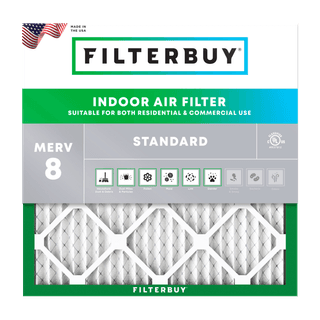
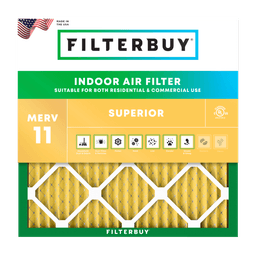
Filterbuy Canada ships pleated air filters in over 600 sizes to homes across filterbuy.ca, with three MERV ratings suited to different Halifax households:
Source: Filterbuy Canada MERV rating guide.
During Halifax's long heating season, furnace filters accumulate debris faster than in most of the country, so check yours monthly and plan on replacing it every 60 to 90 days under normal conditions, more often for households with pets or during active wildfire smoke advisories. See Filterbuy's full guide to MERV ratings for more detail on choosing between MERV 8 (Standard), MERV 11 (Superior), and MERV 13 (Optimal) filters, or set up a filter subscription so replacements arrive automatically before wildfire smoke season each summer.
“The households I hear about most often in Atlantic Canada make one of two mistakes: they run the same MERV 8 filter straight through both heating season and wildfire season without ever stepping up, or they jump straight to the highest MERV rating they can find without checking whether their furnace blower can actually pull air through it. Halifax's climate hands you two different filtration problems in the same year, so it's worth matching the filter to the season, and confirming your system's rated airflow before you upgrade, not after.”
- David Clark, Licensed HVAC Technician
Filterbuy Canada: MERV ratings explained
A breakdown of which MERV rating fits Halifax's long heating season versus its wildfire smoke season, so you're not guessing at the hardware store.
Environment Canada: Halifax AQHI current values and forecast
This is the same primary source this page draws from: the current AQHI reading and same-day forecast for Halifax, straight from the agency that calculates it.
Environment Canada: WeatherCAN app
Turn on AQHI notifications and the free WeatherCAN app alerts you the moment Halifax's reading shifts, no need to remember to check.
Environment Canada: FireWork wildfire smoke forecast maps
FireWork forecasts show where smoke plumes are headed before they arrive, giving Halifax households a planning window instead of a same-day scramble.
Nova Scotia Environment: AQHI Frequently Asked Questions
The province addresses regional myths directly in its own words, including the "tailpipe of North America" nickname covered earlier on this page.
Health Canada: Preparing for wildfire smoke events
Health Canada's guide lays out who's most at risk and what to prepare, medications, filtration, a clean-air room, before smoke season starts, not during it.
U.S. EPA: Create a Clean Room to Protect Indoor Air Quality During a Wildfire
A step-by-step guide to sealing off one room as a smoke-free refuge, a practical option for any Halifax household without central air conditioning.
The following statistics are drawn from Canadian and U.S. government or government-hosted sources and support the guidance above:
• Nova Scotia Environment reports that the most frequently recorded Air Quality Health Index level across the province is 2, solidly within the Low Risk (1-3) category, and that Atlantic Canada's AQHI levels tend to remain low most of the time.
• Nova Scotia Environment notes that, across Canadian cities generally, the AQHI sits in the low-risk end of the scale roughly 70 percent of the time, with larger cities such as Toronto registering readings of 6 to 8 on especially smoggy days, a useful benchmark for how much lower Halifax's typical readings run. (Source: Nova Scotia Environment)
• In a controlled study of healthy adults in British Columbia, a 7-day HEPA air filter intervention reduced indoor PM2.5 concentrations by about 60 percent (from roughly 11.2 to 4.6 micrograms per cubic metre). (Source: National Academies Press, hosted on NCBI Bookshelf)
• A ventilation and filtration study of 37 office buildings, hosted by the U.S. CDC, found that using filters rated MERV 13-14 or MERV 15+ was associated with reductions of roughly 31 percent and 39 percent in indoor PM2.5, respectively, compared with lower MERV 7-12 filters. (Source: stacks.cdc.gov)
These findings support the practical recommendation above: a higher-MERV filter, properly maintained, measurably reduces the fine particulate matter that reaches the air inside your home.
Any reading from 1 to 3 is Low Risk and considered good. Halifax spends most of the year in this range.
Most consumer weather apps default to the U.S. EPA's 0-to-500 AQI scale, while Canadian government sources report the 1-to-10+ AQHI. The two scales measure and weight pollutants differently, so the numbers won't match even when describing the same air.
Check the live AQHI map near the top of this page for the current reading. Outside of wildfire smoke events, Halifax typically sits at Low Risk (1-3), so a bad-air day here is the exception, not the norm.
Wildfire smoke is the leading cause of High or Very High AQHI readings in Halifax in recent years, as seen during the May 2023 Tantallon-area fires and again in August 2025.
Every 60 to 90 days under normal conditions is standard, but Halifax's long heating season and periodic wildfire smoke exposure mean many households benefit from checking monthly and replacing sooner if the filter looks visibly loaded or if an air quality advisory is in effect. A Filterbuy Canada filter subscription can time deliveries to this schedule automatically.
MERV 13 (Filterbuy's Optimal rating) captures the smallest particles among residential filter options, including fine smoke, and is the rating most often recommended for wildfire-prone periods, provided your HVAC system can handle it.
AQHI (Air Quality Health Index): Canada's 1-to-10+ scale for reporting outdoor air pollution and associated health risk, jointly administered by Environment and Climate Change Canada, Health Canada, and provincial partners.
AQI (Air Quality Index): The United States Environmental Protection Agency's 0-to-500 scale for reporting outdoor air pollution; not the scale used by Canadian government sources.
PM2.5: Fine particulate matter measuring 2.5 micrometres or smaller in diameter, small enough to be inhaled deeply into the lungs; one of the three pollutants that make up the AQHI.
Ground-level ozone: A gas formed by chemical reactions between pollutants in sunlight, distinct from the protective ozone layer higher in the atmosphere; one of the three pollutants that make up the AQHI.
Nitrogen dioxide (NO2): A gas produced mainly by vehicle exhaust and combustion sources; one of the three pollutants that make up the AQHI.
MERV rating (Minimum Efficiency Reporting Value): A 1-to-16 (residential range) scale rating how effectively an air filter captures airborne particles of different sizes; higher numbers capture smaller particles. Filterbuy Canada labels its own MERV 8, 11, and 13 filters Standard, Superior, and Optimal, respectively.
Halifax Regional Municipality (HRM): The amalgamated municipal government covering Halifax, Dartmouth, Bedford, Sackville, and surrounding suburban, rural, and coastal communities.
Transboundary air pollution: Air pollution that originates outside a region's own borders and is carried in by prevailing winds, such as pollution reaching Nova Scotia from the eastern United States or central Canada.
Published by Filterbuy Canada. Written by Michelle Wan. Reviewed by David Clark, Licensed HVAC Technician, for technical accuracy on filtration and HVAC guidance. This page draws on publicly available data from Environment and Climate Change Canada and Nova Scotia Environment and Climate Change, and is updated periodically to reflect current seasonal guidance. It does not replace medical advice. If you or a family member has a heart or lung condition, consult your physician about air quality precautions specific to your situation.
Every fact and figure on this page was checked directly against Environment Canada, Nova Scotia Environment, the U.S. EPA, or a peer-reviewed source before publishing, not pulled from a secondary summary. That step surfaced at least one correction along the way (the exact date and building change behind Halifax's downtown monitoring point) that most general write-ups of this topic leave out.