Shop by
July 16, 2026

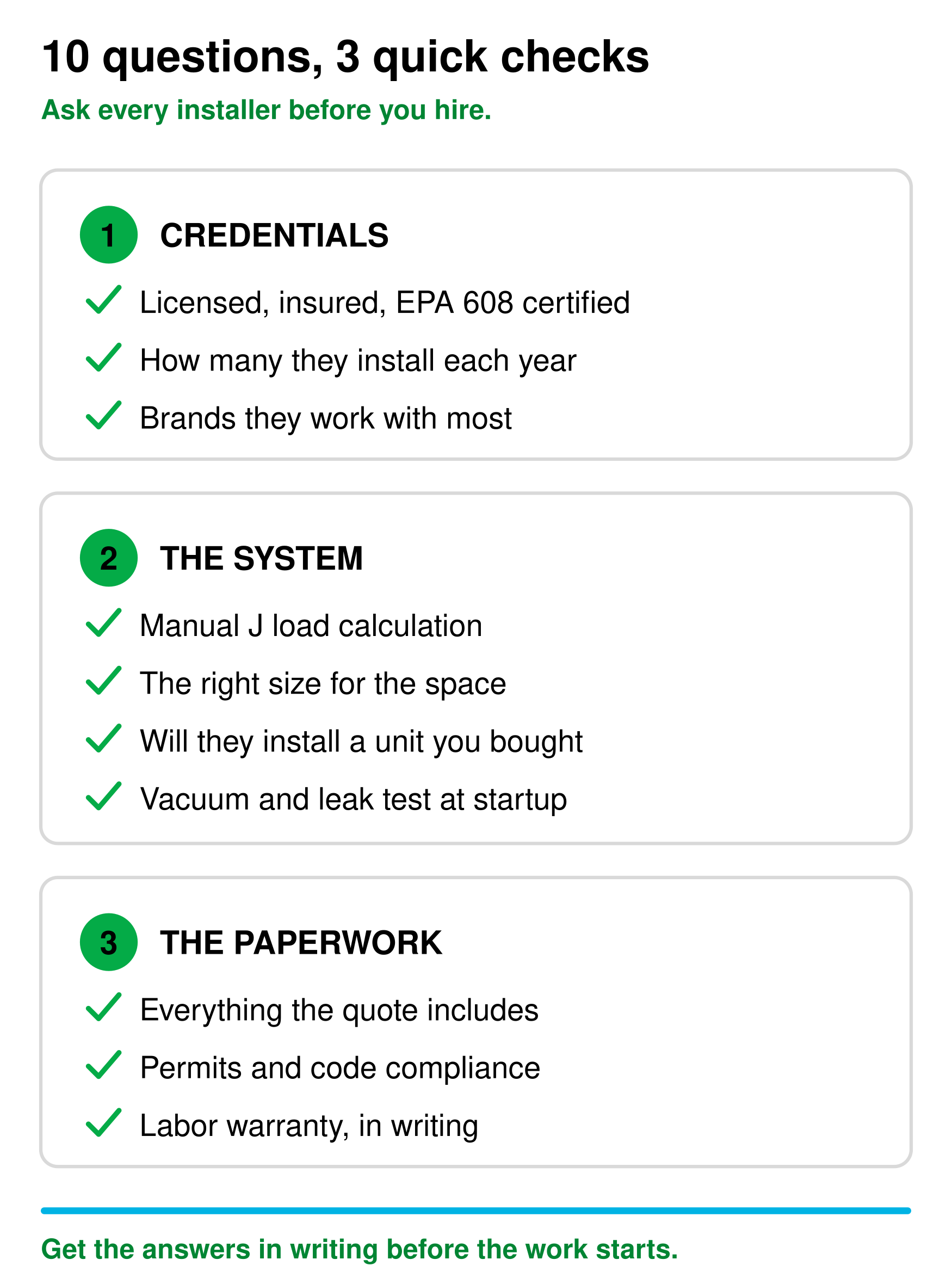
Ask for three things before you hire anyone: proof they are licensed, insured, and EPA Section 608 certified; a Manual J load calculation to size the system; and a written quote that spells out the labor warranty. Then confirm they will install a unit you bought online, and that permits and code compliance are on them, not you.
Those answers are what protect your warranty and your budget. An improper install can void the manufacturer's warranty and push energy bills 20% to 40% higher than expected.
Not sure which system you would be asking about yet? Take the quick match quiz below, then browse Filterbuy mini split systems.
Answer 3 quick questions and we'll match you to your mini split.
Ductless mini split systems are becoming incredibly popular for their energy efficiency and flexible comfort. As a result, many homeowners are now buying their systems online and hiring an independent contractor to install them. This approach can save you money and give you greater control over your brand and feature choices.
However, this method requires careful coordination. When you provide the equipment, ensure your installer is qualified for the job. Hiring an inexperienced contractor can lead to costly problems and void your warranty.
Asking the right questions upfront is crucial to protect your investment and ensure a smooth installation. This guide serves as your checklist to help you find a reliable HVAC professional and keep your project on track.
Verify Installer Credentials: Ensure the contractor is experienced, licensed, and qualified to install the specific equipment you provide.
Protect Your Warranty: Confirm that the installation complies with the manufacturer's requirements to avoid voiding it.
Ask Critical Questions: Prepare a list of questions to assess the contractor's experience, certifications, and past projects.
Coordinate Properly: Establish clear communication with your installer to align on the project timeline, scope, and expectations.
Consider Long-Term Costs: A reliable, skilled installer can save you money in the long run by preventing mistakes and ensuring efficient operation.
Hiring the first contractor you find might seem convenient, but a poor installation process can have serious consequences. An improperly installed ductless system can lead to energy bills that are 20% to 40% higher than expected. The unit has to work harder to compensate for leaks or poor placement, draining your wallet every month.
Furthermore, improper installation practices can instantly void the manufacturer's warranty. Most major brands require proof that a certified professional handled the setup. If your contractor cuts corners, you could be left footing the bill for future repairs out of pocket. A quality system should last anywhere from 15 to 20 years, so vetting your contractor ensures your mini split reaches its full lifespan.
You want to approach your contractor interviews with confidence. Use this conversational Q&A format to evaluate potential hires based on real installation scenarios across the U.S.
Every legitimate HVAC contractor must carry a state HVAC license. They also need an EPA Section 608 certification, which is required by law for anyone who handles refrigerants. Finally, ask to see proof of liability insurance, ideally for $1 million or more. This protects you legally and financially if property damage or an injury occurs during the installation.
Sizing a system properly requires more than measuring a room's square footage. A Manual J load calculation accounts for your home's insulation levels, window quality, ceiling height, and sun exposure. While a quick rule of thumb is about 20 BTU per square foot, a professional load calculation ensures absolute precision for your specific space.
Based on the load calculation, your installer should recommend a specific capacity. If you are shopping on Filterbuy, you can use these general guidelines to double-check their math:
12,000 BTU: Covers up to 250–300 square feet (available in 115V or 230V). Best for 1-car garages or small rooms.
18,000 BTU: Covers up to 350–400 square feet (230V). Best for large 1-car or small 2-car garages.
24,000 BTU: Covers up to 500–550 square feet (230V). Best for 2-car garages or larger spaces.
An oversized unit will short-cycle, turning on and off too frequently and failing to remove humidity. An undersized unit will run constantly, leading to poor comfort and premature wear.
This is a key question for anyone buying a mini split online. Simply ask, “Will you install customer-supplied equipment?” Some contractors only install units they sell directly. You should also clarify if they charge any additional labor fees for installing third-party equipment and confirm they are comfortable with the specific brand you plan to buy.
A comprehensive quote prevents surprise charges on installation day. Ensure the estimate explicitly includes labor, the line set, electrical work, necessary permits, and drainage routing. To give you an idea of U.S. cost expectations, labor for a single-zone system typically ranges from $800 to $2,500. The total installed cost, including equipment and labor, generally ranges between $3,000 and $10,500.
Installing a ductless system usually requires a dedicated circuit, which means obtaining electrical permits and complying with NEC 2023 requirements are mandatory. If an installer tells you they want to skip the permitting process to save time or money, consider it a massive red flag.
Experienced HVAC pros follow strict protocols. Ask them how they route the line set and handle the system startup. Specifically, listen for them to mention pulling a vacuum for at least 30 minutes and conducting thorough leak testing. Skipping the vacuum process can cause moisture to remain in the lines, which is responsible for approximately 35% of all refrigerant-related issues.
When you supply the equipment, the manufacturer typically provides a 5- to 12-year parts warranty. However, the contractor is responsible for their workmanship. Ask what labor warranty they offer. A reputable installer will usually guarantee their labor for 1 to 5 years.
Experience matters tremendously. An ideal candidate installs 50 or more mini-split systems each year. Do not hesitate to ask for references or photos of past work to verify their expertise.
Ask this to gauge their general mini split AC company experience. Every brand has slightly different wiring and mounting quirks. Confirming they are familiar with the brand you purchased ensures a smoother, faster installation process.
Deciding how to source your equipment is the first major step in your ductless journey. Understanding the differences between sourcing methods will help you maximize your budget.
Purchasing directly from retailers offers a lower upfront equipment cost. You gain total control over the brand, specifications, and efficiency ratings. Platforms like Filterbuy even offer fast, free shipping and direct-to-door convenience. The only catch is that you must coordinate with a willing installer yourself.
Currently, contractors still control over 60% of all mini-split installations in the U.S. Buying through them offers a convenient, all-in-one package. Warranty claims are generally easier to handle, as the installer acts as the middleman. However, this route almost always comes with a significant markup on the equipment itself.
Having a realistic view of U.S. installation scenarios helps you spot bids that are suspiciously high or concerningly low. Here is a typical breakdown for a single-zone system:
Equipment: $700–$5,500
Labor: $800–$3,500
Permits: $250–$400
Routine Maintenance: $150–$300 per year
Keep in mind that high-efficiency systems (those rated 20+ SEER2) can reduce your summer cooling costs by roughly 30%. The upfront investment pays serious dividends over the equipment's lifespan.
Before locking in your purchase or signing a labor contract, take these final steps to ensure a flawless project.
First, get three to four quotes from local contractors to compare labor rates and assess their communication skills.
Next, share your desired unit’s specifications with the installer in advance. Let them know the voltage requirements (115V or 230V), the exact length of the required line set, and the refrigerant type.
Finally, verify your system's ENERGY STAR rating to see if you qualify for local utility rebates or federal tax credits.
Following a comprehensive ductless mini split buying guide and asking your contractor the tough questions leads directly to better home comfort, lower operating costs, and fewer headaches. Vetting your professional is essential when you decide to take control of your equipment purchase.
Take the time to get your specs ready before calling an installer, and enjoy the peace of mind that comes with a perfectly executed home upgrade. For all your HVAC needs, from filters to equipment, trust Filterbuy to deliver quality and value.
Yes, many independent HVAC contractors will install customer-supplied equipment. However, some larger HVAC companies prefer to install only the brands they supply. Always ask upfront if they accept online purchases and if there are any associated labor adjustments.
A general baseline is 20 BTU per square foot. For example, a 12,000 BTU unit typically cools 250 to 300 square feet, making it perfect for small rooms or single-car garages. A Manual J load calculation by a professional will provide the exact sizing needed for your unique space.
Total costs generally range from $3,000 to $10,500 for a single-zone system. The equipment itself runs between $700 and $5,500, while the labor portion typically costs between $800 and $3,500, depending on your region and the job's complexity.
Yes. Installing a mini split usually requires running a new dedicated electrical circuit, which mandates an electrical permit and compliance with local building codes, including NEC 2023 standards.
A straightforward single-zone mini split installation usually takes an experienced professional between 4 and 8 hours. Multi-zone systems or complex line set routing can extend the project to a few days.
An improper installation can cause refrigerant leaks, electrical hazards, and severe water damage due to poor drainage. It also forces the system to run inefficiently, driving up energy bills by 20% to 40% and immediately voiding the manufacturer's warranty.