
When AQI Is High, Should You Run an Air Purifier?
July 8, 2026
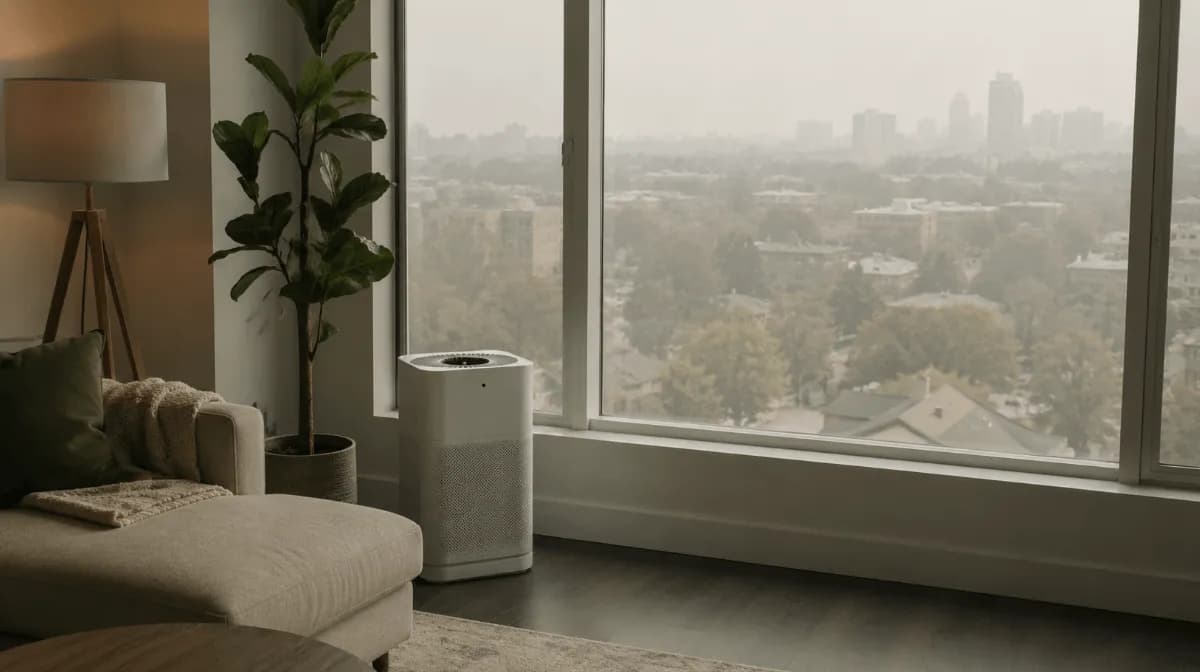
Yes — run your air purifier whenever the AQI is high, and keep it running as long as the air outside stays unhealthy. Turn the fan up as the AQI climbs, keep your windows closed, and put the purifier in the room where you spend the most time.
For heavy smoke and pollution, look for a purifier with a HEPA-grade filter, a CADR rating matched to your room size, and an activated carbon layer that captures odors and gases. And during high-AQI stretches, plan to change your filters more often, since smoke and dust load them up fast.
Answer 3 quick questions and we’ll match you to the right filter.
Outdoor air pollution does not politely stay outside. When the skies turn gray with wildfire smoke or city smog, that polluted air eventually finds its way into your home. Smoke, fine dust, and vehicle exhaust slip through small gaps around windows, doors, and vents. This means even if you stay inside your house all day, your indoor air may still pose a risk to your health.
You might be wondering if your current indoor air setup is enough to keep your family safe. Should you run an air purifier when AQI is high? Absolutely. A properly sized air purifier equipped with a high-quality filter acts as a shield for your lungs.
This guide explains exactly how to use your air purifier when local air quality drops. You will learn what fan speeds to use, how long to run your machine, and which replacement filters actually protect your home from dangerous airborne particles.
Key Takeaways
Run Your Air Purifier During High AQI Levels: Always use your air purifier when the Air Quality Index is high to reduce exposure to harmful particles.
Adjust Fan Speeds Accordingly: For optimal performance, set the fan speed based on the severity of the air quality outside; higher speeds for worse conditions.
Use High-Quality Replacement Filters: Ensure you replace filters with certified high-efficiency options designed to trap fine particulate matter such as PM2.5 and other pollutants.
Continuous Operation is Crucial: Keep your air purifier running consistently during periods of poor air quality to maintain cleaner indoor air.
What Counts as a High AQI Reading?
A high Air Quality Index (AQI) means outdoor air pollution has reached a level that may negatively affect your health. According to AirNow, AQI values above 100 are considered unhealthy for sensitive groups first. As the number rises, the air becomes unhealthy for everyone.
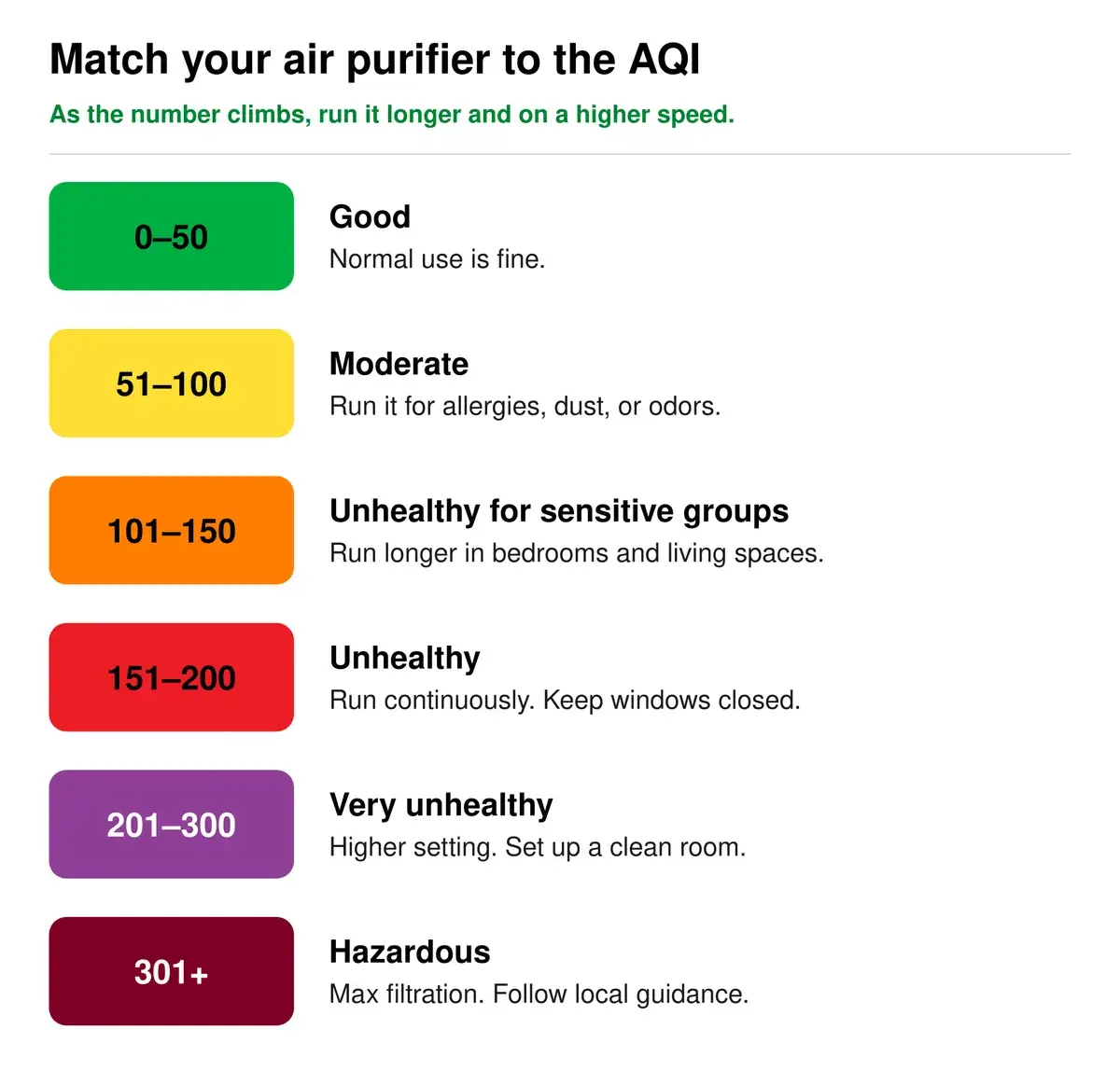
Here is a simple breakdown of the AQI scale and what you should do indoors:
| AQI Range | Air Quality Level | Air Purifier Guidance |
|---|---|---|
| 0–50 (Green) | Good | Normal air purifier use is fine. |
| 51–100 (Yellow) | Moderate | Run your air purifier if you have allergies, asthma, or notice indoor odors and dust. |
| 101–150 (Orange) | Unhealthy for Sensitive Groups | Run your air purifier longer, especially in bedrooms and main living spaces. |
| 151–200 (Red) | Unhealthy | Run your air purifier continuously and keep all windows closed. |
| 201–300 (Purple) | Very Unhealthy | Use a clean-room setup if possible and run the air purifier on a higher setting. |
| 301+ (Maroon) | Hazardous | Follow local health guidance, stay indoors if safe, and maximize your indoor air filtration. |
The California Air Resources Board (CARB) recommends using an indoor air cleaner any time the AQI reaches unhealthy levels. You should also turn your air purifier on whenever you can actually see or smell smoke inside your home.
Should You Keep Windows Closed During High AQI Days
Yes. When the AQI is high, keep your windows and exterior doors closed as much as possible.
An air purifier can only clean the air that passes directly through its filter. If polluted outdoor air constantly streams into your bedroom through an open window, your air purifier has to work much harder. In most cases, it will not be able to keep up with the constant flow of new pollution.
The Environmental Protection Agency (EPA) clean-room guidance recommends closing windows and doors to prevent outdoor smoke from entering. The EPA also warns that running exhaust fans and range hoods can accidentally pull more smoke into the home from outside.
To help your air purifier do its job, avoid these activities on high AQI days:
Opening windows "for fresh air."
Running bathroom exhaust fans for long periods
Using kitchen range hoods longer than absolutely necessary
Burning candles or incense
Frying, broiling, or cooking smoky foods
Vacuuming without a HEPA-filtered vacuum
What Fan Speed Should You Use on Your Air Purifier During High AQI Events
When the outdoor AQI is high, use a higher fan speed than you normally would.
The EPA notes that higher fan speeds and longer run times actively increase the total amount of air filtered. More air passes through the filter at higher speeds, which results in cleaner indoor air.
Here is a quick guide on choosing the right setting for your home:
Choose Low or Auto Mode if the AQI is moderate (51-100).
Choose Medium or High if the AQI is unhealthy for sensitive groups (101-150).
Choose High Speed if the AQI is unhealthy or worse (151+), especially during peak afternoon pollution hours.
Choose High Speed if smoke is clearly visible or you smell smoke indoors. Keep it on high until the air clears.
Choose the Highest Comfortable Setting when you are sleeping.
If the highest speed is too loud for you to sleep comfortably, run the air purifier on high for 30 to 60 minutes before you go to bed. Once you are ready to sleep, lower it to a quieter setting.
How Long Should You Run Your Air Purifier When Outdoor Air Is Unhealthy
Run your air purifier for as long as the outdoor air remains unhealthy.
During a brief afternoon pollution spike, that might just mean running it for a few hours. But during a major wildfire smoke event, you may need to run your air purifier continuously for several days.
The EPA states that longer air cleaner run times increase overall filtration. Therefore, it is much better to keep the air purifier running steadily instead of turning it off and on throughout the day. Think of your air purifier like a shield. It works best when it is already running before the indoor air gets overly dirty.
Where Should You Place Your Air Purifier for Maximum Effectiveness
Put the air purifier directly in the room where you spend the most time. For most homeowners, this means the primary bedroom. You spend roughly eight hours a day sleeping there. Breathing clean air overnight makes a massive difference in how you feel the next day.
For the best indoor air quality results:
Keep the air purifier in the same room as you.
Do not hide the machine behind heavy furniture or couches.
Keep curtains, bedding, and walls at least a few feet away from the air intake vents.
Close the room's door when possible to create a dedicated clean room.
EPA guidance clearly states that airflow should not be obstructed. A blocked air purifier cannot pull in dirty air, which means it cannot protect your lungs.
What Kind of Air Purifier Works Best for High AQI and Wildfire Smoke
For high AQI events, look for an air purifier that features these three specific things:
1. A HEPA or high-efficiency particle filter
Fine particles, known as PM2.5, are your biggest enemy during smoke and pollution events. According to CARB, smoke particles are often 2.5 micrometers or smaller. That is small enough to travel deep into your lungs and pass into your bloodstream. A true HEPA filter traps these dangerous ultrafine particles.
2. A high CADR rating for your room size
CADR stands for Clean Air Delivery Rate. The EPA says the higher the CADR, the more particles the air cleaner can filter out. Make sure the air purifier you buy is rated for the actual square footage of your room.
3. An activated carbon filter for odors and gases
HEPA filters are incredible at trapping physical dust and smoke particles. However, they cannot stop harmful gases or bad odors. The EPA recommends using an activated carbon filter to remove chemical gases and Volatile Organic Compounds (VOCs). Choose a filter with a heavy carbon layer for the best odor protection.
Do You Need to Change Your Filter More Often During High AQI
Yes, you often need to change your filters much faster during high AQI events.
Heavy smoke, seasonal dust storms, and smog load up your filters very quickly. CARB advises that particle and charcoal filters should be checked frequently and changed as needed. Running an air purifier with a fully clogged filter is exactly like trying to drink a thick milkshake through a crushed straw. It simply does not work, and it forces the machine's motor to work overtime.
Signs you need a replacement filter from Filterbuy include:
The airflow coming from the purifier feels noticeably weaker.
The machine sounds louder or strains more than normal.
Smoky or musty odors return to the room quickly.
The physical filter looks dark, gray, or caked in dust.
At Filterbuy, we know that a clean filter is the only thing standing between your lungs and outdoor pollution. Stock up on high-quality replacement filters before the next wildfire season hits, so you are never caught off guard.
Creating Your Indoor Air Quality Action Plan
When the AQI spikes, your air purifier should never be an afterthought. It needs to be the core part of your home's indoor air defense plan. You cannot control the wind or the weather outside, but you have total control over the air inside your living room. Check your local air quality map from Filterbuy close your windows tightly, crank up the air purifier, and always make sure you have a fresh filter ready to go.
Frequently Asked Questions (FAQs)
Can an Air Purifier Lower the Outdoor AQI Map Reading?
No, an indoor air purifier cannot change the outdoor AQI number. AQI is based strictly on outdoor air quality sensors. However, a HEPA air purifier will drastically lower the particle levels inside your specific room, making your personal indoor air much safer than the air outside.
Should You Use an Ionizer or Ozone Generator During High AQI Days?
No, you should avoid them. The EPA explicitly warns against using portable air cleaners that intentionally produce ozone, as ozone is a known lung irritant. Stick to air purifiers that use a combination of safe HEPA particle filtration and activated carbon.
Is My Home's HVAC System Enough to Filter Out Wildfire Smoke?
Your HVAC system can help filter out smoke if you use a high-quality MERV 13 filter and run the system fan continuously. However, a dedicated portable HEPA air purifier placed in your bedroom is usually much more effective at rapidly removing concentrated smoke particles in a single room.
How Do I Know if My Air Purifier Filter Is Actually Working?
You will know your filter is working if the air smells noticeably fresher, your allergy symptoms decrease, and you see visible dust and gray discoloration accumulating on the filter itself. If the filter remains perfectly white after weeks of running during high AQI, the air is likely bypassing the filter entirely.