Shop by
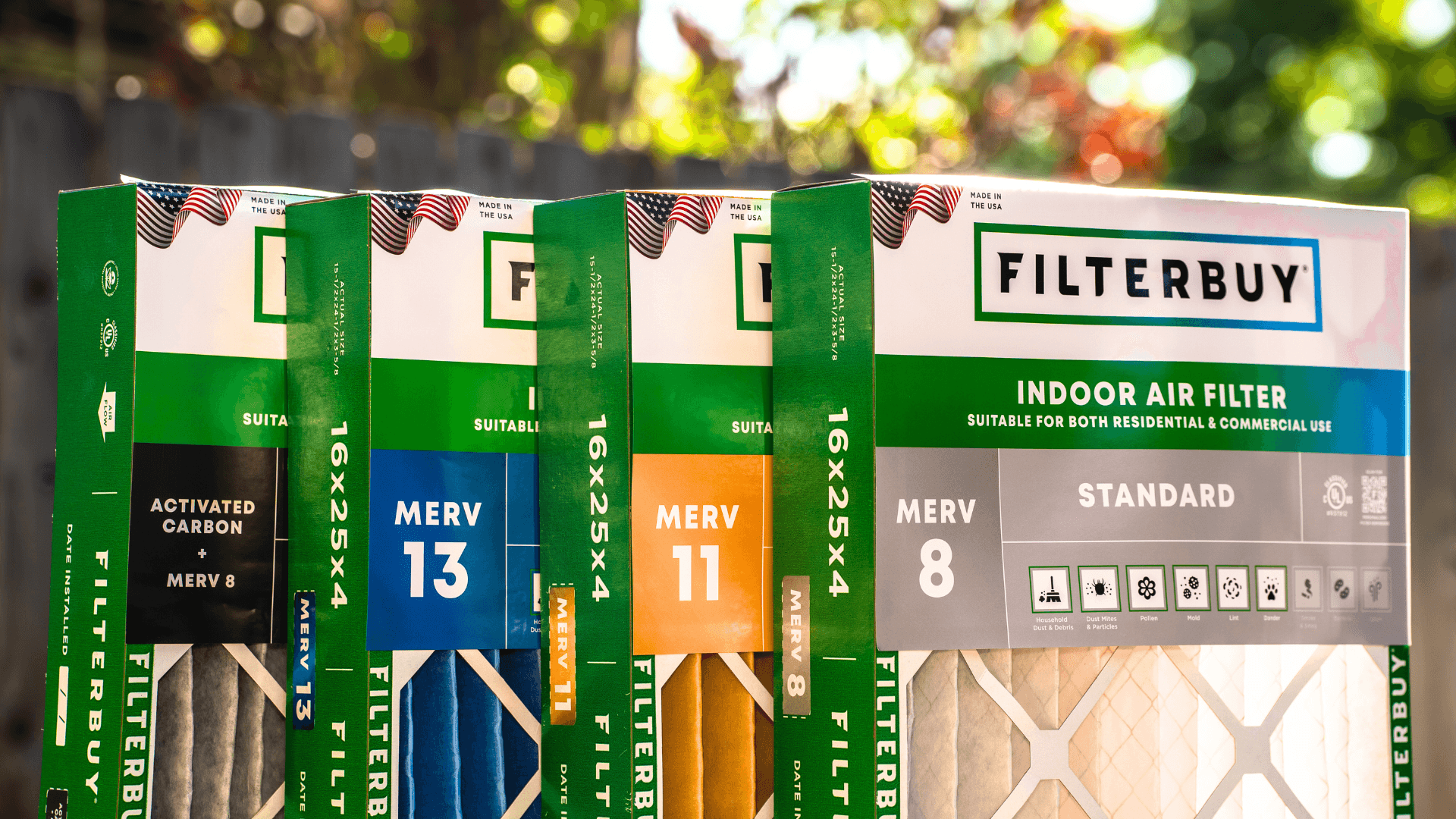
At Filterbuy, we're obsessed with indoor air quality. After manufacturing filters for over a decade and serving many households, we've learned exactly which MERV ratings work best for different home situations.
Don't take your indoor air for granted! MERV ratings—the industry standard developed by ASHRAE for measuring filter effectiveness—range from 1 to 16, but knowing which one protects your family best requires understanding what's actually floating in your home's air.
Based on our analysis, here's what we've learned:
Which MERV rating should I use for my home? Most homes should use MERV 8-11 for standard filtration, while homes with severe allergies, asthma, or immune-compromised individuals should use MERV 13. Always verify your HVAC system can handle your chosen rating by checking the manufacturer specifications.
What is MERV rating? MERV (Minimum Efficiency Reporting Value) is the industry standard developed by ASHRAE that measures air filter effectiveness on a scale of 1-16, with higher numbers capturing smaller particles down to 0.3 microns.
What's the difference between MERV 8, 11, and 13? MERV 8 captures basic dust and pollen (3+ microns), MERV 11 adds pet dander and mold spores (1-3 microns), and MERV 13 captures bacteria, smoke, and some viruses (0.3+ microns). Each step up provides finer filtration but increases airflow resistance.
Can MERV 11 damage my HVAC system? MERV 11 is safe for modern HVAC systems (2010+) but may restrict airflow in older units (pre-2010). Check your system manual for maximum MERV rating specifications before upgrading.
How often should I change my MERV filter? Replace MERV 8-13 filters every 90 days for optimal performance, or every 60 days in homes with pets, heavy use, or air quality concerns.
What is MERV?
MERV stands for Minimum Efficiency Reporting Value, a standard that measures how effectively an air filter captures particles. The scale runs from 1 to 16, where higher numbers mean the filter can trap smaller particles. Think of it as your filter's report card for cleanliness.
MERV (Minimum Efficiency Reporting Value) is the official standard developed by the American Society of Heating, Refrigerating and Air-Conditioning Engineers (ASHRAE) through their Standard 52.2 test method. According to the EPA, MERV ratings measure a filter's ability to capture particles between 0.3 and 10 microns in size—a range that includes everything from large dust particles down to bacteria and some viruses. The Department of Energy's Zero Energy Ready Home program requires MERV 8 minimum, while ASHRAE recommends MERV-13 for managing airborne virus concentrations.
Understanding the MERV rating breakdown can help you choose the right air filter for your needs. Each rating reflects the filter's ability to capture different sizes of particles, ensuring your indoor air quality meets your household's requirements.
MERV 8 filters capture dust, pollen, and larger particles down to about 3 microns. They're perfect for basic home filtration without putting extra strain on your HVAC system. Most homeowners find MERV 8 filters strike the right balance between air cleaning and system efficiency.
Best for: Average homes without significant air quality concerns, older HVAC systems, budget-conscious homeowners

MERV 11 filters step up the game by catching smaller particles including pet dander, dust mites, and some bacteria. If you have pets or mild allergies, this upgrade makes a noticeable difference in your home's air quality.
Best for: Pet owners, mild allergy sufferers, homes with moderate air quality concerns

MERV 13 filters offer the highest efficiency for residential use, capturing particles as small as 0.3 microns. These filters excel at removing smoke, bacteria, and even some viruses from your air. They're the best MERV filter for allergies and health-sensitive environments.
Best for: Severe allergy sufferers, homes with smokers, health-sensitive individuals, areas with poor outdoor air quality
Note: MERV ratings above 13 are typically designed for hospitals and commercial buildings. For most homes, MERV 14+ filters can actually restrict airflow too much and damage your HVAC system.

After producing filters for over a decade, we've seen countless HVAC systems struggle with the wrong MERV rating. Here's how to check compatibility:
Red Flags Your MERV Rating Is Too High:
If you're unsure, our customer support team has helped over many homeowners find the perfect filter. Call us or chat with an expert.
Check your HVAC compatibility first. Your system's manual will specify the maximum MERV rating it can handle. Using a filter that's too restrictive can reduce airflow and strain your equipment.
Consider your health needs. Severe allergies or respiratory conditions may warrant MERV 13 filters, while healthy households often do fine with MERV 8 or 11.
Factor in pets and lifestyle. Pet owners, smokers, or homes near construction sites benefit from higher MERV ratings to handle the extra particles.
Think about your local air quality. Areas with high pollen counts, wildfire smoke, or pollution may need more filtration power.
Budget for replacement costs. Higher MERV filters typically cost more upfront but may last longer, balancing out the investment.
For most homeowners, MERV 8 to 13 covers all residential needs effectively. Here's a quick decision guide:
Choose MERV 8 if:
Choose MERV 11 if:
Choose MERV 13 if:
Remember, the best air filter is one that fits your system properly and gets changed regularly. A MERV 8 filter changed every 90 days outperforms a clogged MERV 13 filter any day.
Filterbuy makes choosing the right MERV rating simple with American-made filters in every size, fast, free shipping, and expert guidance. With over 85,000 five-star reviews, homeowners trust Filterbuy for reliable air filters that keep their families breathing clean air. Whether you need MERV 8, MERV 11, or MERV 13, we have the perfect filter for your home HVAC system.

No, MERV 11 is not too high for most modern homes. MERV 11 filters work perfectly in HVAC systems manufactured after 2010. However, older systems (pre-2010) may struggle with the increased air resistance.
Check your compatibility:
Tip: We've found that 95% of homeowners with systems less than 10 years old can safely use MERV 11 filters without any performance issues.
The right MERV rating for you would depend on what your requirements are. Make a list of what your concerns are then use the chart to decide. For most homes, a rating of MERV 8-13 is a good start to keep your air healthy.
It depends. A MERV 11 filter can restrict your airflow more than filters with lower ratings. This isn't a problem per se, but it will force your HVAC system to work harder if it's not designed to handle it.
Take into account the air quality in your home, any allergies you may suffer from and also how powerful your HVAC system is when deciding on a MERV rating. Long-story-short, higher ratings catch more particles but can restrict airflow and efficiency.
MERV 11 won’t hurt your HVAC unit unless your system is not designed to handle higher MERV ratings. In this case, a higher air filter like MERV 11 could potentially damage it. You should check the maximum MERV rating that your system allows on your unit’s manual.
You may not need a MERV 11 filter or higher unless you have specific air quality issues or allergies. For the average household, a MERV 8 air filter can be good enough. You’ll want to think about factors like how often you want to change your filters and what type of material do you want filtered out of your air.
The best MERV filter for a home is typically between 8 and 13. With the right media, this strikes a good balance of air filtration and efficiency.
The higher a MERV filter, the more it filters the air with better efficiency. This means that a higher MERV will restrict airflow. However, unless your system is older, this might not be an issue for your home. It depends on how much filtration is important to you over system energy efficiency. Decreased airflow means the system could be working harder.
In general MERV 11 is a better filter than MERV 8. However, whether MERV 8 or 11 is better for your home solely depends on your needs. MERV 11 filters out more particles but can restrict airflow more than MERV 8.
It depends on your system. A MERV 11 filter can be difficult for an old furnace to manage. You should ensure you check the specifications of your system before adding a high MERV filter.
Generally 1-3 months. The frequency for changing MERV 11 filters depends on your home's air quality and your HVAC system usage, but generally, you should change them every 3 months.
Potentially, yes. The higher MERV rating could make your AC work harder, as the filter is more dense and the system will have to work harder to push the air through the filter. This may decrease the lifespan and efficiency of the system if your unit isn’t built to handle this type of filter.