filterbuy
 

Shop by

Home
air quality
north america
canada

Hamilton Real-Time AQI Tracker

What's Actually In Hamilton Air Today?

What High AQI Means for Your Lungs in Hamilton

How to Read AQI

The Air Quality Index (AQI) measures how polluted the air is and how it may affect your health.

0–50 (Good): Air quality is satisfactory.

51–100 (Moderate): Acceptable, but some pollutants may pose minor concerns.

101–150 (Unhealthy for Sensitive Groups)

151–200 (Unhealthy)

201–300 (Very Unhealthy)

301+ (Hazardous)

AQI
Exploring Moderate

Moderate

AQI 51–100

Still okay for most, but if you have asthma or allergies, take it easy and avoid long outdoor workouts.

Shop MERV 11 filters

What's the Right Filter for Your AQI Level?

AQI 0-100

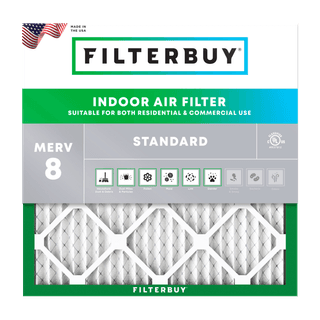
MERV 8 Standard Filtration

Best For:

Everyday dust, pollen, lint

Filters:

Larger particles (3–10 microns)

Recommended for normal air quality days.

Shop MERV 8

AQI 101-150

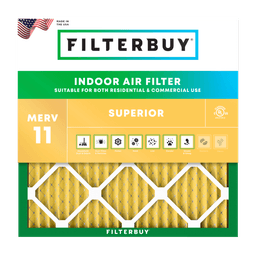
MERV 11 Superior Filtration

Best For:

Moderate AQI days, urban pollution

Filters:

Fine dust, pet dander, some smoke particles

Helpful during moderate pollution events.

Shop MERV 11
EPA seal

AQI 151+

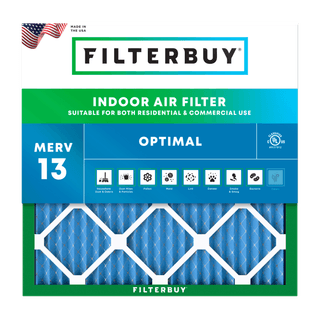
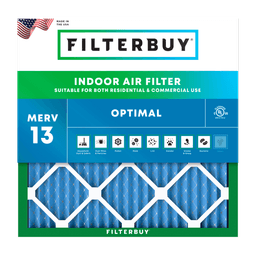
MERV 13 Optimal Filtration

Best For:

Wildfire smoke & high AQI days

Filters:

Fine particulate matter (PM2.5), smoke, bacteria

The EPA recommends upgrading to MERV 13 (or the highest compatible filter for your system) during wildfire smoke events and high particulate pollution days to help reduce indoor exposure.

Shop MERV 13
Check Today’s Live Real Time Air Quality Index AQI Map in Hamilton, ON Now

Check Today’s Live Real Time Air Quality Index AQI Map in Hamilton, ON Now

By Michelle Wan  ·  Reviewed by David Clark, Licensed HVAC Technician | Published 6 July 2026  ·  Updated 6 July 2026

TL;DR

Hamilton’s official, real-time air quality is reported as the Air Quality Health Index (AQHI), a 1-to-10+ scale published by Environment and Climate Change Canada, rather than the 0–500 Air Quality Index (AQI) commonly shown in weather apps. Check the live reading in the map above: 1–3 indicates low risk, 4–6 moderate risk, 7–10 high risk, and 10+ very high risk. Hamilton’s air quality is influenced by its steel industry, traffic, the Niagara Escarpment, which can trap pollution in the Lower City, and seasonal wildfire smoke. When outdoor pollution rises, a clean furnace filter—the everyday indoor air quality solution Filterbuy is built around—can help reduce the amount of airborne particles circulating inside your home.

How’s the air in Hamilton right now? The map above shows Hamilton’s current Air Quality Health Index (AQHI), Canada’s official measure of how today’s air may affect your health, updated hourly from provincial monitoring stations. Read the number against a simple scale: 1–3 is low risk (enjoy your usual outdoor activities), 4–6 is moderate, 7–10 is high, and 10+ is very high. If you searched for Hamilton’s “AQI,” the AQHI is the local number you actually want. Below, we explain why the two differ and what today’s reading means for you.

Key Takeaways

  • Hamilton’s official index is the AQHI (1–10+), issued by Environment and Climate Change Canada, Health Canada, and the Province of Ontario, not the U.S. EPA’s 0–500 AQI that apps like IQAir and AccuWeather display for the city.

  • The AQHI is built from three pollutants known to harm health: ground-level ozone (O₃), nitrogen dioxide (NO₂), and fine particulate matter (PM2.5). It reflects short-term health risk, not a pass/fail grade.

  • Hamilton’s air is influenced by steelmaking and industry, road and truck traffic, the Niagara Escarpment trapping pollution in the Lower City, and regional smoke, including wildfire smoke that can push PM2.5 up in summer.

  • Long-term air quality in Hamilton has improved markedly: the province reports large multi-decade declines in PM2.5, NO₂, and sulphur dioxide across Ontario, including at Hamilton’s downtown station.

  • You can’t control Hamilton’s outdoor air, but you can control your indoor air: keeping windows shut on high-AQHI days and running a clean MERV 13 furnace filter helps reduce the fine particles that get inside.

What Is Hamilton’s Air Quality Today?

Hamilton’s air quality today is shown live in the map at the top of this page as an Air Quality Health Index (AQHI) value between 1 and 10+. The reading is calculated hourly from provincial monitoring stations, including Hamilton Downtown, Hamilton Mountain, and Hamilton West, and comes from Air Quality Ontario, run by the Ontario Ministry of the Environment, Conservation and Parks. Environment Canada also publishes Hamilton’s current AQHI and a 72-hour forecast. A lower number means lower health risk; a higher number means you may want to ease up on strenuous activity outdoors.

Because Hamilton is split by the Niagara Escarpment, readings can differ between the Lower City (downtown and the industrial waterfront) and the Mountain above it. If a station near you shows a higher number than one across the city, that’s normal, so check the station closest to where you live or work.

Good to know: Real-time AQHI values are automatically polled and are not individually verified, so treat the current reading as a live guide rather than an official historical record. Environment and Climate Change Canada publishes final, quality-controlled air quality data separately.

Which Hamilton Monitoring Station Should You Check?

Hamilton is one of the few Ontario cities with more than one air-quality station, and that is genuinely useful, because the Niagara Escarpment can leave the Lower City and the Mountain with different readings at the same moment. The map above defaults to the nearest station, but if you want the most accurate picture for your own street, check the one closest to you.

Station Roughly Covers
Hamilton Downtown The Lower City: downtown, the harbourfront, and the industrial waterfront (often the city's highest readings)
Hamilton Mountain The Mountain (Upper City) above the escarpment and the southern suburbs
Hamilton West The west end, including the Westdale and McMaster University area

Rule of thumb: if you live or work in the Lower City, the Downtown station is usually the more honest number for you, because pollution tends to settle there, so a city-wide average can read cleaner than the air on your block.

AQI Vs. AQHI: Why Hamilton’s Official Number Differs From Your Weather App

If you check Hamilton’s air on a weather app and see a number like 38 or 50, that’s usually the U.S. Air Quality Index (AQI), a 0-to-500 scale created by the U.S. Environmental Protection Agency. Canada uses a different, health-first measure: the Air Quality Health Index (AQHI), a 1-to-10+ scale that Environment and Climate Change Canada and Health Canada designed around the risk air pollution poses to your health. The AQHI has replaced the AQI as the public face of air quality information across Canada.

The two indexes answer slightly different questions. The U.S. AQI is anchored to a single dominant pollutant and includes carbon monoxide and sulphur dioxide. The Canadian AQHI blends three health-relevant pollutants (ozone, nitrogen dioxide, and PM2.5) into one risk number. That’s why the same air can read “50, moderate” on a U.S.-style app and, say, low-risk on the AQHI. For Hamilton, the AQHI is the number to trust.

Feature AQHI (Canada, use this) AQI (U.S., shown by many apps)
Scale 1 to 10+ 0 to 500
Built around Health risk Pollutant concentration limits
Pollutants O3, NO2, PM2.5 Adds CO and SO2
Issued by Environment Canada, Health Canada, Ontario U.S. EPA
Used in Hamilton? Yes, official Only via third-party apps

Bottom line: search results and apps will hand you an “AQI” for Hamilton, but the AQHI in the map above is the locally official reading. When the two disagree, go with the AQHI.

How To Read The AQHI Scale (1 To 10+)

The Air Quality Health Index groups air quality into four risk categories. Each comes with plain-language advice for the general population and for at-risk groups such as children, older adults, people who are pregnant, and anyone with asthma, heart disease, or a lung condition. Use the table to translate today’s Hamilton number into what to do.

AQHI Risk level What it means for you
1–3 Low Ideal air quality. Everyone can enjoy usual outdoor activities.
4–6 Moderate Consider easing or rescheduling strenuous outdoor activity if you have symptoms like coughing or throat irritation.
7–10 High Reduce or reschedule strenuous outdoor activity. At-risk groups should take it easy outdoors.
10+ Very high Reduce or reschedule all strenuous outdoor activity. At-risk groups should avoid the outdoors where possible.

The AQHI measures short-term health risk and does not account for odour, pollen, dust, heat, or humidity.

The AQHI is designed as a self-calibrating guide: if you notice symptoms at a given number, use that as your personal signal, even in the moderate range. It measures short-term (hourly to daily) risk and does not account for odour, pollen, dust, heat, or humidity.

A centered image

Why Is Hamilton’s Air Quality The Way It Is?

Hamilton’s air reflects its geography and its economy. As a major steel-producing and manufacturing city on the western shore of Lake Ontario, it carries a heavier industrial footprint than most Canadian cities its size. Layered on top are traffic emissions, regional pollution blown in from elsewhere, and a landscape that can hold pollution in place. Understanding the main sources helps explain why the AQHI moves the way it does.

The Escarpment Traps Air In The Lower City

The Niagara Escarpment divides Hamilton into the Lower City (downtown and the industrial waterfront) and the Upper City, or “the Mountain.” Combined with the shoreline of Lake Ontario, this geography can trap pollutants at street level in the Lower City, so downtown and waterfront neighbourhoods often see higher readings than the Mountain. It’s a key reason a single city-wide number can understate what one neighbourhood is breathing.

Industry, Traffic, And Regional Sources

A provincial study of the Lower City’s fine-particle pollution, using data from the Hamilton Downtown monitoring station, traced PM2.5 to a mix of local traffic, local industry (including steelmaking and coking), and sources outside the city carried in on the wind, with a large share coming from long-range regional transport. Ground-level ozone in Hamilton is largely blown in from upwind regions, while nitrogen dioxide from vehicles and industry contributes to both smog and fine-particle formation.

Main source What it adds When it peaks
Traffic (cars, trucks) NO2 and fine particles Winter, weekday rush hours
Steel & industry Fine particles, sulphur compounds Fairly steady year-round
Regional transport A large share of PM2.5 Varies with wind
Ground-level ozone Summer smog Warm, sunny days
Wildfire smoke Sharp PM2.5 spikes Summer (June–September)

The Long-Term Trend Is Improving

The encouraging part: Hamilton’s air has gotten cleaner over the long run. The Province of Ontario reports large multi-decade declines in fine particulate matter, nitrogen dioxide, and sulphur dioxide across the province, and Clean Air Hamilton’s tracking at the downtown station shows the same downward trend in PM2.5. Day-to-day readings still rise and fall, especially during summer smoke and winter traffic, but the baseline has moved in the right direction.

When Is Hamilton’s Air Quality Worst?

Hamilton’s air quality follows seasonal patterns worth planning around. In winter, nitrogen dioxide and traffic-related particles run highest, especially on weekdays. In summer, warm sunny weather drives ground-level ozone, and, increasingly, wildfire smoke from across the country can send PM2.5 sharply higher for days at a time. Spring tends to bring the year’s peak in locally generated pollution, while later summer and early autumn are often the cleanest stretch.

  • Winter (Oct–Apr): traffic NO₂ and nitrates climb; furnaces run for months, so indoor filtration matters most.

  • Spring: local pollution and pollen both rise, a common trigger for allergy symptoms.

  • Summer (Jun–Sep): ozone smog on hot days, plus wildfire-smoke PM2.5 spikes that can reach high or very high AQHI.

  • Late summer–autumn: often the cleanest air of the year.

Who’s Most At Risk, And What To Do When The AQHI Is High

Poor air quality affects some people more than others. Health Canada identifies at-risk groups as children, older adults, people who are pregnant, and anyone with asthma, other lung conditions, heart disease, or diabetes. Even healthy people can feel the effects (coughing, throat irritation, shortness of breath) when the AQHI is high or during heavy smoke. When today’s number climbs, a few simple steps lower your exposure:

  1. Check the AQHI before you plan outdoor activity, and use the today/tonight/tomorrow forecast to time errands and exercise.

  2. On high or very high days, reduce strenuous activity outdoors, and if you’re in an at-risk group, keep it light.

  3. Keep windows and doors closed to slow smoke and fine particles from getting inside.

  4. Run your furnace or HVAC fan so indoor air keeps passing through a clean, higher-efficiency filter. A MERV 13 such as Filterbuy’s Optimal is made to catch smoke-sized particles.

  5. Watch for symptoms; if they persist, follow your doctor’s usual advice for your condition.

Disclaimer: This page is general information, not medical advice. If you have a heart or lung condition, follow the guidance of your physician and Health Canada’s AQHI health messages.

Protecting Your Indoor Air When Hamilton’s Outdoor Air Is Poor

The piece most “Hamilton air quality” pages leave out is this: the outdoor number only affects your health to the extent it gets indoors, and indoors is the part you can actually control. We look at Hamilton’s air from a filter-maker’s vantage point, so the rest of this page focuses on turning today’s AQHI into a decision you can act on at home.

On smoke-heavy or high-AQHI days, much of what you breathe indoors comes down to what your furnace filter can capture. A fresh, higher-efficiency pleated filter traps more of the fine particles, including wildfire smoke, that slip inside. And because Canadian furnaces run six to eight months a year, that filter works hard right through the long heating season, well beyond smoke season.

Filterbuy’s colour-coded MERV system makes it easy to match a filter to your needs:

MERV Filterbuy label Best for
MERV 8 Standard Everyday filtration for homes without pets or allergy concerns.
MERV 11 Superior Homes with pets or seasonal allergies. Captures dust mites, mould spores, and pet dander.
MERV 13 Optimal Our highest-rated filtration. Captures fine allergens and smoke particles, and a strong choice during wildfire-smoke season.
Carbon Odour Eliminator Carbon-infused media that tackles smoke, cooking, and pet odours, helpful when windows stay shut.

For smoke and fine particles, the MERV 13 (Optimal) is the filter we steer most Hamilton homeowners toward: it captures the fine stuff while still letting a home’s blower move enough air, which matters, because a filter that chokes airflow can do more harm than good. We make our filters in our own American facilities in more than 600 sizes, including hard-to-find and custom dimensions that the big-box shelves skip, so we can usually match whatever size your system takes, with free shipping to Canada and no minimum order. Subscribe and save sends a fresh one on your schedule; edit, skip, or cancel anytime, with prices shown in CAD.

During smoke season, the homes that stay comfortable are the ones that closed up early and were already running a clean MERV 13. A filter only catches what actually passes through it, so I tell people to switch the fan from ‘auto’ to ‘on,’ and to keep a spare on hand, because heavy smoke can load a filter in weeks, not months.

— David Clark, Licensed HVAC Technician, Filterbuy

How Often Should You Change Your Filter In Hamilton?

The “every 90 days” rule on the box is a starting point, not a Hamilton answer. Local conditions (a heating season that runs six to eight months, summer smoke, pets) all shorten the interval. Use this as a guide, then trust your eyes.

Your situation Change about every
Standard home, milder months 90 days (a typical pleated filter's rated life)
Furnace running daily through the heating season (Oct–Apr) 60–90 days
Pets or allergy sufferers in the home 45–60 days
During a wildfire-smoke episode Check weekly; replace once the media looks grey

The simplest habit: once a month, slide the filter out and hold it up to a light. If you can’t see through it, it’s done its job, so put in a fresh one. During heavy smoke, keeping a spare or two on hand saves a trip when you need clean air most, and Filterbuy’s subscribe-and-save can line up deliveries with these intervals so a fresh filter arrives before you need it.

A centered image

Supporting Statistics

Three findings from top U.S. air-quality authorities back the case for cleaner indoor air. They are U.S. data, but the science applies to Hamilton homes.

  1. We spend about 90% of our time indoors, where some pollutants run 2 to 5 times higher than outdoors. On smoky days, indoor air is what you breathe. Source: U.S. EPA.

  2. One MERV 13 filter raised clean-air delivery by 123% in EPA testing (a 4-inch filter on a box-fan cleaner). EPA recommends MERV 13 for wildfire smoke. Source: U.S. EPA.

  3. 156 million people, about 46% of the U.S. population, breathe air graded “failing” for ozone or particle pollution, worsened by 2023 Canadian wildfire smoke. Source: American Lung Association.

Frequently Asked Questions

What is the air quality in Hamilton today?

Hamilton’s air quality today is shown live in the map above as an Air Quality Health Index (AQHI) value from 1 to 10+, updated hourly from provincial monitoring stations. Read 1–3 as low risk, 4–6 moderate, 7–10 high, and 10+ very high. Check the station nearest you, since Lower City readings can differ from the Mountain.

Is the air quality bad in Hamilton right now?

Check the live AQHI in the map above. If it reads 1–3, the air is low-risk and fine for outdoor activity; 4–6 is moderate; 7 or higher means most people should ease up on strenuous outdoor activity, and at-risk groups should take extra care. “Bad” depends on the current number and on your own health.

What’s the difference between AQI and AQHI in Canada?

The AQI (Air Quality Index) is a U.S. 0–500 scale you’ll see on many weather apps. The AQHI (Air Quality Health Index) is Canada’s official 1–10+ scale, built by Environment and Climate Change Canada and Health Canada around health risk from ozone, nitrogen dioxide, and PM2.5. In Hamilton, the AQHI is the number to rely on.

What is Hamilton’s PM2.5 level today?

PM2.5 (fine particles 2.5 microns and smaller) is one of three pollutants folded into Hamilton’s AQHI, along with ozone and nitrogen dioxide. The live map above reflects current PM2.5 in the AQHI reading. PM2.5 tends to spike in Hamilton during summer wildfire smoke and winter traffic.

Why does Hamilton have air quality problems?

Hamilton’s air is shaped by steelmaking and industry, road and truck traffic, and the Niagara Escarpment, which can trap pollution in the Lower City. Regional pollution and summer wildfire smoke add to it. Even so, long-term levels of PM2.5, NO₂, and SO₂ have fallen significantly over recent decades.

What filter is best for wildfire smoke in Hamilton?

For wildfire smoke and other fine particles, a MERV 13 (Optimal) pleated furnace filter is the practical choice for most homes, because it captures fine smoke particles while still allowing good airflow. Run your HVAC fan on smoky days and keep windows closed so indoor air keeps cycling through the clean filter.

Which Hamilton air quality reading should I trust, downtown or the Mountain?

Check the station closest to where you live or work. Because the Niagara Escarpment separates the Lower City from the Mountain, the two can read differently at the same time. The Hamilton Downtown station usually reflects the Lower City and the industrial waterfront, Hamilton Mountain covers the Upper City, and Hamilton West covers the west end near McMaster. If you’re in the Lower City, the downtown reading is typically the more accurate one for you.

Glossary

AQHI (Air Quality Health Index): Canada’s official air quality scale, from 1 to 10+, created by Environment and Climate Change Canada and Health Canada to show the short-term health risk of current air pollution.

AQI (Air Quality Index): The U.S. Environmental Protection Agency’s 0-to-500 air quality scale, shown by many international weather apps; not Canada’s official measure.

PM2.5: Fine particulate matter 2.5 micrometres in diameter or smaller, small enough to reach deep into the lungs. A key component of both the AQHI and wildfire smoke.

Ground-level ozone (O₃): A pollutant formed when emissions react in sunlight; a driver of summer smog and one of the three pollutants in the AQHI.

Nitrogen dioxide (NO₂): A gas produced mainly by vehicles and industry; contributes to smog and to fine-particle formation, and is one of the three AQHI pollutants.

MERV: Minimum Efficiency Reporting Value, a 1-to-16+ rating of how effectively a filter captures airborne particles. Higher numbers capture smaller particles. Filterbuy labels its filters Standard (MERV 8), Superior (MERV 11), and Optimal (MERV 13).

Niagara Escarpment: The ridge running through Hamilton that separates the Lower City from the Upper City (“the Mountain”) and can trap pollution near ground level in the Lower City.

Air Quality Ontario: The Ontario Ministry of the Environment, Conservation and Parks program that operates the provincial monitoring stations feeding Hamilton’s AQHI.

Essential Resources

A short, curated list of the most useful places to check Hamilton’s air, understand the health guidance, and keep the air inside your home clean.

Protect Your Indoor Air

Check Hamilton’s Live Air Quality

Understand The Health Guidance

Go Deeper On Hamilton’s Air

About This Page

Written by Michelle Wan and reviewed for technical accuracy by David Clark, a Licensed HVAC Technician. Air quality figures and scale definitions are drawn from Environment and Climate Change Canada, Health Canada, Air Quality Ontario (Ontario Ministry of the Environment, Conservation and Parks), and Clean Air Hamilton. Live readings are provided by provincial monitoring stations and are automatically polled; final quality-controlled data is published separately by the province. Last updated 6 July 2026.

Why trust this page? Filterbuy has manufactured pleated air filters in our own American facilities since 2012, in more than 600 sizes, and ships them directly to homes across Canada, backed by more than 85,000 five-star reviews. That hands-on experience making and delivering filters is exactly why this guide focuses on what you can control indoors, rather than only the outdoor reading.

Questions about choosing a filter for your home? Filterbuy Canada is here to help. Call (855) 345-8289 or email info@filterbuy.com. Filterbuy, 96 Carrier Dr, Toronto, ON M9W 5R1. Free shipping to Canada on every order.